
Sports physiotherapy
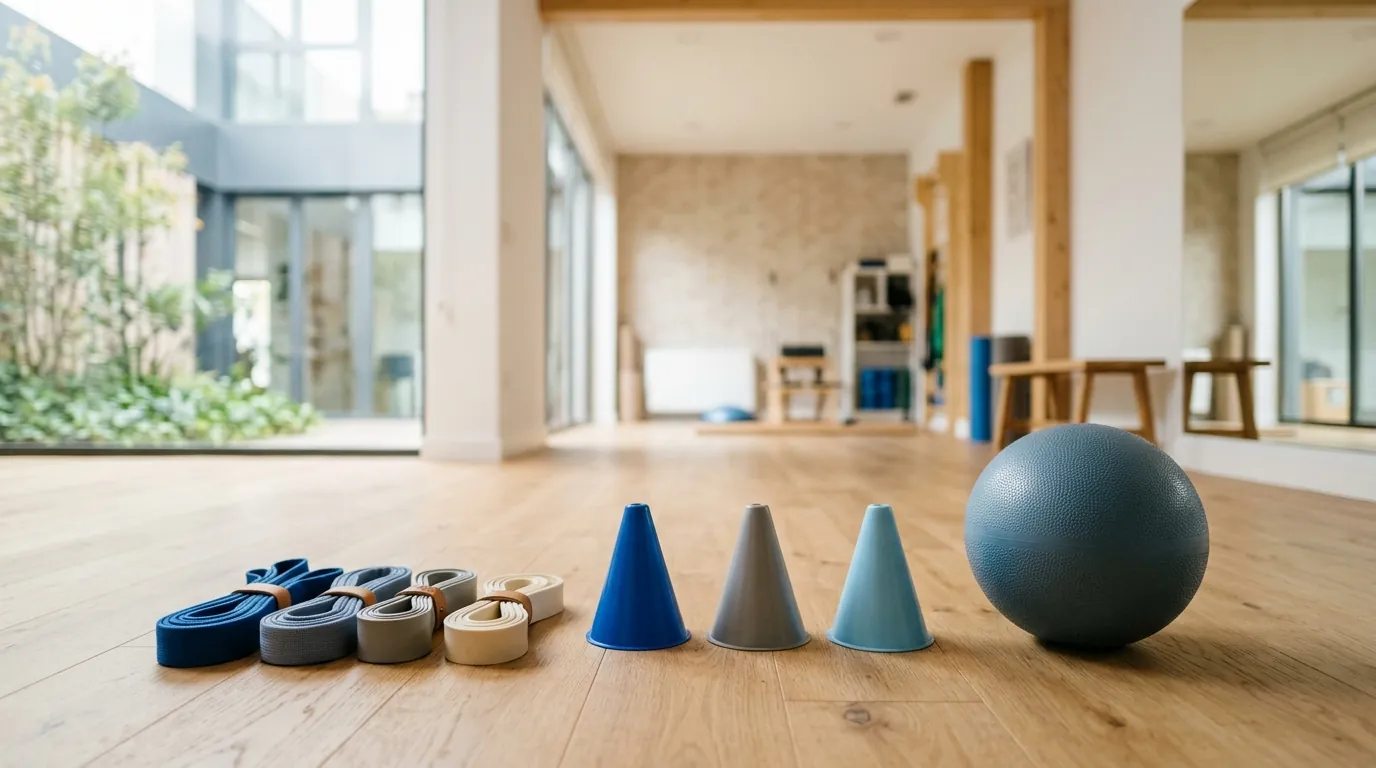
Sports physiotherapy: treating strains, sprains and tears, and progressive return-to-sport training to get back to training without relapse.
Treating the injury and preparing the return
For an athlete — elite or weekend — taking away the pain isn't enough. Most relapses happen because training starts again once the symptom has gone but the tissue still can't handle the real demands of the movement. That's why treatment has two parts: the injury and the return to sport.
What we see every day
- Ankle and knee sprains.
- Hamstring, calf and adductor strains.
- Achilles, patellar and shoulder tendinopathies.
- Overload injuries from a sudden increase in training volume.
- Lower back pain in athletes.
- Return to sport after surgery.
How we work
When you can go back
Discharge isn't decided by the calendar or the absence of pain: it's decided by objective criteria for strength, control and load tolerance. It's the part athletes like least and the one that prevents a second injury. It's coordinated with your coach when there is one, and with the orthopaedics clinic when the injury calls for it.
Frequently asked questions
When can I go back to training after an injury?
Clearance is not given by the calendar or by the pain going away, but by objective criteria of strength, control and load tolerance. Going back when the symptom has gone but the tissue still cannot handle the real movement is the most common cause of relapse.
What is return-to-sport reconditioning?
The final phase of treatment: gradually reproducing the demands of your sport —changes of direction, jumping, sprinting, contact— before competing. It is the part people like least because it feels as if you are already fine, and it is precisely the part that prevents a second injury.
I don't compete, I just go running. Is this for me?
Yes. Most of our patients are amateur athletes: overload from increasing volume too quickly, tendinopathies, sprains. The approach is the same, adjusted to your goals, your training time and the actual load you handle each week.
How many physiotherapy sessions for tendinitis?
There is no fixed number: a chronic tendinopathy is measured in weeks or months of work, not in isolated sessions. What changes the prognosis is not how many times you come, but the progressive loading programme you follow between sessions. Passive techniques relieve, but they do not heal the tendon.
What does sports physiotherapy do?
It treats the injury and prepares the return: assessment of movement and load, treatment of the acute phase with manual therapy and whatever techniques are needed, and reconditioning with strength exercise until the demands of your sport are reproduced. Discharge is given on criteria of strength and control, not on how it feels.