
Dry needling
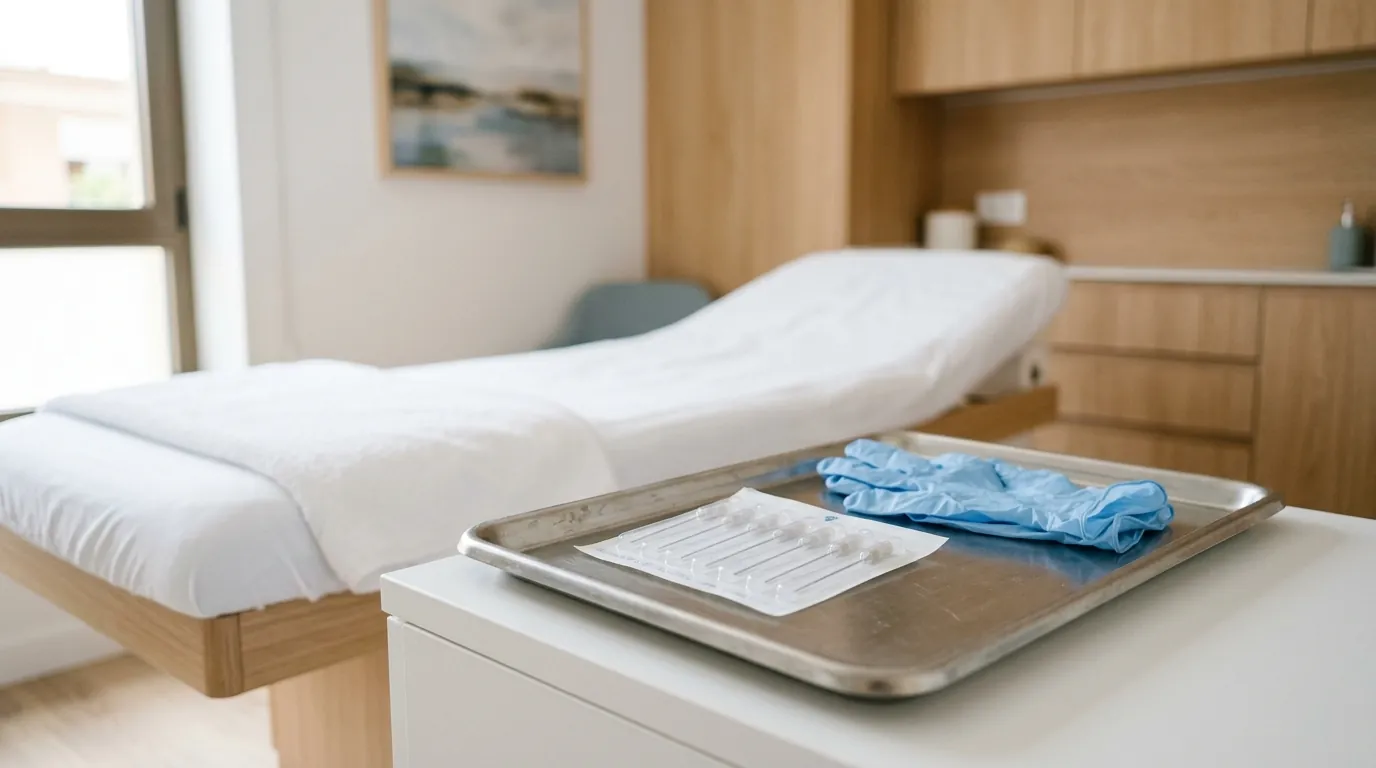
Dry needling: a fine needle applied to the myofascial trigger point to release persistent muscle tightness and restore movement. No medication injected.
What dry needling is
This is a physiotherapy technique that treats myofascial trigger points: those knots inside a muscle that hurt when pressed and also refer pain elsewhere — the trapezius point that causes headaches is the classic example. A very fine needle, like an acupuncture needle, is inserted into the point to release it.
It's called «dry» precisely because no medication is injected: the effect comes from the mechanical stimulus of the needle on the muscle.
What it's used for
- Neck and trapezius tightness that keeps coming back.
- Lower back and mid-back pain of muscular origin.
- Headaches originating from the neck.
- Overload injuries in athletes, alongside a sports physiotherapy plan.
- Restricted movement from shortened muscles.
What it feels like and what happens afterwards
Reaching the point usually triggers a sudden muscle twitch — the local twitch response — and an intense but brief sensation. Afterwards it's common to have soreness similar to muscle ache for a day or two: that's expected and passes. Drinking water, applying gentle heat and moving the area normally helps; staying still doesn't.
When it isn't done
It's not for everyone: it's carefully assessed in people on blood thinners, with a significant fear of needles, with an infection in the area, with clotting problems or during pregnancy, and it's not applied over an implant or prosthesis. That's why there's an assessment beforehand, and why dry needling almost never stands alone: it's part of a treatment with exercise and hands-on therapy, which is what stops the point coming back.
Frequently asked questions
Is dry needling the same as acupuncture?
No. A similar needle is used, but the aim is different: to deactivate a trigger point inside the muscle, located by examination. No medication is injected —hence the word “dry”— and the effect is produced by the mechanical stimulus of the needle on the tissue.
Does it hurt?
When the point is reached there is usually a sudden twitch of the muscle and an intense but brief sensation. Afterwards it is common to feel soreness similar to that after exercise for a day or two. It helps to drink water, apply gentle heat and move the area normally.
Who should not have it?
It is considered with care in people on anticoagulants or with clotting problems, with an infection in the area, with a marked fear of needles and during pregnancy, and it is not performed over prostheses or implanted material. That is why there is always a prior assessment.
What should you avoid after dry needling?
Avoid intense exercise and heavy loads for 24 to 48 hours, as well as ice on the area. Gentle heat, drinking water and moving the area normally do help. Soreness like after a workout for a day or two is to be expected: it is not a complication.
How long does the effect of dry needling last?
Relief can be felt from the very first session, but it only holds if whatever created the trigger point is corrected: posture, workload or muscle weakness. That is why needling is never used on its own, but as part of a treatment that includes exercise; if the movement that caused it stays the same, the point comes back.
Related articles

Jaw pain and bruxism: what TMJ physiotherapy can do
Clicking when opening your mouth, pain near the ear or stiffness upon waking: why TMJ dysfunction occurs and what physiotherapy ca…
Miguel Ángel Sánchez de Toro ·