
INDIBA physiotherapy
448 kHz radiofrequency to ease pain and speed up recovery, within your physiotherapy session.
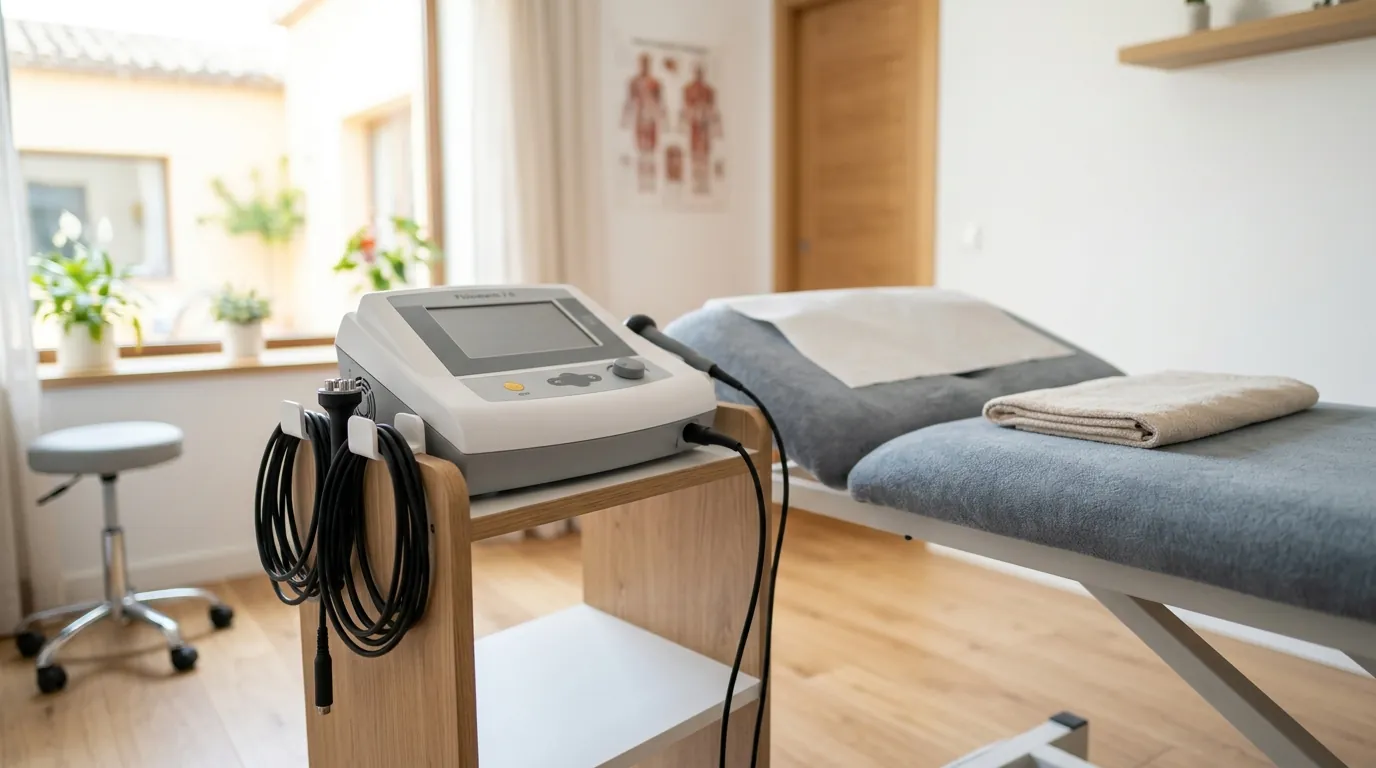
INDIBA is a radiofrequency device we use within your physiotherapy session, not as a separate treatment. It works at 448 kHz and passes a high-frequency current through the tissue: that boosts cellular exchange and, depending on the intensity, raises the temperature of the area in a controlled way. This is what's known in physiotherapy as tecar therapy or diathermy.
It doesn't replace hands-on therapy or exercise: it works alongside them. A session normally combines INDIBA with whatever techniques your case needs, aiming to get you moving and training the area sooner.
What we use it for
- Recent sports injuries: strains, muscle tears, sprains and tendinopathies, to reduce inflammation and regain mobility sooner.
- Recovery after surgery: working on the scar and swelling, once the orthopaedic surgeon has given the go-ahead.
- Muscle tightness and back pain: neck and lower back pain and tightness that doesn't ease with hands-on therapy alone.
- Joint pain and osteoarthritis: as support to ease pain and help you tolerate therapeutic exercise better.
- Swelling and lymphoedema: alongside manual lymphatic drainage and decongestive therapy.
- Jaw pain: for temporomandibular joint (TMJ) disorders, on muscles that are hard to reach with hands alone.
What a session involves
The application takes up part of the physiotherapy session, not all of it. How many sessions are needed depends on the injury and is reviewed as you go: if there's no change after the first few, the plan changes instead of being extended.
When it can't be applied
What to expect
It's a supporting tool. Many patients feel relief quickly, but it doesn't cure on its own or shorten a tissue's biological healing time: what it does is leave you in better shape to work on the area. Whether it suits you or not is decided by the physiotherapist after examining you.