
Tratamientos
Published on
Sports injuries to bones and joints: what to do and when to see a doctor
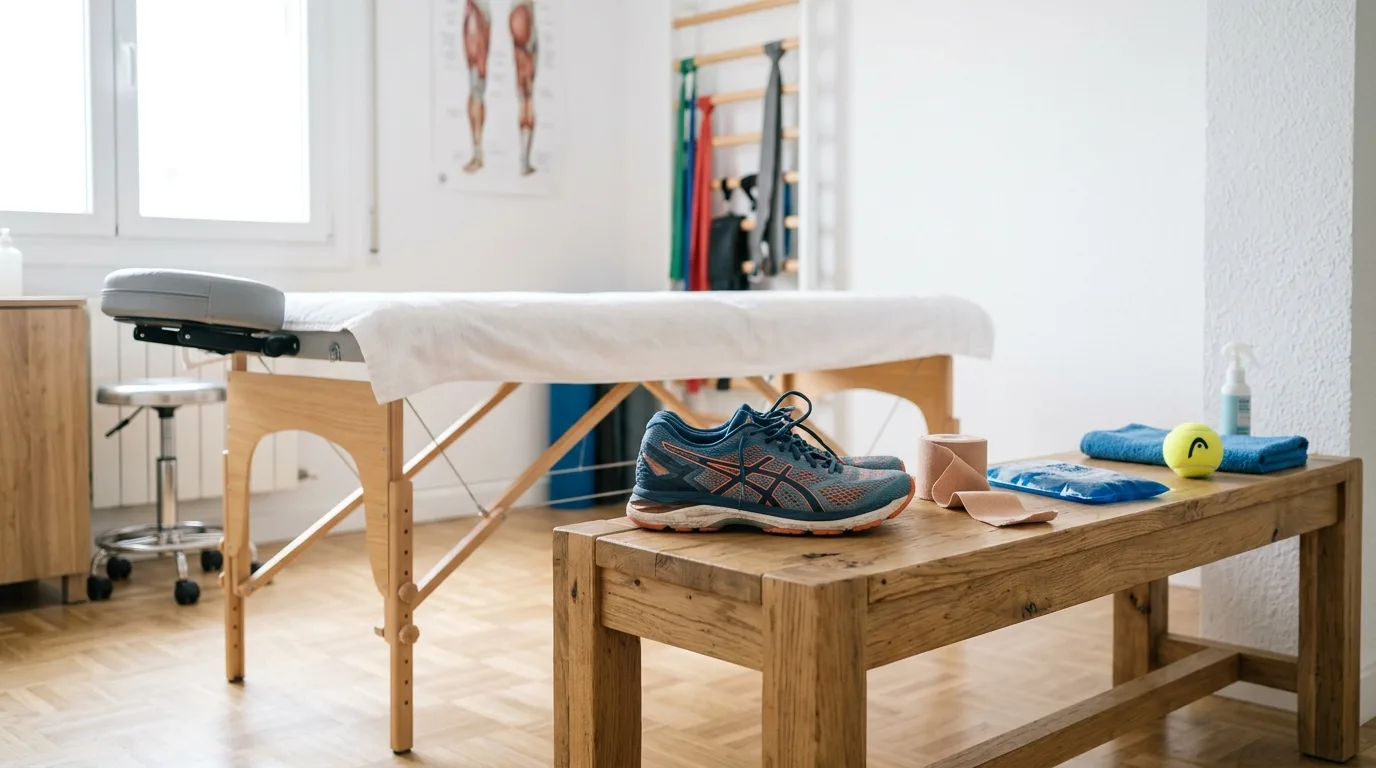
Sports injuries such as ankle sprains, muscle tears, tendinopathy and stress fractures: what to do in the first 48 hours and when to see a doctor.
Running, playing padel, cycling, getting back to football at the weekend. More and more people play sport at every age, and with it come sports injuries. Most are minor and heal well if they are treated from the start; the problem usually comes from playing on through pain, going back too soon or not knowing how to tell what will heal on its own from what needs a diagnosis.
This guide covers the most common sports injuries affecting bones, joints, muscles and tendons, what to do in the first few hours, when to see a doctor and how the decision to return to sport is made.
What to do in the first 48 hours
With an acute injury (a sprain, a pulled muscle, a knock that swells up), the first steps are always the same:
- Stop the activity. Carrying on playing ‘to see if it wears off’ turns minor injuries into long ones.
- Ice for 10 to 15 minutes at a time, several times a day, never directly on the skin.
- Gentle compression with an elastic bandage and elevation of the limb to limit the swelling.
- Avoid heat, vigorous massage, alcohol and anti-inflammatories in the first few hours, because they increase bleeding in the injured tissue.
- Relative rest, not complete rest: with most injuries, moving gently within what the pain allows speeds up recovery.
See a doctor promptly if you can't put weight on it or use it, if the joint looks deformed, if it swelled up suddenly, if you noticed a distinct pop or if you have lost strength. That is not something to wait out.
Sprained ankle
It is the most common sports injury and the one that recovers least well, precisely because people don't take it seriously. The foot rolls inwards and the ligaments on the outer side of the ankle are damaged. Depending on how severe it is, it ranges from a stretch with little pain to a complete tear with a lot of swelling and bruising.
What we know today: immobilising the ankle for weeks is counterproductive in most sprains. After a few days of protection, you need to start moving it, gradually put weight on it and, above all, train your balance (proprioception). Sprains that are not properly rehabilitated happen again, and the ankle ends up unstable. That chronic instability, when physiotherapy can no longer control it, may then need surgery to repair the ligaments.
An X-ray is requested when there is pain over specific bony points or you can't put weight on the foot, to rule out a fracture.
Muscle injuries
Hamstring, calf and adductor muscle fibre tears are an everyday occurrence in football, running and sprint sports. The person feels a sharp twinge, as if ‘hit by a stone’, in the middle of an effort and can't carry on. An ultrasound scan confirms the injury and measures its extent, which makes it possible to give a realistic timescale: from one or two weeks for the mildest injuries to more than six for large tears.
Treatment is progressive: a few days of protection, then gentle mobility, gradual loading and, once the muscle tolerates it, strength and speed work before returning to competition. Going back with the injury half-healed is the most common cause of relapse, and re-injuries heal less well.
Overuse tendinopathies
The patellar tendon in jumpers, the Achilles tendon in runners, the elbow in padel and tennis players (epicondylitis), the plantar fascia in people who spend many hours on their feet or run on tarmac. These are overuse injuries: the tendon takes more load than it can absorb and degenerates.
Modern treatment is not rest but progressive, controlled loading: strengthening exercises, with eccentric work playing a particularly important part, which stimulate the tendon to reorganise itself. It takes weeks or months of consistency. When pain makes training impossible, injections or platelet-rich plasma can help in selected cases. Corticosteroids are avoided in the Achilles and patellar tendons because of the risk of rupture.
Knee injuries
Twisting movements and falls damage the menisci and the ligaments, especially the anterior cruciate. A knee that swells in the hours after a twist, that locks or that gives way when you change direction needs an accurate diagnosis, because treatment varies a great deal depending on the structure affected and the person's age. We have a separate article on knee arthroscopy and ligament and meniscus injuries.
Another typical sports injury is pain at the front of the knee caused by chondromalacia patellae or patellofemoral pain syndrome: it hurts going down stairs, after sitting for a long time and when running downhill. It is treated with physiotherapy aimed at strengthening the quadriceps and hip, and by correcting technique and footwear.
Shoulder injuries
A dislocated shoulder is common in contact sports and in falls. In young people, a first dislocation carries a high risk of happening again, because the labrum that stabilises the joint is left detached; when the shoulder becomes unstable, arthroscopic repair is the usual treatment. In throwing sports and swimming, the problem is usually rotator cuff tendinopathy from overuse, which is treated with physiotherapy and by correcting the movement. More detail in our article on the rotator cuff and shoulder replacement.
Stress fractures
These are small cracks in the bone caused by repeated loading, without any trauma. They appear in runners who increase their training volume too quickly, and mainly affect the tibia, the metatarsals and the neck of the femur. The pain is localised, gets worse with activity and at first improves with rest. An X-ray may look normal in the first few weeks; an MRI scan confirms it. Treatment involves taking the load off the bone for as long as necessary and looking at why it happened: training progression, footwear, diet and, in women, menstrual disturbances that affect the bone.
Groin pain (pubalgia)
Pain in the groin and pubic area in footballers and runners is usually an overload of the area where the adductors and the abdominal muscles meet. It is easily confused with hip injuries, hernias and other causes, and diagnosis requires a detailed examination. Treatment is a programme of core and hip strength and control over several weeks; surgery is the exception.
How they are diagnosed
The foundation is the examination in the consulting room, with specific manoeuvres for each joint and each tendon. An X-ray rules out fractures and assesses the bone; ultrasound is the ideal test for muscles and tendons and lets us see the injury in movement; MRI is reserved for ligaments, menisci, cartilage and stress fractures. At Rincón Salud, radiology is available in the centre itself, which speeds up diagnosis at the first visit.
Returning to sport
This is decided not by the calendar but by criteria: no pain during activity, full range of movement, strength comparable to the other side, and the ability to perform the movements of your sport (running, stopping, jumping, changing direction) with control. The return is gradual, first to training and then to competition. Skipping that order is the surest way to get injured again.
Prevention
- Increase the volume and intensity of your training gradually.
- Warm up beforehand and work on strength, not just endurance.
- Rest: many overuse injuries are really injuries caused by a lack of recovery.
- Look after your footwear and, if pain keeps coming back in the knee, hip or foot, have a gait analysis done in Podiatry.
- Don't train through pain. Pain that appears during activity and gets worse is a warning sign, not an obstacle to push through.
If you've been injured
In the Orthopaedics unit at Rincón Salud we assess sports injuries with an examination and imaging tests in the centre itself, and the recovery plan is drawn up together with the Physiotherapy team from day one, with a clear goal: getting back to your activity properly and without relapses. You can book an appointment with our team.