
Shockwave therapy
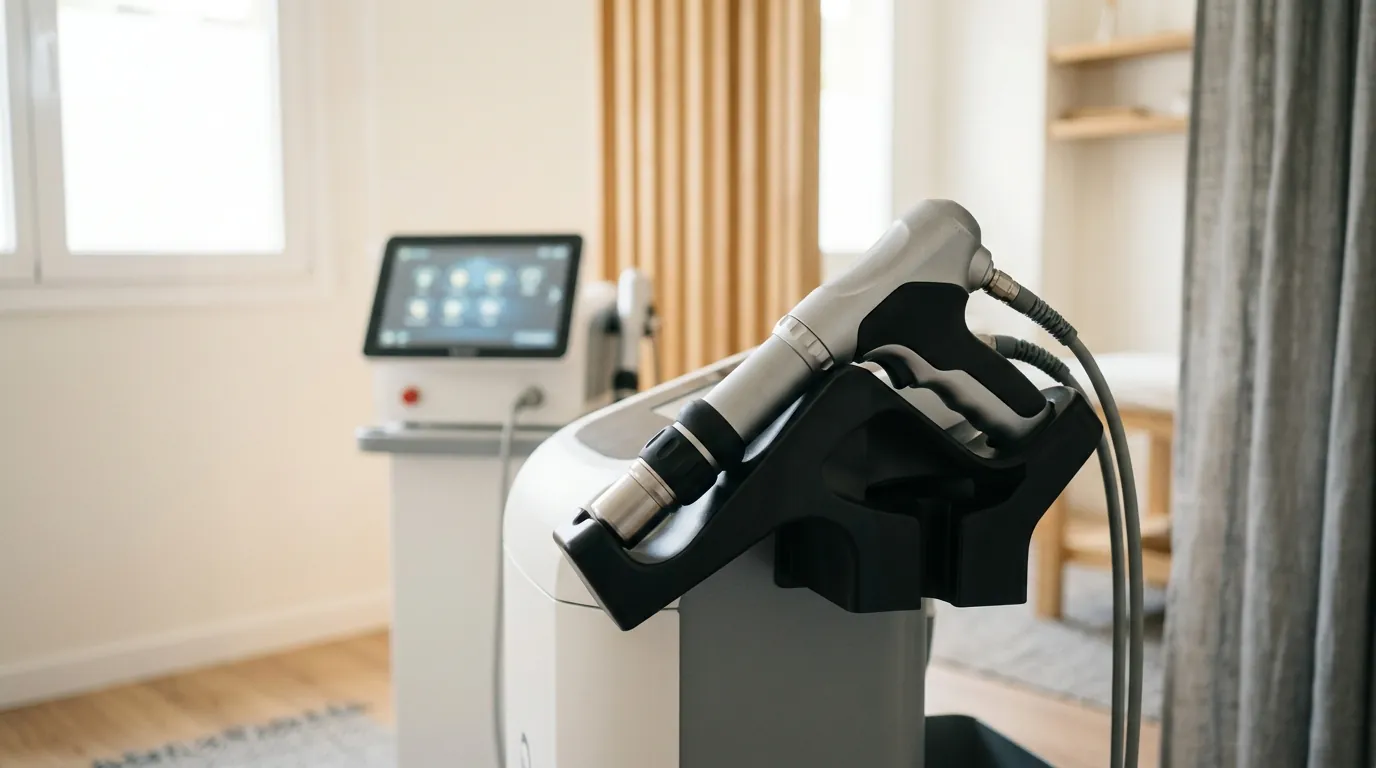
Extracorporeal shockwave therapy: treatment for chronic tendinopathies, plantar fasciitis and calcifications that haven't improved with other measures.
What shockwaves are
These are high-energy acoustic waves applied from outside, using a head placed against the skin. On reaching the tissue they trigger a mechanical stimulus that restarts a repair process that had stalled, improves blood flow to the area and helps break down some calcifications. That's why it's suited to chronic injuries, not acute ones.
When it's used
- Plantar fasciitis and heel spur.
- Shoulder tendinopathy, with or without calcification.
- Tennis elbow (epicondylitis) and golfer's elbow (epitrochleitis).
- Patellar and Achilles tendinopathy.
- Trochanteric pain and tendon-related hip pain.
- Delayed healing in some fractures.
The typical indication: a tendon that's been hurting for more than three months and hasn't improved with relative rest, exercise and standard treatment.
What the session involves
It lasts a few minutes and is done at the clinic. It's uncomfortable while being applied — the intensity is adjusted to what you can tolerate — and afterwards there can be soreness for a day or two. It's usually scheduled over three to five sessions, a week apart. It's best to avoid anti-inflammatories in the days around treatment, as they interfere with the very inflammation the therapy is trying to trigger.
What makes it work
Shockwave therapy isn't a standalone treatment: it always goes alongside a progressive loading exercise programme for the tendon. Without that work, the pain tends to come back. It isn't applied over areas with infection, tumours, in patients on blood thinners without assessment, or during pregnancy.
Frequently asked questions
How many shockwave sessions are needed?
The usual number is between three and five, a week apart. Each session lasts only a few minutes. It is not a stand-alone treatment: it always goes together with a progressive loading exercise programme for the tendon, which is what stops the pain from coming back a few months later.
Can I take anti-inflammatories during the treatment?
It is recommended to avoid them in the days around each session, because they interfere with precisely the inflammatory response the treatment aims to trigger in order to reactivate tissue repair. If you take anti-inflammatories for another reason, mention it beforehand so it can be assessed.
Is it painful?
It is uncomfortable while it is being applied, and the intensity is adjusted to what you can tolerate. Afterwards some soreness may remain for a day or two. It is not applied over areas with infection or tumours, in people on anticoagulants without assessment, or during pregnancy.
How many shockwave sessions for plantar fasciitis?
The usual number is between three and five sessions, a week apart. The improvement is generally gradual and sometimes comes after finishing the course rather than during it. It always goes together with loading exercise for the fascia and the Achilles tendon, which is what sustains the result.
What should you avoid after shockwave therapy?
Avoid anti-inflammatories in the days that follow —they interfere with the response the treatment aims to provoke—, ice on the area and high-impact exercise for the next 48 hours. Some soreness for a day or two is normal. It is a good idea to keep up the prescribed exercises.
Questions and comments
Ask the specialist who reviews this page or leave us a comment. Everything is reviewed before it is published.
To write, first confirm your email: we will send you a code.
Content reviewed by Ana Campos Ramos