
Rehabilitation after surgery
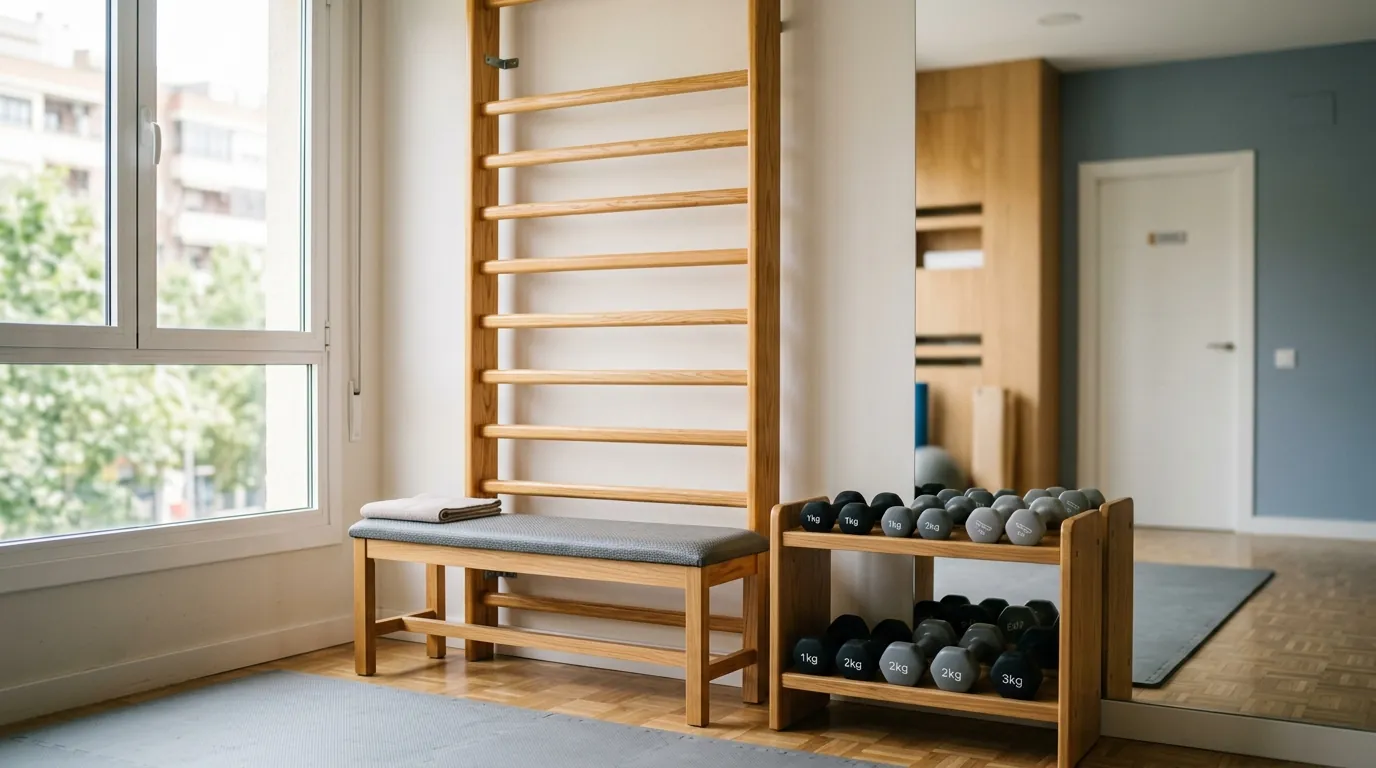
Orthopaedic and post-surgical rehabilitation: regaining mobility and strength after joint replacement, ligament surgery, shoulder surgery, fractures and casts.
The operation is half the job
A well-placed knee replacement or a well-repaired ligament don't guarantee, on their own, that you'll get back to your life. What decides the result is what happens afterwards: regaining joint range, strength and confidence in the operated limb. That's the goal of rehabilitation.
In which cases
- Hip and knee replacements.
- ACL, meniscus and other knee ligament surgery.
- Shoulder surgery: rotator cuff, recurrent dislocation.
- Fractures, with or without surgery, after the cast or immobilisation device comes off.
- Hand, wrist and ankle surgery.
- Stiffness or loss of strength left over from an old injury.
How it's organised
It starts by assessing where you're at: how much the joint moves, how much strength you have, how much it hurts and what your surgeon has advised. From there, a phased programme — controlling pain and inflammation, regaining movement, progressive strength and, finally, functional movement — with exercises set for home between sessions.
Realistic timeframes
Every type of surgery has its own timeline and it can't be shortened through willpower alone: some tissues need weeks before they can tolerate load. What does change the outcome is consistency and starting at the right moment. The plan is coordinated with the orthopaedicsclinic, and if you're returning to sport it links into sports rehabilitation.
Frequently asked questions
When do I start rehabilitation after surgery?
It depends on the surgery and on what your surgeon has indicated, but today the trend is to start early with whatever the area tolerates: prolonged rest is the exception, not the rule. Bring the surgical report to the first session, because it sets the timings and the limits.
How long does recovery take?
Every surgery has its own timescales and they cannot be shortened through willpower: some tissues need weeks before they can tolerate load. What does change the outcome is consistency and doing the home exercises between sessions, which are half of the treatment.
Is it normal for the exercises to hurt?
Moderate discomfort that settles once you finish is to be expected and does not mean damage is being done. What you should report is sharp pain, increasing swelling, local heat or the loss of mobility you had gained: that is reviewed before continuing.
When does rehabilitation start after shoulder surgery?
It depends on what was repaired and on what the surgeon indicates: with some surgeries passive movement starts within a few days and with others weeks of immobilisation have to be respected. Always bring the surgical report to the first session, because it is what sets the timings.
What is knee rehabilitation like?
In stages: first pain and swelling control and recovery of the range of movement; then progressive quadriceps and hamstring strengthening; and finally functional work — walking, stairs, single-leg support — and, where appropriate, return to sport based on objective criteria, not on the calendar.
Questions and comments
Ask the specialist who reviews this page or leave us a comment. Everything is reviewed before it is published.
To write, first confirm your email: we will send you a code.
Content reviewed by Ana Campos Ramos