
Vestibular rehabilitation
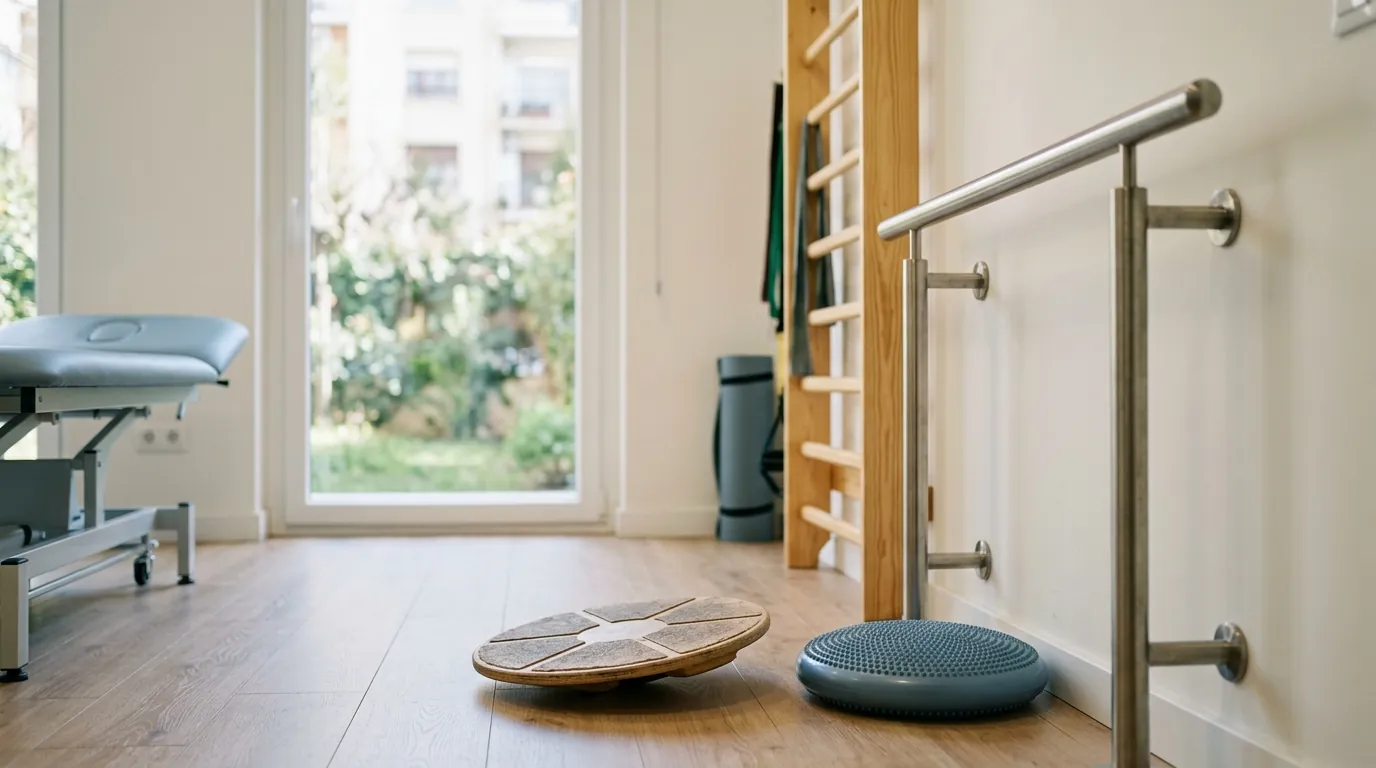
Vestibular rehabilitation with physiotherapists: gaze stabilisation, habituation and balance exercises, guided and progressive. Book an appointment.
Vestibular rehabilitation is balance physiotherapy: a structured exercise programme that teaches the brain to compensate when the vestibular system stops providing accurate information. It is neither a passive treatment nor a pill — it is training, and it works precisely because it is practised.
It is carried out by physiotherapists dedicated to this field within the Vestibular Unit, working from the diagnosis already made in the otoneurology consultation: first, a diagnostic assessment indicates the cause of the dizziness, the functional deficits it has produced are evaluated, and then the affected systems (integration of visual information, proprioception, vestibular system, neural networks, etc.) are trained to restore functionality.
When it is indicated
- After positional vertigo, to regain confidence when moving.
- In vestibular neuronitis, when the affected ear does not fully recover.
- In persistent instability, with or without a diagnosis of vertigo.
- In older people with a fear of falling, where the additional objective is fall prevention.
- When dizziness occurs in environments with high visual stimulation: supermarkets, traffic, screens.
- Following a head injury that has left residual balance problems.
What a programme involves
It begins with an assessment of balance and the specific symptoms of each individual, from which a plan structured into three blocks is created:
- Gaze stabilisation: exercises to prevent vision from blurring or jumping when moving the head.
- Habituation and coordination: gradual, controlled exposure to the movements that trigger the symptom until they stop triggering it.
- Balance and gait: stability work of increasing difficulty, first on firm support and later in real-life situations.
How many sessions are needed
There is no fixed number: the plan is reviewed session by session. Early diagnosis and treatment improve the prognosis and efficacy of the therapeutic approach. What remains constant is that a large part of the work is done at home: the exercises prescribed between sessions are an essential part of the treatment, not an optional extra.
What to expect
It is normal for some exercises to initially trigger a degree of the dizziness you are trying to relieve: this is precisely the mechanism by which the brain readapts, and the intensity of the exercises is adjusted so that it remains tolerable.
Book an appointment
Vestibular rehabilitation is provided at the Málaga medical centre (La Rosaleda), within the Vestibular Unit, and is coordinated with the otoneurology consultation and the physiotherapy team. Book an appointment and we will begin by assessing your balance.
Frequently asked questions
What does vestibular rehabilitation involve?
Prescribed, progressive exercises that teach the brain to compensate for the faulty information reaching it from the inner ear: gaze stabilisation, habituation to movement and balance work. It is done with physiotherapists and with daily exercises at home.
Is it normal to feel dizzy during the exercises?
Yes, and up to a point it is necessary: compensation is achieved by exposing the system to what triggers symptoms, in a controlled and progressive way. Avoiding all movement is what turns instability and the fear of moving into a chronic problem.
How long does it take to notice a difference?
It depends on the cause and on how long the problem has been there, but improvement is usually gradual over weeks, not days. Consistency with the home exercises is what most influences the outcome.
How is vestibular rehabilitation carried out?
With prescribed, progressive exercises: gaze stabilisation, habituation to the movement that triggers symptoms and balance and gait work, first at the clinic and then at home every day. The programme is adapted to the cause and to how you are responding.
How do you do vestibular rehabilitation at home?
With the exercises prescribed for you after the assessment, not with generic videos: a badly chosen programme can make symptoms worse or be useless. What is common to everyone is daily consistency and not avoiding the movements that cause dizziness, because compensation is achieved through controlled exposure.
Related articles
Vertigo and dizziness: causes, diagnosis and treatment
BPPV, vestibular neuritis, Ménière's or vestibular migraine: how vertigo differs from dizziness, which signs are urgent, and how b…
Dr Irene Mayorga Chamorro ·
When dizziness causes fear: how anxiety can maintain the cycle of dizziness
Why dizziness can persist after a vestibular problem: how anxiety, hypervigilance and avoidance maintain it, and what is addressed…
Mr Álvaro Chaves Sánchez
Questions and comments
Ask the specialist who reviews this page or leave us a comment. Everything is reviewed before it is published.
To write, first confirm your email: we will send you a code.
Content reviewed by Marian Ortega Jaramillo de Contreras