
Snoring
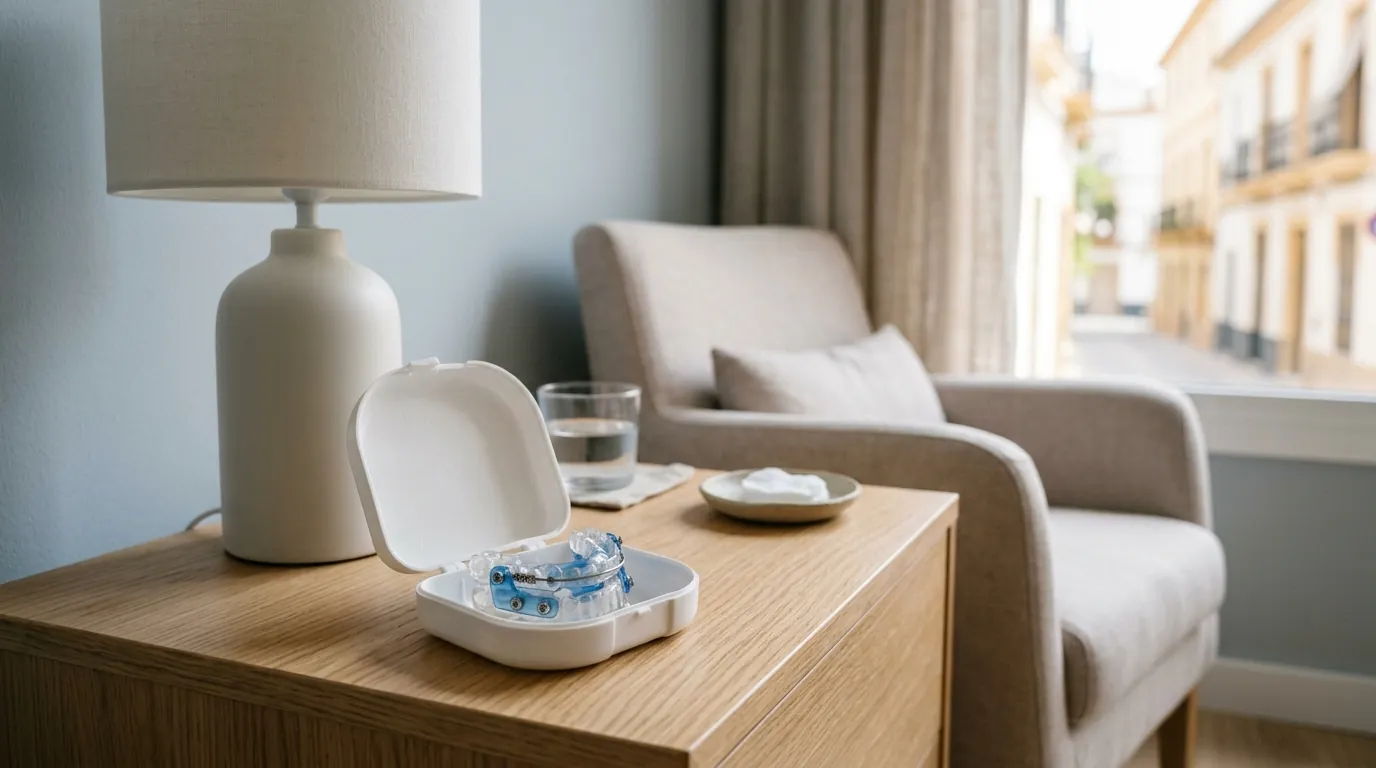
Treating snoring: a study to rule out apnoea, positional measures, ENT assessment and a custom-made mandibular advancement splint.
First, rule out apnoea
Simple snoring bothers whoever sleeps next to you; sleep apnoea affects the health of the person snoring. Since they can't be told apart from the outside, the first step is an overnight study when there's suspicion. Treating the noise without ruling out apnoea can leave the condition silenced and untreated.
Why people snore
Because air struggles to pass through and makes the soft tissue of the throat vibrate. Contributing factors include nasal obstruction —a deviated septum, rhinitis, polyps —, large tonsils, being overweight, sleeping on your back, alcohol at night and muscle relaxants.
What can be done
- General measures: losing weight, avoiding alcohol in the hours before bed, sleeping on your side, keeping regular hours.
- Treating the nose: if you can't breathe well through it, everything else works worse.
- Mandibular advancement device: a custom-made splint that gently advances the jaw and opens up space in the throat. It's made from a mould or an intraoral scan and needs follow-up visits to adjust the advancement.
- Surgical assessment by ENT in selected cases.
What to expect
Mandibular advancement devices reduce or eliminate snoring in a good proportion of cases and are also used for selected mild to moderate apnoea. In the first few days, jaw discomfort or increased saliva is common; it usually settles within one or two weeks. A prior dental check-up is recommended: not every mouth is a candidate.
Frequently asked questions
Can snoring simply be treated on its own?
Sleep apnoea has to be ruled out first, because the two are indistinguishable from the outside and treating only the noise would leave a disease silenced. Once the study has been done, simple snoring is addressed with general measures, by treating the nose and, where appropriate, with a mandibular advancement device.
How does a mandibular advancement device work?
It is a custom-made splint that moves the lower jaw slightly forward and opens up the space in the throat during sleep. It is made from an impression or an intraoral scan and needs follow-up appointments to adjust the advancement. A prior dental check-up is advisable: not every mouth is suitable.
Is it uncomfortable to wear?
In the first few days it is common to notice jaw discomfort or more saliva; this usually settles within one or two weeks. In exchange, it reduces or eliminates snoring in a good proportion of cases and it also works for selected cases of mild and moderate sleep apnoea.
When is snoring dangerous?
When it comes with witnessed pauses in breathing, waking up choking, daytime sleepiness or poorly controlled high blood pressure. At that point the snoring is signalling sleep apnoea and it has to be investigated, not silenced with remedies.
What should I do to stop snoring?
First, rule out sleep apnoea with a sleep study. Then: lose weight if you are overweight, avoid alcohol and sedatives at night, sleep on your side, treat any nasal obstruction and consider a custom-made mandibular advancement device. Strips and sprays from the chemist rarely solve anything.
Related articles

Sleep apnoea: the condition many people have without knowing it
Snoring, breathing pauses and daytime tiredness: what sleep apnoea is, why it should be diagnosed early and what treatments exist.
Miguel Ángel Sánchez de Toro ·