
Published on
Sleep apnoea: the condition many people have without knowing it
By Miguel Ángel Sánchez de Toro
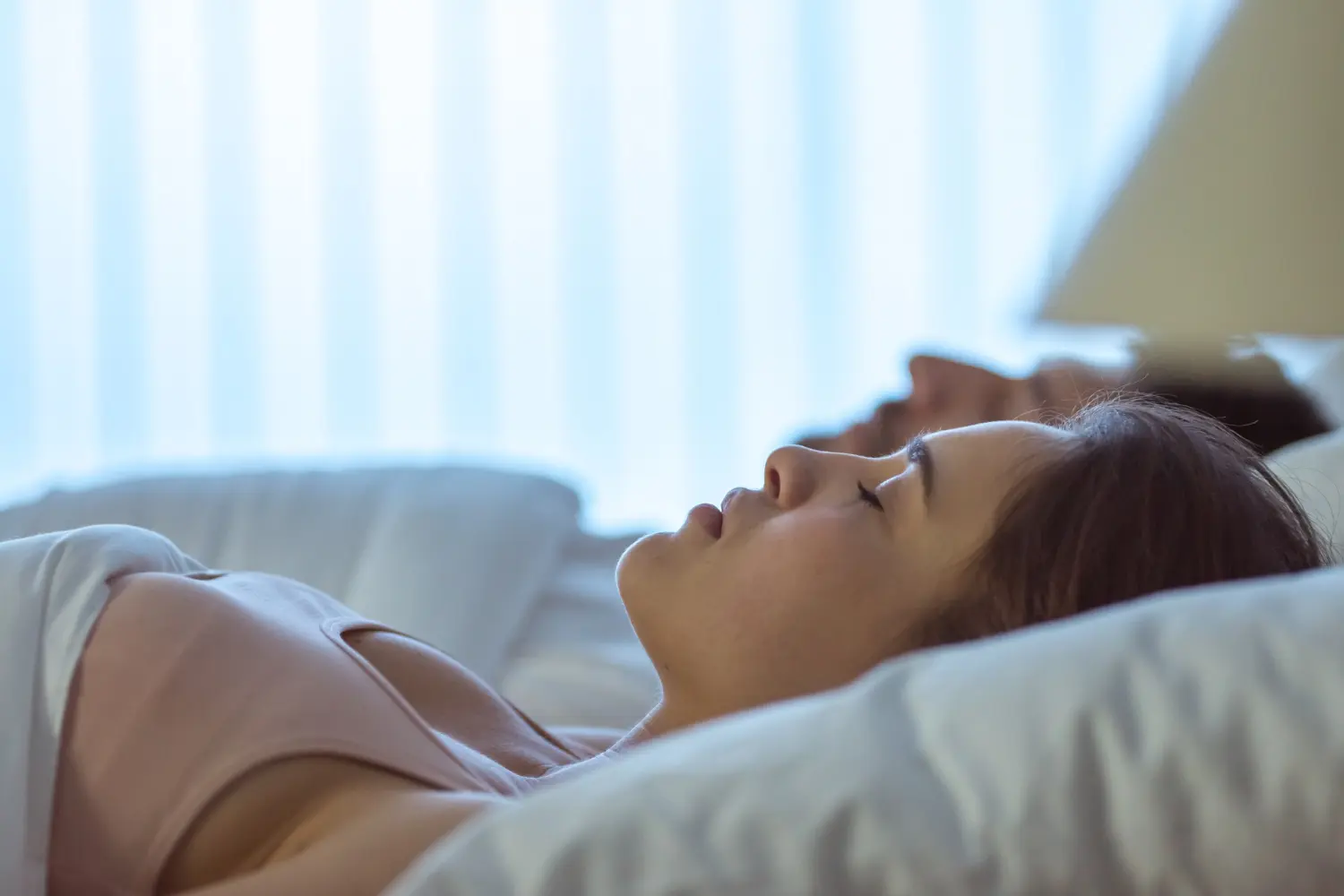
Snoring, breathing pauses and daytime tiredness: what sleep apnoea is, why it should be diagnosed early and what treatments exist.
Snoring loudly, falling asleep in front of the television or waking up tired after eight hours in bed is so common that almost no one mentions it to a doctor. And yet, behind that picture there is often a specific, measurable and treatable condition: obstructive sleep apnoea.
It affects roughly 15-30% of adults, depending on age and the diagnostic criteria used, and most cases still go undiagnosed today. Nor is it a problem exclusive to people with obesity: it also appears in slim people, because what matters most for the risk is the shape of each person's airway.
What happens while we sleep
While we sleep, the muscles that keep the throat open relax. In sleep apnoea, that airway narrows or closes completely for a few seconds, and air stops flowing even though the body keeps trying to breathe.
Each of these pauses sets off a chain of three things:
- Repeated breathing pauses, which can number in the tens or hundreds over a single night.
- Drops in blood oxygen each time breathing is interrupted.
- Micro-arousals that the brain triggers to reopen the airway. They last seconds, are not remembered in the morning, and still break deep sleep again and again.
That's the explanation for something that puzzles a lot of people: you can spend eight hours in bed and get up as if you hadn't slept at all. The hours are there; the rest isn't.
Symptoms that should raise suspicion
- Loud snoring, especially if it's habitual and bothers the person sleeping next to you.
- Breathing pauses observed by your partner, often ending with an abrupt snort.
- Daytime sleepiness: on the sofa, in a meeting, while reading or — more seriously — at the wheel.
- Sudden awakenings with a choking sensation or shortness of breath.
- Tiredness on waking, with a feeling of unrefreshing sleep, dry mouth or a morning headache.
- Difficulty concentrating, memory lapses or irritability.
- High blood pressure, especially if it's hard to control despite treatment, along with other associated conditions.
One detail is worth bearing in mind: the person who provides the most information usually isn't the patient, but whoever sleeps next to them. If someone has told you that you stop breathing at night, that alone is reason enough to see a doctor.
Why early diagnosis matters
Sleep apnoea isn't just a rest problem. By repeating night after night, the drops in oxygen and the micro-arousals keep the body on constant alert and eventually take their toll:
- Higher cardiovascular risk, with blood pressure that is often difficult to control.
- Higher risk of arrhythmias and stroke, particularly atrial fibrillation.
- Metabolic changes, such as insulin resistance and poorer diabetes control.
- Traffic and workplace accidents, due to drowsiness and reduced attention.
- Poorer quality of life: mood, memory, work and sports performance, relationships.
The flip side of that list is the good news: when apnoea is diagnosed and treated, much of that damage improves or stops progressing. That's why the goal isn't just to sleep better, but to protect the heart and overall health in the medium term.
How it's diagnosed
Diagnosis isn't made by guesswork, nor ruled out just because someone is slim. It has three steps:
- Assessment by an expert team. In our Sleep Unit the study of apnoea is approached in coordination with pulmonology, the specialty that directs respiratory treatment.
- Medical history. What symptoms there are, since when, how you sleep, what your partner has observed, what medication you take and what associated conditions exist. This is the part that guides everything else.
- Sleep study. This is the test that records what happens while you sleep — breathing, oxygen, snoring, position — and confirms or rules out the diagnosis. It can be carried out in your own home, which is the usual approach, or at our facilities at the Rincón de la Victoria medical centre when the case requires it.
The study produces a number, the apnoea-hypopnoea index per hour of sleep, which classifies the condition as mild, moderate or severe. That figure, together with your symptoms and the rest of your medical history, is what decides the treatment: the number on its own isn't enough.
Is there a treatment? Yes
Sleep apnoea is one of those conditions where treatment works well and the effect is felt quickly. There isn't a single option: there's the one that fits each case.
CPAP
This is the reference treatment for moderate and severe forms. A small device pushes pressurised air through a mask and keeps the airway open all night, so the pauses disappear. It requires an adjustment period and follow-up to fine-tune the pressure and the mask, and it's exactly that support that makes the difference between a device that gets used and one that ends up in a cupboard.
Mandibular advancement devices
These are custom-made splints that slightly move the jaw forward during sleep to make it easier for air to pass. They are an alternative in selected mild and moderate cases, and also for people who can't tolerate CPAP. They are made and fitted by our dental team: you can see how we work with intraoral devices for snoring and apnoea.
Weight loss and habits
When there is excess weight, losing it significantly reduces the number of apnoea episodes and improves the response to other treatments. Adding to this are simple measures with a real effect: avoiding alcohol and sedatives at night, paying attention to sleep position and treating nasal obstruction if present.
When there is a correctable obstruction
If behind the snoring there is an airway obstruction that can be corrected, it is assessed together with ear, nose and throat (ENT) before deciding anything.
Individualised treatment
These options don't compete with each other: they are combined. The choice depends on severity, the anatomy of your airway, any associated conditions and what you can sustain day to day. That's why the treatment is decided in consultation, with you present, and reviewed over time.
When to request an assessment
- If you snore a lot.
- If someone has observed breathing pauses while you sleep.
- If you fall asleep easily during the day.
- If you have high blood pressure, especially if it's hard to control.
- If you have atrial fibrillation or other related conditions.
- If you want a complete medical check-up.
- If you're looking to improve your work or sports performance and suspect you're not resting well.
If you're not sure, you can start with our sleep test: it's just a few questions and gives you guidance in a minute on whether you should see a specialist.
Sleeping well isn't just about sleeping many hours
Sleeping with normal breathing is a fundamental pillar of health, just as much as diet or exercise. Sleep apnoea has a treatment and, when diagnosed in time, it improves quality of life and reduces the risk of numerous conditions.
If you have compatible symptoms or simply want to put your mind at rest, putting yourself in the hands of a specialised team can make a real difference.
Who signs this article
Miguel Ángel Sánchez de Toro
Sleep Unit · Specialist Physician in Pulmonology and Allergy
Medical registration number: 292603493 · Ilustre Colegio Oficial de Médicos de Málaga
My approach to work is responsible and committed. Throughout my life, I've worked on developing empathy, sociability, initiative and leadership. In my free time, I enjoy moderate sport, and enjoy it even more outdoors, in nature. Awards and mentions: Award…
AllergyRespiratory medicineSleep Unit
See the full profile →Questions and comments
Ask the author of this article or leave us a comment. Everything is reviewed before it is published.
To write, first confirm your email: we will send you a code.