
Shoulder pain
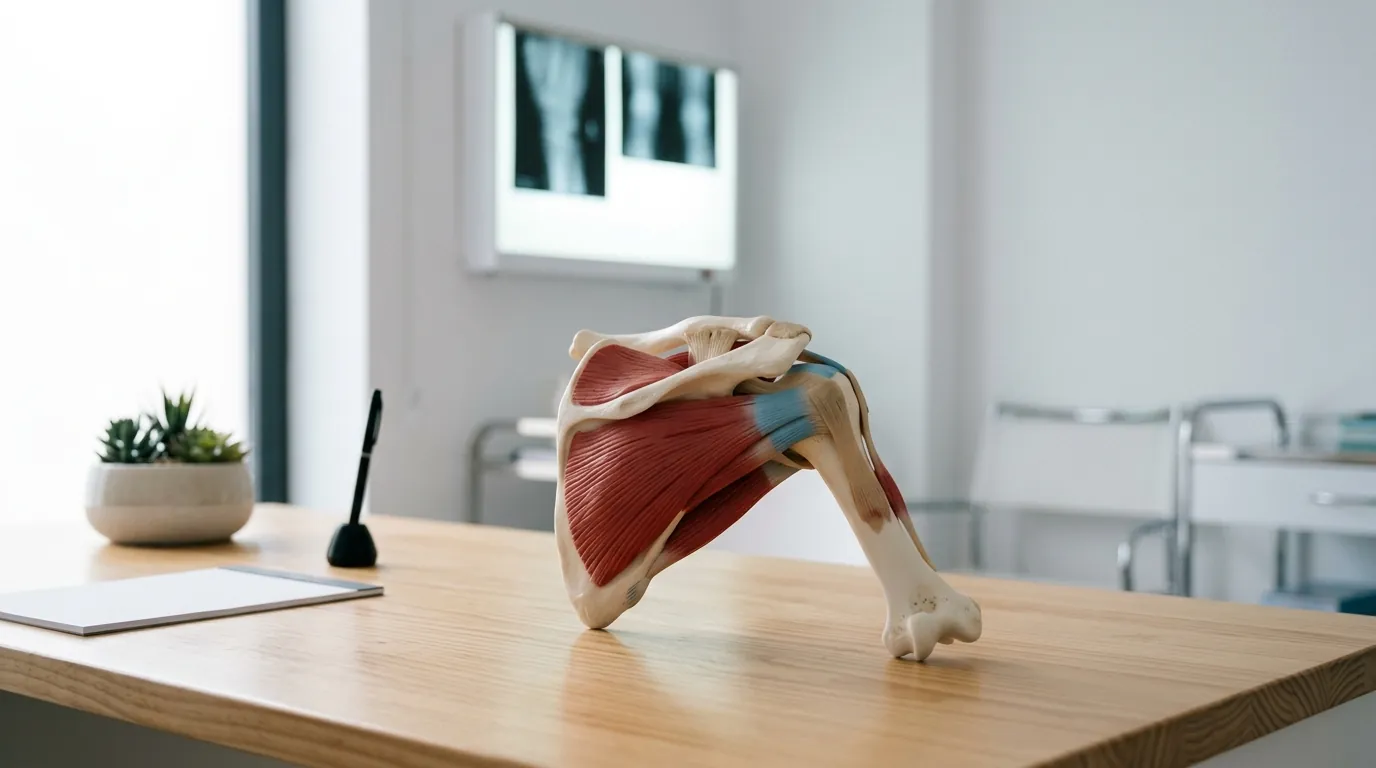
Diagnosis and treatment of a painful shoulder: rotator cuff, calcific tendinitis, frozen shoulder and instability, with ultrasound and rehabilitation.
Why the shoulder hurts
The shoulder is the most mobile joint in the body, and that freedom comes at the cost of stability. Most pain doesn't come from the bone, but from the tendons that hold it together and move it — the so-called rotator cuff. The most common causes:
- Rotator cuff tendinopathy and tears.
- Calcific tendinitis, which can cause very intense, sudden-onset pain.
- Subacromial bursitis.
- Frozen shoulder or adhesive capsulitis, in which mobility is progressively lost.
- Osteoarthritis and instability after dislocations.
Signs that point the way
Pain when raising the arm above the shoulder, night pain that wakes you when turning onto that side, loss of strength when brushing your hair or reaching a shelf, and difficulty reaching your hand behind your back. Sudden pain after exertion, with a clear loss of strength, should be assessed promptly.
How we investigate it
With a specific examination — there are manoeuvres that pinpoint fairly well which tendon is affected — and with imaging: X-ray for the bone and calcifications, and ultrasound to see the tendons moving. When surgery is being considered or the picture isn't clear, an MRI is requested.
Treatment
The great majority of shoulders improve without surgery: pain control, correcting movements and, above all, a physiotherapy programme with progressive exercise, which gives the best results in the medium term. In selected cases, ultrasound-guided injections are considered, and surgery is reserved for specific tears or when well-conducted conservative treatment hasn't worked.
Frequently asked questions
My shoulder hurts at night, is that normal?
Night pain that wakes you when you roll onto that side is very typical of rotator cuff problems and bursitis. It is not something to put up with: it is one of the clearest reasons to seek advice and have the shoulder examined.
Is an MRI scan necessary?
Not always. The physical examination locates fairly well which structure is affected, the X-ray assesses bone and calcifications and the ultrasound scan makes it possible to see the tendons in movement. MRI is reserved for when surgery is being considered or the picture is unclear.
Am I going to need surgery?
The vast majority of shoulders improve without an operating theatre: pain control, correction of movement patterns and a physiotherapy programme with progressive exercise, which is what gives the best results in the medium term. Surgery is reserved for specific tears or for failures of properly delivered treatment.
When is shoulder pain a cause for concern?
When it appears after an injury with deformity or an inability to move the arm, when there is clear loss of strength, when the pain is intense at night and does not improve over weeks, or if it comes with fever, swelling or chest symptoms. That last one is assessed without delay.
How do I know if I have shoulder tendinitis?
Pain when raising the arm above shoulder height, pain at night when lying on that side and discomfort when combing your hair or reaching a shelf, with strength preserved, all point that way. Examination with specific manoeuvres and an ultrasound scan confirm which tendon is affected.