
X-ray
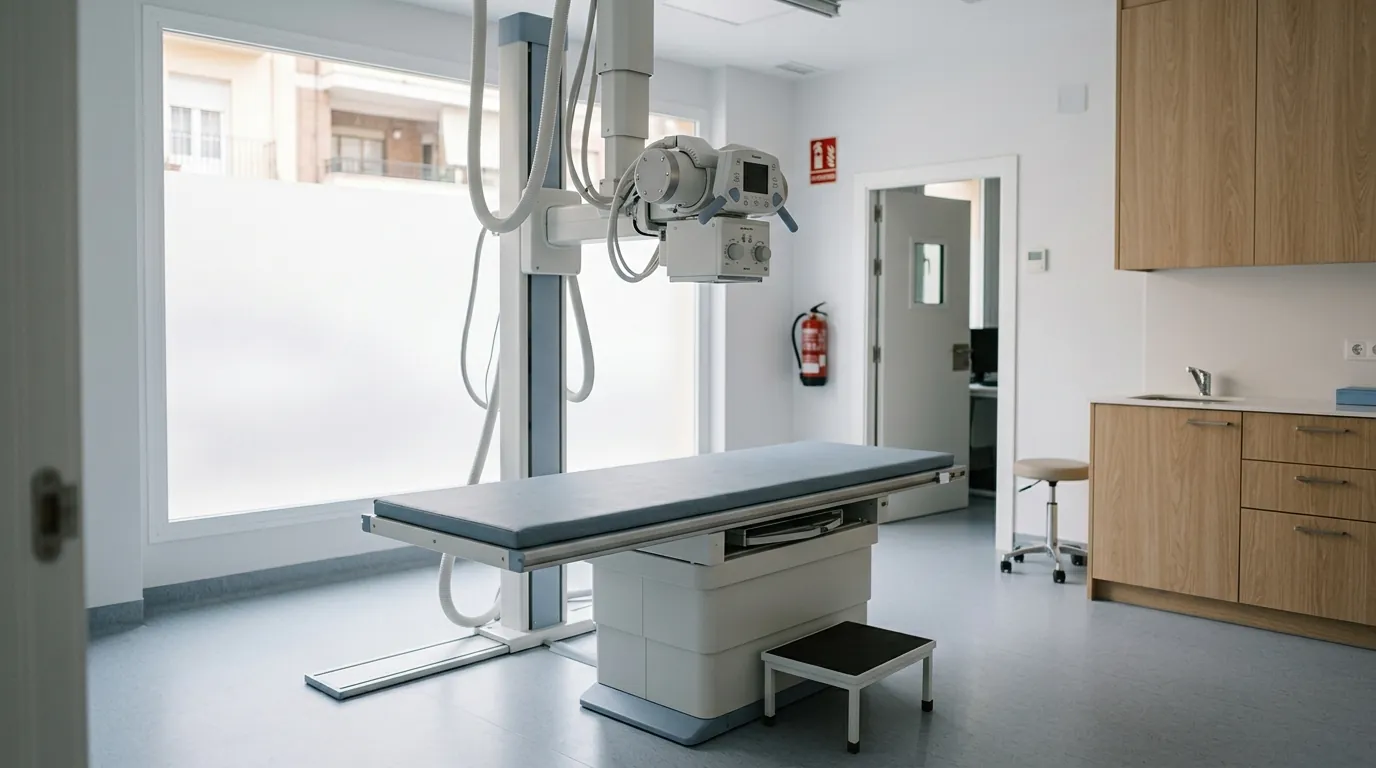
Digital plain X-ray: chest, abdomen, spine and limb X-rays, with a radiologist's report and digital delivery of the images.
What it's for
An X-ray uses a very small dose of radiation to produce an image of the inside of the body. It's the quickest, most accessible imaging test, and remains the first choice in many situations:
- Injuries: ruling out a fracture or dislocation.
- Chest: investigating a persistent cough, fever, chest pain or a pre-surgery check.
- Spine: assessing back pain, scoliosis or joint wear.
- Abdomen and bone studies of the limbs.
What the test involves
It takes a few minutes. Metal objects need to be removed from the area, and you'll be asked to adopt a specific position, staying still and, for a chest X-ray, holding your breath for a moment. It doesn't hurt and needs no preparation in most cases. You can carry on as normal straight afterwards.
Radiation: the right amount
The dose from a standard X-ray is low — a chest X-ray is roughly equivalent to a few days of natural background radiation — but it isn't zero, which is why it's requested when it adds information, not «just in case». If you are or might be pregnant, mention it before the scan: it may change what's requested or what protection is used.
The report
The images are read by the radiologist and the report is provided together with them digitally, so you can take it to your doctor or another clinic. If the X-ray doesn't answer the question, the study may be completed with ultrasound, a CT scan or other tests depending on the case.
Frequently asked questions
Is the radiation from an X-ray dangerous?
The dose from a conventional X-ray is low —a chest X-ray is equivalent to a few days of natural background radiation— but it is not zero, and that is why it is requested when it provides information and not just in case. If you are or may be pregnant, say so before going in.
Is any preparation needed?
In most cases, no. You have to remove metal objects from the area, adopt the position you are shown and stay still; for the chest, hold your breath for a moment. It does not hurt and you can go about your day normally straight afterwards.
Do I take the images with me?
Yes. The radiologist interprets the study and the report is provided together with the images in digital format, so you can take it to your doctor or to another consultation. If the X-ray does not settle the question, completing it with ultrasound, a CT scan or other tests is considered.
What should you avoid doing before an X-ray?
Wearing metal objects in the area —necklaces, underwired bras, piercings, coins in your pocket— and moving during the exposure. Fasting is not needed except in studies with contrast. And always tell us if you are or could be pregnant, before entering the room.
Do I need to undress for an X-ray?
It depends on the area: for the chest or abdomen you are usually asked to remove the clothing over that part and put on a gown; for a hand or a foot, no. What always has to be removed is metal, because it shows up on the image and can hide exactly what needs to be seen.