
Platelet-rich plasma
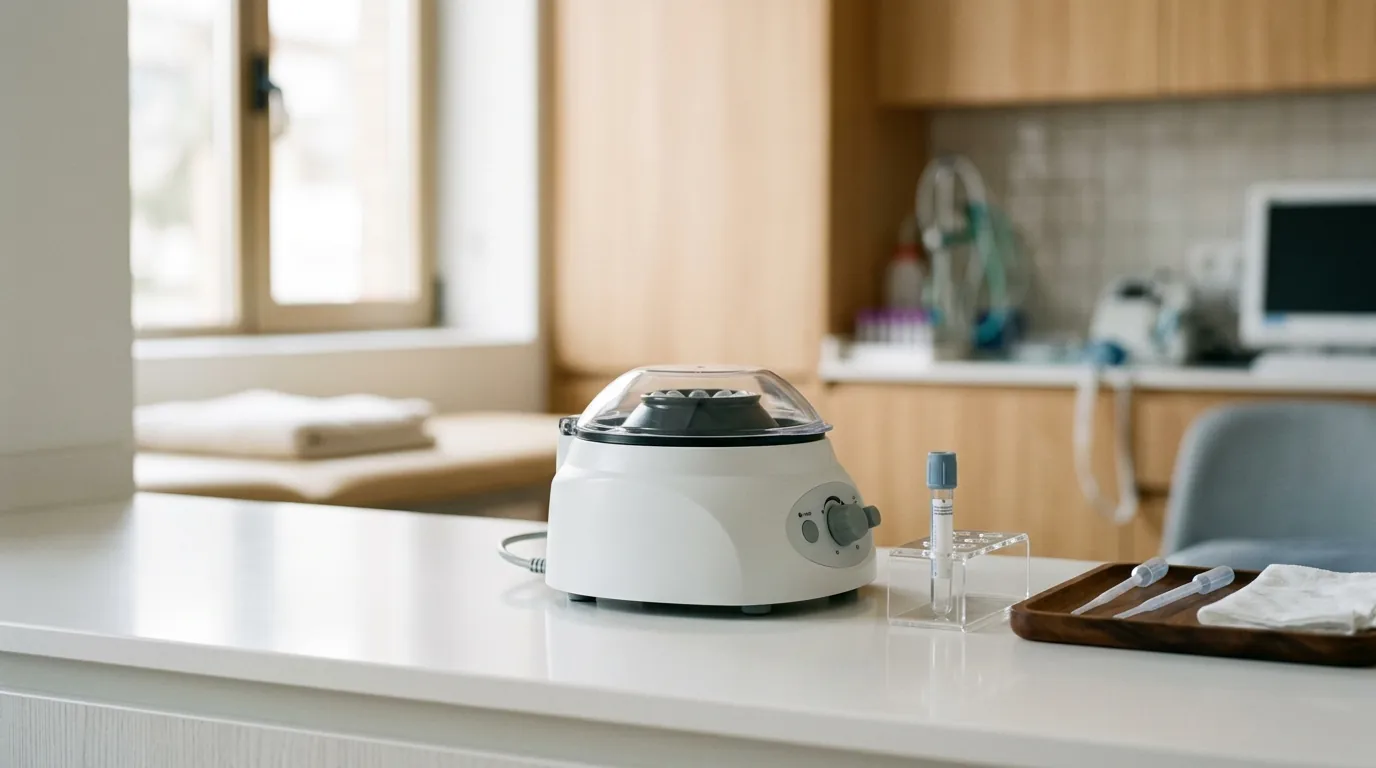
Platelet-rich plasma injection: a biological treatment obtained from your own blood for tendinopathies, meniscal lesions and early osteochondral lesions, with tailored medical indication.
What it consists of
A small amount of your own blood is drawn, centrifuged to separate the plasma with a high concentration of platelets, and injected into the area to be treated. Platelets release growth factors that participate in natural tissue repair processes. Since it is your own biological material, the risk of an allergic reaction or rejection is virtually non-existent.
Where it is used
- Chronic tendinopathies: patellar, Achilles, epicondylitis, rotator cuff.
- Meniscal lesions.
- Early or low-grade osteochondral lesions, both traumatic and degenerative (early-stage osteoarthritis).
- Plantar fasciitis that does not respond to other treatments.
- Certain muscle and ligament injuries, assessed on a case-by-case basis.
What the treatment is like
The entire session —extraction, preparation, and injection— takes around one hour, is performed under sterile conditions, and uses ultrasound guidance when indicated by the location. There is no single consensus protocol: the ideal approach is to inject the highest concentration of platelets possible, in one, two, or three sessions. Afterwards, it is normal to experience discomfort or inflammation for a few days; avoiding anti-inflammatory medication during this period is recommended, as it interferes directly with the process being stimulated.
What should be clearly understood
PRP does not regenerate worn cartilage or replace a prosthesis when osteoarthritis is advanced. The evidence is stronger for some indications than for others, which is why the decision is made during a consultation by assessing your individual case, reviewing imaging tests, and explaining what can be expected. Like other musculoskeletal treatments, it works best when accompanied by a therapeutic exercise programme.
Frequently asked questions
Does PRP regenerate cartilage?
No. It does not regenerate worn cartilage nor replace a joint replacement when osteoarthritis is advanced. It can help in early or moderate osteoarthritis and in chronic tendinopathies, and the evidence is stronger for some indications than others. This is explained case by case at the appointment.
Can it cause rejection or an allergic reaction?
It is a product obtained from your own blood, so the risk of an allergic reaction or rejection is practically non-existent. It is prepared and injected under sterile conditions, with ultrasound guidance when the location calls for it.
How many sessions are there and what is the recovery like?
Several sessions a few weeks apart are usually scheduled; each one lasts about an hour including the blood draw, the preparation and the injection. Afterwards it is normal to have discomfort or swelling for a few days, and it is best to avoid anti-inflammatories during that period because they interfere with the intended effect.
What should I avoid after platelet-rich plasma treatment?
Avoid anti-inflammatories in the following days, because they interfere with the biological response being sought, and do not overload the area for 48 hours. It is normal to feel discomfort or swelling during those days. Afterwards the prescribed exercise programme is resumed gradually.
Who cannot have platelet-rich plasma treatment?
It is not advised with an active infection in the area, clotting disorders or low platelets, significant anaemia, active blood or tumour disease, or during pregnancy. In poorly controlled diabetes or anticoagulant treatment it is assessed case by case.
Questions and comments
Ask the specialist who reviews this page or leave us a comment. Everything is reviewed before it is published.
To write, first confirm your email: we will send you a code.
Content reviewed by Dr Agustín Fernández Palomero