
Ear infections
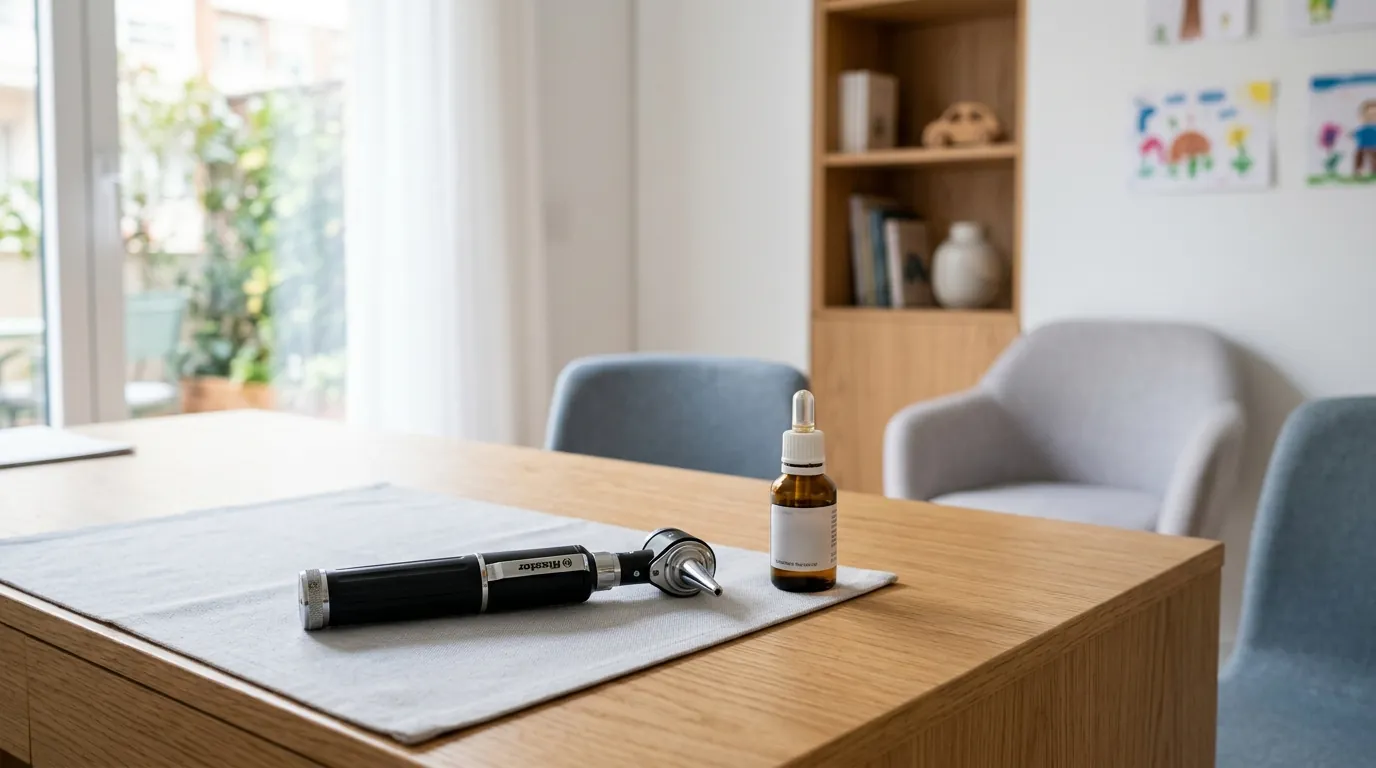
Diagnosis and treatment of middle and outer ear infections: eardrum examination and management of recurring ear infections in children and adults.
Not every ear infection is the same
- Outer ear infection (otitis externa): the ear canal becomes inflamed. It hurts a lot when you touch the ear or chew, and it's typical of summer and swimming pools — hence the name «swimmer's ear».
- Acute middle ear infection (otitis media): infection behind the eardrum, common in children after a cold. Intense pain, fever and sometimes discharge when the eardrum perforates, which often brings sudden relief from the pain.
- Middle ear fluid (otitis media with effusion): fluid behind the eardrum with no acute infection. It doesn't hurt, but it makes hearing worse; in children it's a very common, easily missed cause of speech delay or poor performance at school.
When to see us
Ear pain that won't ease, discharge, fever, hearing loss lasting days, ear infections happening several times a year, or a child who turns the volume up, doesn't respond when called, or speaks less clearly than expected for their age.
How it's investigated and treated
The basis is otoscopy: looking at the eardrum. Depending on the case it's completed with a hearing test and tympanometry. Treatment depends on the type: drops for outer ear infections — often after cleaning the canal first —, painkillers and antibiotics only when indicated for middle ear infections, and considering grommets for persistent fluid affecting hearing.
Prevention
Drying the ear well after bathing, not using cotton buds, treating rhinitis when present, and checking the hearing of children with recurring ear infections. If a blocked feeling remains after an infection, it's worth checking: fluid can remain behind the eardrum for weeks afterwards.
Frequently asked questions
Does every ear infection need antibiotics?
No. Otitis externa is treated mainly with drops and cleaning of the ear canal, and many cases of middle ear infection in children improve with pain relief and observation. Antibiotics are reserved for the cases where they are indicated, and that is decided by looking at the eardrum, not over the phone.
My child gets ear infections very often. Should anything else be done?
Yes: hearing should be checked and it should be assessed whether fluid remains behind the eardrum between episodes. That glue ear does not hurt but it does impair hearing, and in children it is a common and easily overlooked cause of delayed language or poor school performance.
How do you prevent swimmer's ear?
By drying the ear well after swimming, not using cotton buds and avoiding scratching the ear canal. In people who are prone to it, specific measures can be prescribed before the swimming season. If it hurts when you touch the ear or when chewing, it is best to seek advice early.
What should you avoid doing if you have an ear infection?
Inserting cotton buds or trying to clean the ear canal, getting the ear wet —no swimming pool or diving—, applying drops on your own if the eardrum is perforated, and self-medicating with leftover antibiotics. Dry local heat brings relief, but it is no substitute for having someone look at the eardrum.
How do you know if an ear infection is viral or bacterial?
It cannot be told apart by how it feels: the eardrum has to be looked at. High fever, intense pain that does not ease, discharge and getting worse after several days all point one way. That is why antibiotics are not prescribed "just in case": the decision is made after otoscopy, and many ear infections get better with pain relief alone.
Questions and comments
Ask the specialist who reviews this page or leave us a comment. Everything is reviewed before it is published.
To write, first confirm your email: we will send you a code.
Content reviewed by Dr Irene Mayorga Chamorro