
Earwax removal
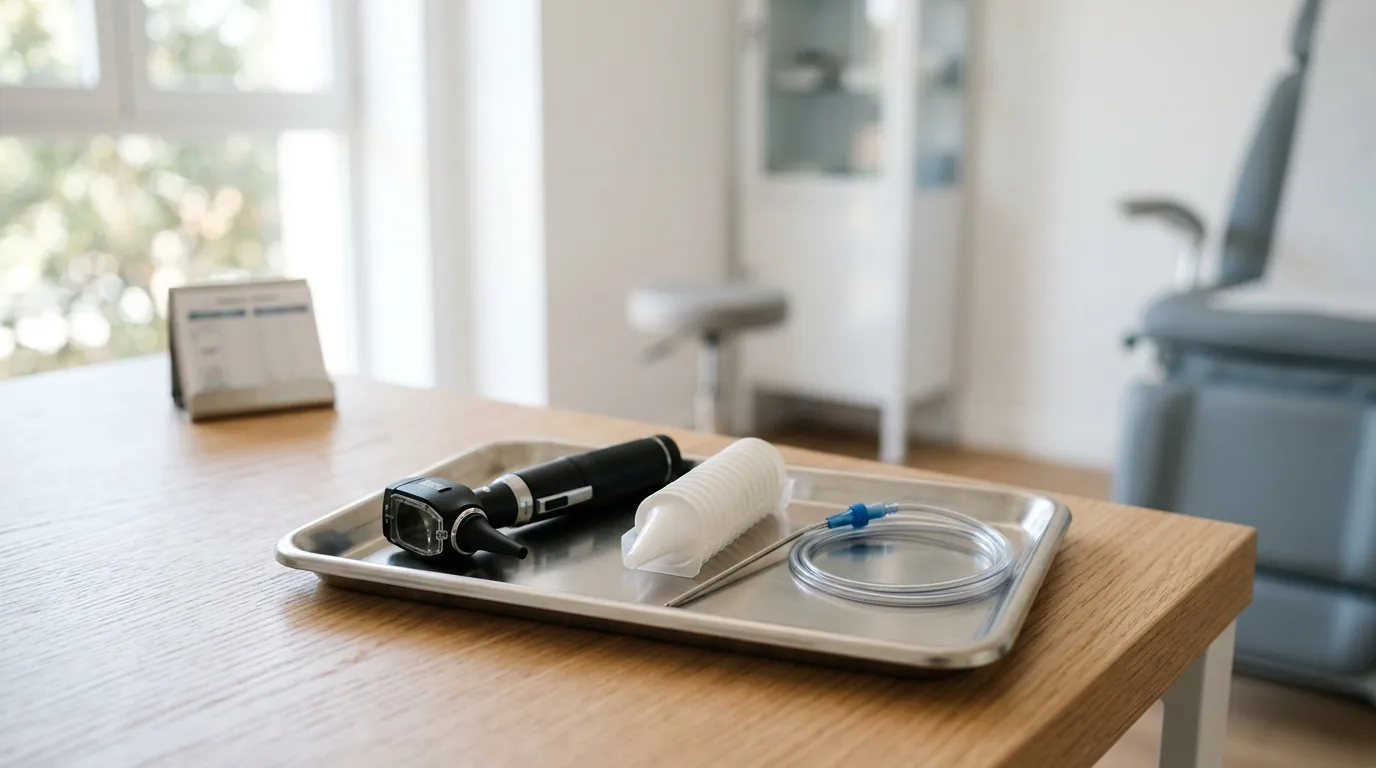
Removing earwax plugs at the clinic with an ENT specialist: suction or irrigation under direct vision, safe even with a perforated eardrum.
What earwax is and why it builds up
Wax is normal and protects the ear: it carries dirt out and keeps the canal in good condition. The problem starts when it builds up and blocks the canal. This is made worse by cotton buds — which push the wax further in and compact it —, by earphones and hearing aids, by narrow ear canals, and by how much wax each person naturally produces.
How it feels
- A blocked feeling and hearing less on that side.
- Ringing or buzzing.
- Hearing your own voice inside your head.
- Itching, discomfort or, sometimes, mild dizziness.
- A sudden worsening after showering or swimming: the wax swells with water.
How it's removed
At the clinic, under direct vision. Depending on the case, suction with a microscope or fine instruments is used, or irrigation with water at body temperature. Suction under direct vision is the technique of choice when there's a perforated eardrum, previous ear surgery or infection, because irrigation isn't safe in those cases. It's usually resolved in a single visit, with immediate relief.
Afterwards, and how to prevent it
Once the plug is removed, the eardrum is examined, since it was hidden behind it: sometimes there's an infection or perforation behind it that better explains the symptoms. To stop it happening again: no cotton buds, dry the outer ear well, and if you produce a lot of wax, use softening drops as directed and get checked regularly. If the ear stays blocked after removal, your hearing needs investigating.
Frequently asked questions
Can I remove it myself at home?
Cotton buds push the wax further in and compact it: they are usually the cause of the plug, not the solution. Ear syringes used without seeing inside the canal are not safe either, especially if there is a perforated eardrum or previous surgery. It is removed at the clinic under direct vision.
Does removal hurt?
It does not usually hurt. It is removed by suction and fine instruments under a microscope, or by irrigation at body temperature, depending on the case. You may notice some noise and an odd sensation as the ear unblocks; the relief is immediate.
The wax plug has been removed and I still can't hear well. Is that normal?
Once the wax is removed, the eardrum, which was hidden, can be examined, and sometimes behind it there is an ear infection or a perforation that better explains the symptoms. If the blocked-ear sensation persists, hearing needs to be assessed: not everything was down to the wax plug.
What happens if I don't have earwax removed?
It can keep compacting and make your hearing worse, with a blocked-ear sensation, ringing or even mild dizziness. It also makes it impossible to examine the eardrum, so it can mask an ear infection. It is not dangerous in itself, but it does not clear up on its own either: the longer it goes on, the harder it is to remove.
How long does it take to dissolve a wax plug?
Softening drops need several days of use and do not always remove it: they prepare the plug so it can be taken out comfortably. Removal at the clinic, by suction under direct vision or by irrigation, is completed in the same visit and the relief is immediate.
Questions and comments
Ask the specialist who reviews this page or leave us a comment. Everything is reviewed before it is published.
To write, first confirm your email: we will send you a code.
Content reviewed by Dr Irene Mayorga Chamorro