
Root canal treatment: saving the tooth instead of extracting it
Root canal treatment removes the infection from the nerve and preserves your natural tooth.
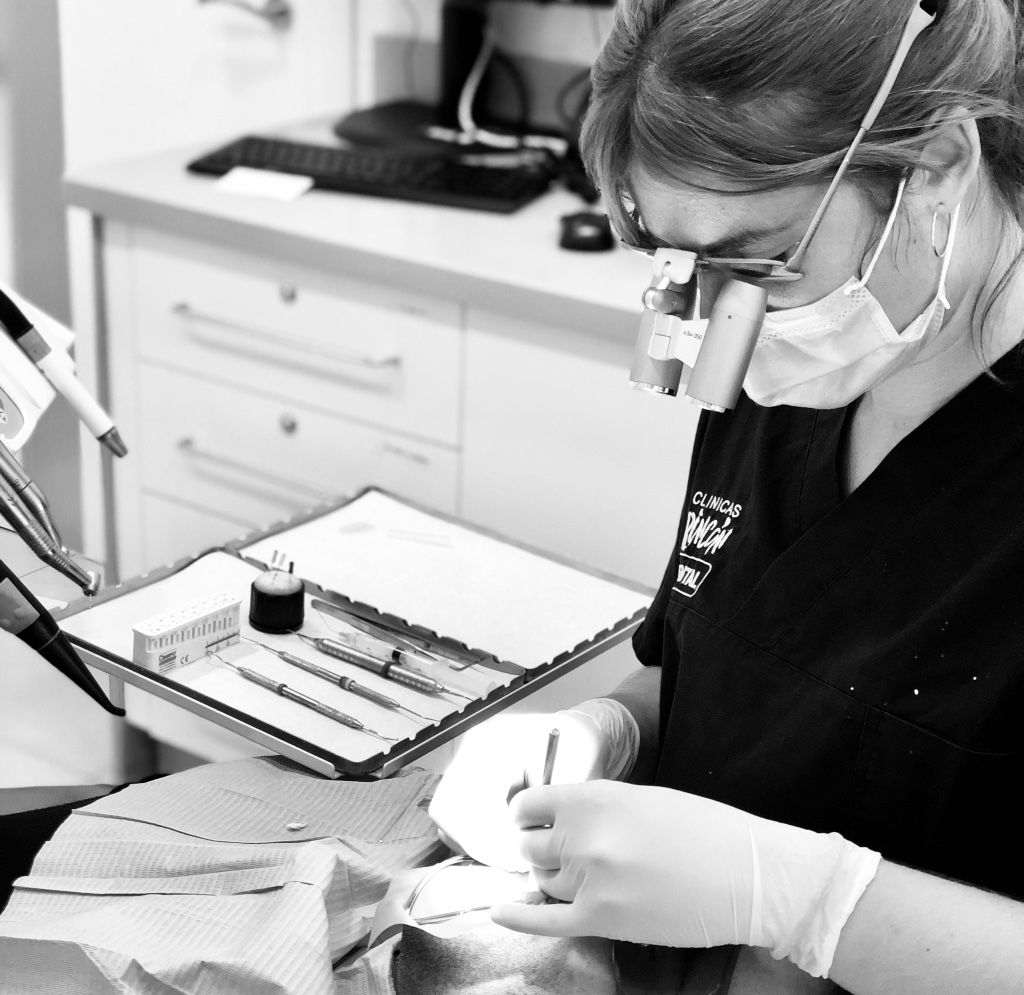
What root canal treatment is and why it saves the tooth
Inside every tooth there is a soft tissue, the pulp, which contains blood vessels and nerves. It runs through the crown and down inside the roots through very fine channels: the root canals. When deep tooth decay, a crack, or an injury allows bacteria to reach it, the pulp becomes inflamed or infected, reaching a point where it can no longer recover.
Endodontic treatment, or root canal treatment, consists of removing this damaged pulp, cleaning and disinfecting the inside of the canals, and sealing them to prevent the infection from returning. It is commonly referred to as "killing the nerve", although that expression does not do it justice: the goal is not simply to remove the nerve, but to preserve the tooth. Once treated, the tooth remains in place, anchored to the bone and supported by the surrounding tissues, and can continue to chew normally.
That is why the real alternative to root canal treatment is not "putting up with it", but extraction. And an extracted tooth leaves a gap that must later be addressed with an implant or a bridge. Whenever a tooth can be saved, trying to save it comes first.
When root canal treatment is needed
These are the most common signs that the pulp is affected:
- Pain that occurs spontaneously, without any trigger, or that wakes you up at night.
- Sensitivity to hot or cold that lingers for a while after the stimulus is removed.
- Pain when biting or touching the tooth.
- Swollen gums, a dental abscess, or a small pimple draining pus next to the tooth.
Sometimes there are no symptoms at all and the infection is discovered on a routine X-ray: the pulp has died without warning. Conversely, not all toothaches require a root canal: if the inflammation is mild and reversible, treating the decay and placing a filling may be enough. This distinction can only be made during a consultation, through an examination and an X-ray.
If the pain is severe or there is swelling, do not wait for a routine check-up: contact our emergency dental services.
Microscopic root canal treatment
The root canals of a tooth measure tenths of a millimetre and are not straight tubes: they curve, branch out, and sometimes narrow until they are almost closed. A canal that is not found cannot be cleaned, and this is the most common reason for a root canal treatment to fail over time.
At Clínicas Rincón Dental, Dr. Antonio Gutiérrez Bermúdez performs root canal treatments using an operating dental microscope: greater visibility inside the tooth, smaller access points that preserve healthy tooth structure, and the ability to attempt to save teeth that would have a poorer prognosis without magnification. We explain this in detail in microscopic endodontics.
Step-by-step treatment process
- Diagnosis. We ask you about the nature of the pain — when it occurs, how long it lasts, if cold relieves it —, examine the tooth, and take an intraoral X-ray to see its roots and the surrounding bone. In uncertain cases or complex anatomy, this is supplemented with a 3D dental scanner.
- Local anaesthesia. Applied only to the tooth and surrounding area.
- Isolation. A sheet of rubber (a dental dam) is placed around the tooth to work free of saliva, which carries bacteria, and to prevent cleaning liquids from entering the mouth.
- Access and cleaning. Through a small opening in the crown, the pulp is removed, the length of each canal is measured, and its interior is cleaned and shaped while flushing it with disinfectant solutions.
- Sealing. The cleaned canals are filled and sealed so that bacteria cannot recolonise them.
- Restoration. The tooth is sealed with a filling and, in many cases — particularly for molars —, protected afterwards with a crown or cap, because a root-treated tooth is more fragile.
Depending on the tooth and the severity of the infection, it is carried out in one or two appointments. Afterwards, a follow-up X-ray is taken to ensure the surrounding bone is recovering.
When a root canal treatment is not enough
Most teeth are successfully resolved with an initial root canal treatment, but there are cases that require additional care, which we also treat:
- Root canal retreatment: when a previous root canal treatment has failed, the material inside the canals is removed and they are cleaned, disinfected, and sealed again. This is where the microscope makes the biggest difference.
- Apicoectomy: minor surgery to remove the tip of the root and the surrounding infection when it cannot be resolved from within the tooth. It allows the tooth to be preserved without extraction.
- Young teeth with incompletely formed roots: in children and adolescents, specific procedures are performed (apexogenesis and apexification), in most cases using MTA, a biocompatible material that helps close the root end.
After root canal treatment
It is normal to feel some tooth sensitivity for a few days, particularly when biting. Until it is permanently restored, it is advisable to avoid chewing hard foods on that side. Below, in our frequently asked questions, we answer the most common queries: whether it hurts, how long a root-treated tooth lasts, or why a crown is sometimes necessary.
Frequently asked questions
Does root canal treatment hurt?
With today's anaesthetics the treatment is practically painless; in fact it usually takes away the pain you arrived with. Afterwards it is normal to feel discomfort and sensitivity when biting for a few days, which settles with painkillers. What hurts is the infection, not the root canal.
Is it worth saving the tooth or is it better to extract it?
Almost always it is worth saving: root canal treatment preserves your own tooth and its root, and long-term survival is very high. Extraction later forces you into an implant or a bridge, which cost more and are never quite the same as a natural tooth.
Why am I told I need a crown afterwards?
Because a root-treated tooth loses part of its structure and becomes more fragile, especially in the case of molars. The crown or onlay spreads the force of chewing and prevents fracture, which is the most common reason for losing an already treated tooth.
What should you avoid after root canal treatment?
Do not chew on that side until the tooth has been restored, because an open or temporarily filled tooth fractures easily. Avoid very hard and sticky foods, do not force dental floss over the temporary restoration and do not put off the crown appointment: fracture of an unprotected root-treated tooth is the most common reason for losing it.
How long does a root-treated tooth last?
Many years, and often a lifetime. Studies show very high survival rates beyond two decades when the canal is well sealed and the tooth is protected with a crown. What shortens its life is usually not the root canal, but fracture from not restoring it or new decay at the margin.
How much does root canal treatment usually cost?
It depends on the tooth: an incisor with a single canal does not cost the same as a molar with three or four, nor does a first root canal cost the same as a retreatment. To the quote you have to add the subsequent restoration and, in molars, the crown. At the appointment the case is assessed with an X-ray and a written quote is given before starting.
Areas within this specialty
Articles in this specialty

Root canal treatment: what it is and when it's needed to save a tooth
Root canal treatment makes it possible to keep teeth that used to be extracted. What a root canal is, when it's indicated, and wha…