
Paediatric dentist
First visit, tooth decay in primary teeth, paediatric orthodontics and free PADI check-up.
Paediatric dentistry
Children's oral health must be protected from a very early age. To this end, paediatric dentists are responsible for diagnosing, treating and preventing any problems that may occur in young children's mouths.
It is essential to obtain a diagnosis during early childhood, as this allows problems that may arise during the eruption of primary teeth (baby teeth) to be prevented. In later stages, the consequences could be genuinely severe.
At our paediatric dental clinic, we focus on offering parents the peace of mind they need so that their little one enjoys their first visit to the paediatric dentist.
Which conditions are frequently treated in paediatric dentistry?
Bacterial infections
Pus-filled infections in a child's mouth — a dental abscess or a small bump on the gum next to a tooth — almost always result from untreated tooth decay or an injury that has damaged the tooth's nerve. They should be assessed and treated as soon as possible.
Putting dirty hands in the mouth is not the cause of these pus-filled infections, although it can encourage other viral or bacterial infections. That is why we emphasise handwashing; however, a dental abscess is prevented by treating tooth decay in time.
Bruxism
Many children grind their teeth at night. This is called bruxism and can be caused by stress in some cases. It can lead to tooth pain and wear on the tooth surface. In children, it is important to find out the cause: your dentist will assess it and decide if treatment is necessary.
What treatments are used in paediatric dentistry?
Correction of tooth alignment
The paediatric dentist will perform a comprehensive examination of the patient's teeth and jaws to detect any potential bite issues. Depending on the findings, treatment may involve orthodontics or dentofacial orthopaedics. Dentofacial orthopaedics is part of orthodontics and allows bone and bite issues to be corrected while the child is growing. In adults, it is not always possible to correct the bite when the cause is skeletal and was not treated early: in some cases, orthognathic surgery is required.
Dental cleaning
In addition to reaching every corner of the mouth and reducing the chances of tooth decay at Rincón Dental, we perform a professional cleaning that helps little ones learn essential advice to improve their oral hygiene.
PADI
Orthodontics and orthopaedics in children
Treatments for children
Children's orthopaedics and orthodontics
Within paediatric dentistry, dentofacial orthopaedics focuses on correcting developmental abnormalities in facial bones. The aim is to avoid, in most cases, the need for surgical intervention on the maxilla or mandible.
Dentofacial orthopaedics is just as important as, or even more important than, children's orthodontics, although it is less widely known.
In paediatric dentistry and orthodontics for children, the earlier the better. It is of great importance for children to visit the dentist at an early age so they get used to annual check-ups and treatments.
It is of great importance for children to visit the dentist at an early age so they get used to annual check-ups and treatments
ORTHOPAEDICS IN CHILDREN
Dentofacial orthopaedics focuses on facial development; that is, it is responsible for guiding facial growth using functional or removable appliances.
Dentofacial orthopaedics is applied in growing children when facial structures are fully developing, although orthodontics can be applied at any age.
The stage preceding the placement of braces, when needed, is of great importance as it will facilitate treatment and achieve a better final result. For all these reasons, it can be described as preventive orthodontics for children.
ORTHODONTICS IN CHILDREN
Orthodontics for children is needed when there is a malocclusion or bad bite, that is, when teeth are not properly aligned.
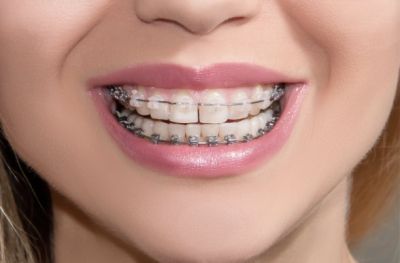
In these cases, it is corrected using children's braces, thereby achieving proper tooth alignment and restoring functional and aesthetic morphological normality.
Metal braces are not always the best option: each child is assessed individually and the type of appliance is decided after an initial study. Clear aligners are increasingly used in children because they make hygiene easier and cause fewer sores and irritation.
In our centres, we offer metal braces in different colours.
Our professionals use various child psychology techniques to prevent fears and phobias.
BRACES FOR CHILDREN
Our professionals use various child psychology techniques to prevent fears and phobias
Frequently asked questions
At what age should a child first visit the dentist?
Around the first year of age, or as soon as the first teeth come through. The first visit is mainly to check, to give guidance on hygiene and diet and to let the child get to know the practice without fear, not to treat anything.
Do baby teeth need fillings if they are going to fall out anyway?
Yes. Decay in a baby tooth hurts, becomes infected and can damage the permanent tooth coming through underneath, as well as affecting chewing and the space for the permanent teeth. Losing them too early usually ends in orthodontic problems.
How do I stop my child from being afraid?
By not planting the idea of pain — no "it won't hurt" — and by bringing them for check-ups when nothing is wrong, so the practice is not only associated with emergencies. At the clinic we use age-appropriate language and short visits at the beginning.
What is the difference between a dentist and a paediatric dentist?
The paediatric dentist is the dentist who specialises in treating children: they understand the development of the teeth and jaws, adapt treatments to the child's age and work on behaviour and fear management. The practical difference lies not only in technique, but in how they communicate with the child and the family.
How is a child's behaviour managed in paediatric dentistry?
With simple techniques and without deception: explaining each step in words the child understands, showing the instruments before using them, starting with short visits and no treatment, praising what they do well and making the first contacts pleasant. Promising that "it won't hurt" when it may be uncomfortable is what breaks trust.
Areas within this specialty
Articles in this specialty
Children's dentist: the first visit and how to overcome fear
At what age should you take your child to the dentist for the first time? What we do in pediatric dentistry, why baby teeth matter…
Questions and comments
Ask the specialist who reviews this page or leave us a comment. Everything is reviewed before it is published.
To write, first confirm your email: we will send you a code.
Content reviewed by Ms Belén Guerrero Ruano