
Dentures and prosthetics
Fixed, removable and implant-supported dentures: which option suits you, how to care for it and how long it lasts.
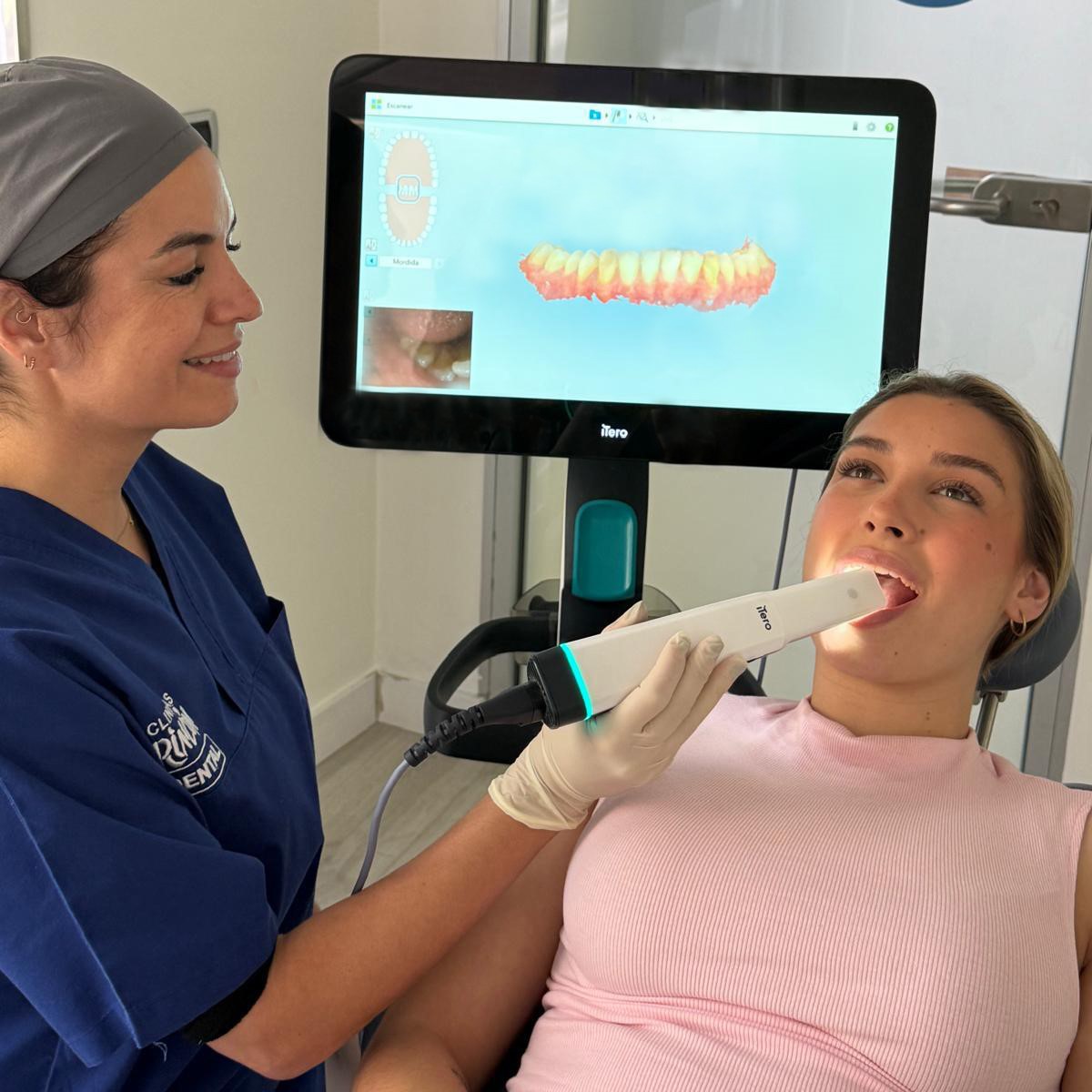
What a dental prosthesis is
A dental prosthesis is a device that replaces one or more missing teeth, or a full set of teeth. Its role goes far beyond appearance: restoring chewing, keeping speech clear and stopping the remaining teeth from shifting into the gaps. The choice between the different types depends on how many teeth are missing, the state of the teeth and bone, and each patient's preferences, so it always starts with an examination.
Fixed or removable: the first big decision
Fixed prosthesis
Crowns and bridges are cemented or screwed in place and aren't taken out of the mouth. A conventional bridge rests on the patient's own neighbouring teeth, which need to be healthy and are shaped to act as supports. Chewing feels very similar to natural teeth.
Removable prosthesis
This is the classic denture, partial or complete, which the patient takes out to clean and, generally, to sleep. It rests on the gum and, where teeth remain, on those too, using clasps. It's a simpler, more affordable solution, though it's less stable than a fixed prosthesis and usually needs a period of adjustment.
Implant-supported prosthesis
When several teeth or a full set are missing, implants let the prosthesis anchor to the bone without relying on other teeth. There are two main variants: an implant-supported fixed prosthesis, which only the dentist can remove, and an overdenture, removable but anchored to the implants, with far more stability than a conventional denture. If you'd like to know how the process works, we explain it in detail on the implantology page.
Is there such a thing as fixed dentures without implants?
It's worth being clear about this: a full fixed denture needs implants to hold it in place. When no teeth remain, there's nowhere to anchor a fixed prosthesis other than the bone itself, and that's exactly what the implant provides. Fixed bridges without implants do exist, but only for partial gaps, and at the cost of shaping healthy neighbouring teeth. If you've seen advertising for «fixed dentures without surgery», it's usually removable dentures with better retention, not fixed prostheses. If in doubt, ask — we'd rather explain your real options than create expectations that don't hold up.
Caring for a prosthesis, and how long it lasts
A well cared-for prosthesis can last many years, though the exact figure varies by type, materials and use. These habits help it last longer:
- Daily hygiene: brushing the prosthesis and the teeth or gums it rests on.
- For removable prostheses, clean it outside the mouth with specific products, not abrasive toothpaste.
- Regular check-ups: the gum and bone change over time, and removable prostheses may need adjusting or relining to keep fitting well.
- Don't try to repair a broken prosthesis at home or use household glue; if it cracks or hurts you, call us as a dental emergency and we'll try to see you as soon as possible.
If you're missing teeth or your current prosthesis no longer fits well, book an appointment at any of our clinics across Málaga, the Axarquía and the Costa del Sol: we'll assess your case and suggest the right options, along with their pros and cons.
Frequently asked questions
What types of dental prosthesis are there?
Fixed ones —crowns, bridges and implant-supported prostheses— and removable ones, which are taken out to clean: complete or partial with a metal framework. The choice depends on how many teeth are missing, on the bone and the gum, and on what each person is looking for.
How long does it take to get used to a removable denture?
In the first few weeks it is normal to notice bulk, more saliva, some rubbing and difficulty speaking or eating. It is adjusted at check-ups —sore spots are eased, not endured— and adaptation is usually complete within a few weeks, eating soft, cut-up food at first.
How do you clean a denture?
By taking it out after meals and brushing it with neutral soap or a specific paste, never with abrasive toothpaste. It is kept damp and cleaned with the recommended tablet or solution. And the mouth is brushed too: gums, palate and tongue.
How often does it need to be checked?
At least once a year. Gums and bone change over time and the denture stops fitting: sore spots appear and stability is lost. A timely reline prevents ulcers and extends the life of the denture.
Which dental prosthesis is the most comfortable?
The fixed one on implants, because it does not move, does not cover the palate and lets you bite with far more force. Among removable options, the metal-framework partial denture is usually more comfortable and stable than a full acrylic one. The most comfortable one for you depends on the bone, the gum and how many teeth are missing: it is decided after the examination.
What is a fixed denture without implants?
It is a bridge attached to your own teeth: the neighbouring teeth are prepared and the prosthesis is cemented onto them. It is fixed, but it requires grinding down healthy teeth and it does not stop the bone loss where the root is missing. When there is enough bone, an implant is usually preferable for that very reason.
Which is better, a flexible or an acrylic denture?
The flexible one is more comfortable at first and its clasps are less visible, but it fits less well in the long run and is difficult to reline or repair. Acrylic or metal-framed dentures allow adjustments and last longer. The choice depends on whether it is a temporary or a definitive solution and on how many teeth are missing.
Areas within this specialty
Articles in this specialty
Types of dental prosthetics: which one is right for you
Fixed, removable or implant-supported: the types of dental prosthetics available, how they're custom-made and what maintenance eac…