
Bruxism, night guard and sleep apnoea
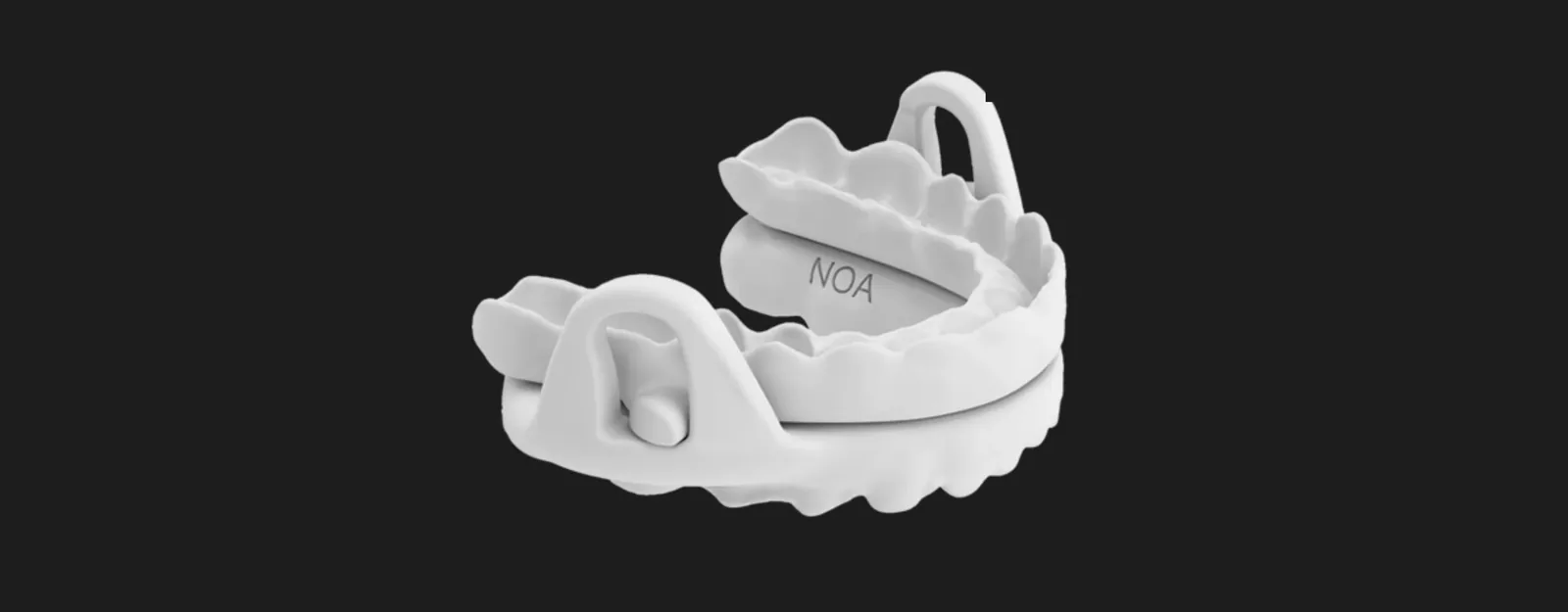
Michigan splint for bruxism and the OrthoApnea intraoral device for snoring and sleep apnoea.
Bruxism: the Michigan splint
Bruxism is the habit of clenching or grinding your teeth. To treat it, we use the Michigan splint, a specific occlusal splint for bruxism that is used at least for sleeping. It can also be worn at other times of the day.
- Protects your teeth: prevents them from wearing down when clenching or rubbing them against each other.
- Relaxes the joint and muscles: relieves pressure on the jaw joint, relaxing the muscles while you sleep.
The splint requires regular check-ups at the clinic; your dentist will tell you how often.
OrthoApnea is a patented intraoral device that is specially indicated for the treatment of snoring and sleep apnoea.
It works by controlled advancement of the jaw during the night to facilitate the passage of air, eliminating snoring and improving apnoea.
Clinical studies guarantee the good results of this treatment
OrthoApnea provides the patient with full freedom to move their mouth thanks to opening, lateral movement and millimetric advancement.
OrthoApnea consists of two splints joined together by a millimetrically adjustable fitting system that allows a controlled, comfortable advancement of the jaw by increasing muscle tone in the airway.
Orthoapnea facilitates the passage of air, eliminating snoring and improving apnoea episodes
Frequently asked questions
What role does the dentist play in sleep apnoea?
Making and adjusting the mandibular advancement device, a custom splint that moves the lower jaw slightly forward during sleep and opens up the airway space. It is a recognised treatment for snoring and for selected mild and moderate apnoea.
Does it replace CPAP?
Not in general. In severe apnoea, CPAP remains the best-supported treatment; the device is considered in mild or moderate cases, or in people who cannot tolerate CPAP. The indication is set by the sleep study, not by preference.
Is it uncomfortable to sleep with the splint?
During the first few days it is common to feel discomfort in the jaw, more salivation or an odd sensation on waking; people usually adapt within one or two weeks. It requires check-ups to adjust the advancement and to confirm that the bite is not being altered.
What are the side effects of a mandibular advancement device?
During the first days it is common to feel discomfort in the jaw or the joint, excess saliva or a dry mouth, and an odd sensation on waking. In the long run there can be small changes in the bite, which is why there are regular check-ups to monitor it and adjust the advancement.
Which oral appliance is effective for sleep apnoea?
The one shown to be effective is the custom-made, adjustable mandibular advancement device, not the standard off-the-shelf splints from the chemist nor the night guards for bruxism, which do not bring the lower jaw forward. Whether it is indicated depends on the sleep study: it is used for snoring and for mild or moderate apnoea, or when CPAP is not tolerated.
Articles in this specialty

Bruxism: symptoms, causes and treatment
Do you clench or grind your teeth without realizing it? Learn to recognize bruxism, why it happens and how it's treated, starting …
Dr Fernando Rincón Granados ·
Questions and comments
Ask the specialist who reviews this page or leave us a comment. Everything is reviewed before it is published.
To write, first confirm your email: we will send you a code.
Content reviewed by Dr Manuel Díaz Cano