
Tratamientos
Published on
Does root canal treatment hurt? What you feel during it and afterwards
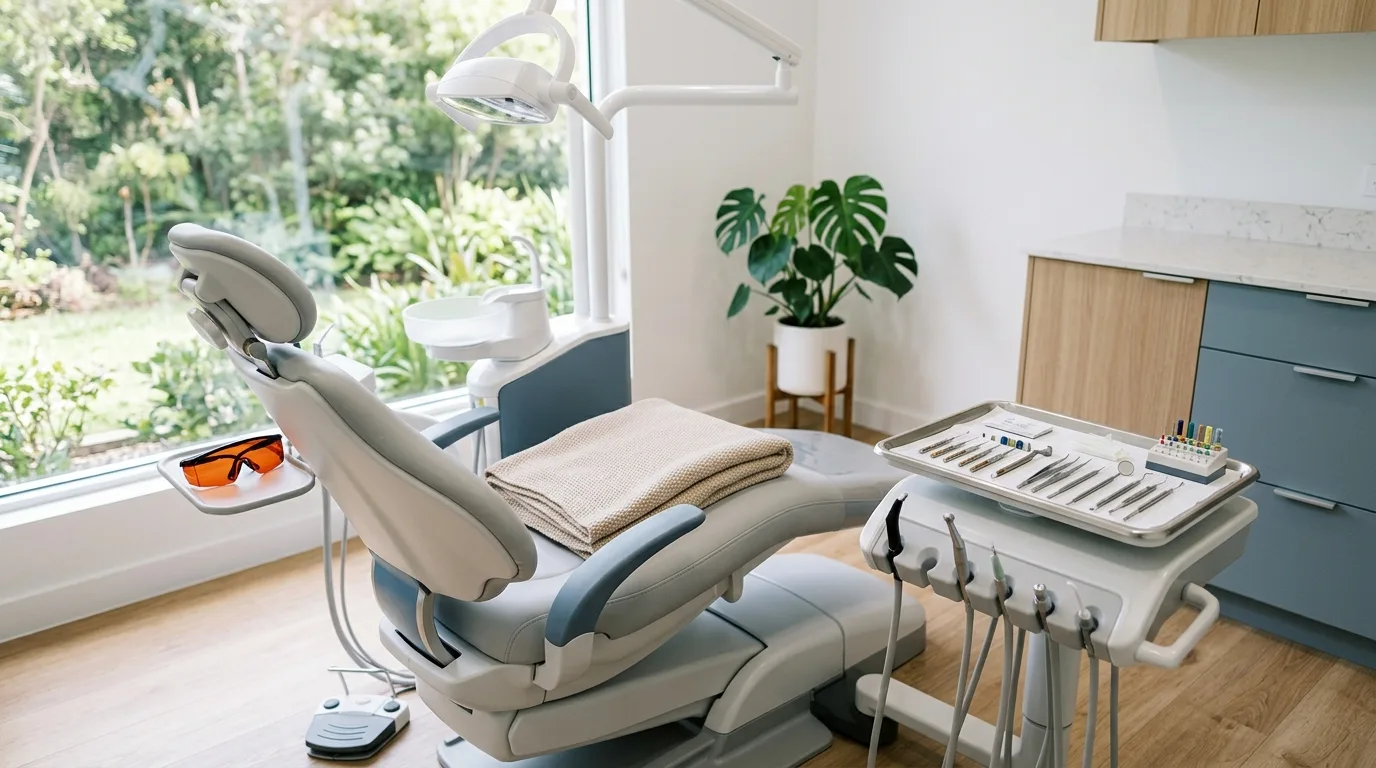
Does root canal treatment hurt? What you feel with the anaesthetic, what pain after a root canal is normal and which signs mean you should go back.
During treatment: local anaesthetic
Root canal treatment, also known as endodontic treatment, is carried out under local anaesthetic, the same kind used for a filling. The tooth and the area around it are numbed, and during treatment you will usually notice pressure, vibration or the noise of the instruments, but no pain. If you'd like to know what the procedure involves, we explain it in root canal treatment: what it is and when it's needed.
There is one situation in which the anaesthetic can struggle to work: when the tooth is very inflamed and is hurting a lot at that moment. Inflamed tissue responds less well to anaesthetic, and this is particularly noticeable in some lower molars. It isn't unusual and it can be dealt with: the dentist can wait a few minutes for it to take effect, top up the anaesthetic or apply it closer to the tooth using additional techniques.
The important thing is to tell the dentist if you feel pain at any point. There's no need to put up with it: the dentist stops, tops up the anaesthetic and carries on.
It also helps to know how the work is done. The tooth is isolated with a sheet of rubber, called a rubber dam, so you won't swallow any liquid or debris, and you can ask for breaks if you need to rest your jaw. Depending on the tooth and its condition, the treatment is done in one session or two.
The pain beforehand: it's caused by the inflamed nerve, not the treatment
Much of the bad reputation of root canal treatment comes from a misunderstanding. People who come in for a root canal have often been in pain for days: pain that comes on by itself, wakes you at night, flares up with cold or heat and takes a while to go, or throbs when you bite. That pain is caused by the inflamed or infected pulp inside the tooth, what is known as the nerve, not by the treatment.
Root canal treatment removes precisely that damaged tissue, cleans the canals from the inside and seals them. That's why, in many cases, the severe pain from before clearly improves after treatment. What may linger for a few days is something else, and milder, which we explain below.
Some root canals are also done without any previous pain: teeth whose nerve has died without warning and where the infection shows up on an X-ray at a check-up. Treating them in time stops the infection from progressing and ending up as a dental abscess.
Pain after a root canal: what's normal in the following days
After a root canal it's common for the tooth to feel sensitive or sore when you bite for a few days. It isn't the nerve, which is no longer there, but the tissues around the tip of the root, which have been irritated by the infection and by the cleaning of the canals itself. You can expect this discomfort to:
- Be mild or moderate, more like the soreness after a knock than the pain you had before.
- Be felt mainly when chewing or touching the tooth.
- Ease off day by day.
To make it easier to cope with:
- If your dentist recommends a painkiller, follow their instructions. Don't self-medicate or take antibiotics on your own initiative: they are only prescribed by the professional when they are needed.
- Chew on the other side until the tooth has been permanently restored. A root-filled tooth with a temporary filling is fragile and can break.
- Avoid very hard or sticky foods on that side.
- Keep up your oral hygiene as normal, being gentle around the treated area.
When to go back to the dentist
Some signs are not part of normal recovery and should be checked as soon as possible:
- Pain that gets worse over the days instead of improving, or that doesn't ease with what your dentist has recommended.
- Swelling of the gum or face.
- Fever or feeling generally unwell.
- A feeling that your bite is high on that tooth: sometimes a small adjustment is all it takes for it to stop bothering you.
- Your temporary filling has come out or broken.
- Any reaction that seems allergic after taking a medicine.
Occasionally, in the days after treatment, the pain and swelling flare up again. It isn't usual and it can be brought under control, but it needs attention: that's why it's best not to wait and see if it goes away on its own.
Pain months or years later: causes and root canal retreatment
A well-done, well-restored root canal can last many years without causing any trouble. But if a root-filled tooth starts hurting again after some time, it needs to be checked. The most common causes are:
- Reinfection of the canals, for example because there was a canal that was hard to locate or because bacteria have got back in.
- Leakage through a filling or crown that no longer seals properly, or new decay at the edge.
- A crack or fracture in the tooth or root, more likely if the tooth wasn't protected as it needed to be.
- A problem with the gum around the tooth, which can be mistaken for toothache.
An examination and an X-ray can show what is going on. If the problem is inside the canals, the tooth can often be treated again with root canal retreatment: the old material is removed, and the canals are cleaned again and resealed. Retreatment is also done under local anaesthetic, and what we said about discomfort in the following days applies just the same.
One thing worth remembering: a root-filled tooth no longer has a nerve, so it gives no warning through sensitivity to cold or heat. It can have decay or an infection without hurting, which is why check-ups are important.
If it's the dentist's chair that scares you: conscious sedation
For some people, the hard part isn't the pain but the anxiety: the noise, keeping your mouth open for a long time, the feeling of not being in control. If that's you, say so before you start. Having each step explained, agreeing on a signal to stop or splitting the treatment into shorter appointments helps a lot.
If you have toothache
Severe toothache, or toothache that keeps coming back, doesn't go away on its own, and the longer you leave it, the more complicated the treatment becomes. An assessment with an examination and an X-ray will show whether you need a root canal or whether another treatment will do. In our endodontics unit we explain what is happening with your tooth and what options there are to save it.
Based on reliable sources
Prepared by our team from the references listed below. This is general information and does not replace a consultation.
Article pending review by one of our dentists.
References (4)
- NHS. Root canal treatment Open
- American Association of Endodontists (AAE). Root Canal Pain & Comfort Open
- MedlinePlus (Biblioteca Nacional de Medicina de EE. UU.). Tratamiento de conductos: MedlinePlus enciclopedia médica Open
- Yadav S (2015). Anesthetic success of supplemental infiltration in mandibular molars with irreversible pulpitis: A systematic review Open