
Orthodontics with braces: the benchmark option
Metal and ceramic braces for crowding and complex bites, with a prior assessment.
Who it's still the best option for
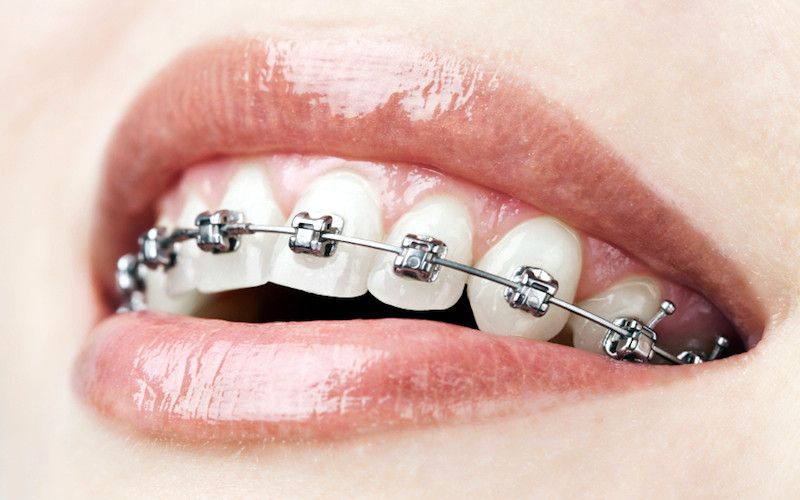
Orthodontics with braces is the system with the longest clinical track record for correcting tooth position and bite. Although it now sits alongside clear aligners, it remains the benchmark option in many cases: severe crowding, pronounced rotations, complex bite corrections and, generally, movements that require very precise control of each tooth.
It also has a practical advantage: being a fixed appliance, it works continuously and doesn't depend on the patient's discipline. That's why it's still often recommended for teenagers and for long treatments, where taking an aligner in and out every day can compromise the result.
Metal braces or ceramic braces
The way they work is the same; what changes is the material and, with it, how discreet they are:
- Metal braces are the most widely used: small, strong and effective for all kinds of movements.
- Ceramic braces are made from materials that match the colour of the tooth, so they're much less noticeable when you talk.
What if I'd rather nothing shows at all?
For cases where appearance is the priority and the diagnosis allows it, invisible orthodontics with aligners is the alternative. Neither is better in the abstract: some movements are better resolved with braces, and in others aligners achieve an equivalent result with more comfort.
The first step: the orthodontic assessment
The system isn't chosen off a menu — it follows an assessment with an examination, X-rays and bite records. The diagnosis produces the treatment plan, and the plan the most suitable appliance. If you'd like to have your case assessed, book an appointment and we'll take that first step.
Frequently asked questions
At what age can braces be fitted?
There is no upper age limit: more and more adults have treatment, and teeth move just the same if the gums and bone are healthy. In children, the first orthodontic check-up is recommended at around 6 or 7 years of age, not to fit an appliance, but to see how the jaws are growing.
How long does treatment with braces take?
The usual range is between 18 and 30 months depending on complexity, with check-ups every four to six weeks. The duration is estimated at the initial assessment and adjusted as treatment progresses: not every mouth responds to movement in the same way.
Do braces hurt?
In the first days after fitting and after each adjustment it is normal to feel pressure and sensitivity when biting, which eases within a few days. They may also rub the cheek at first: this is solved with orthodontic wax while the mouth gets used to them.
What can't I eat with braces?
Nothing very hard or sticky: ice, whole nuts, very crusty bread, chewy sweets or chewing gum. Everything else can be eaten by cutting it into small pieces. A loose bracket is not an emergency, but it is best to let us know so it can be reattached soon.
Areas within this specialty
Articles in this specialty
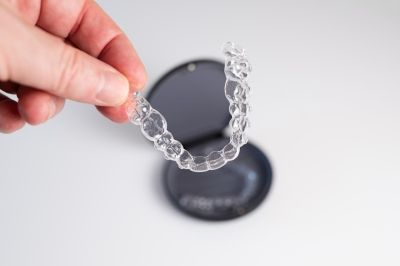
Complete guide to invisible orthodontics: aesthetics and health without braces
How clear aligners work, their advantages over braces, how long treatment takes, and who they're suitable for.
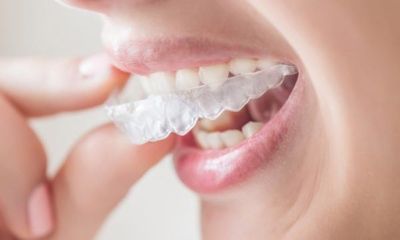
Invisible orthodontics with Spark: how it works step by step
From 3D scanning to aligners: how Spark invisible orthodontic treatment works, how long it takes and what advantages it has over b…
Questions and comments
Ask the specialist who reviews this page or leave us a comment. Everything is reviewed before it is published.
To write, first confirm your email: we will send you a code.
Content reviewed by Miriam Illescas Megías