
Gums: gingivitis and periodontitis
Healthy gums don't bleed: diagnosis, scaling and periodontal surgery to stop the disease in time.
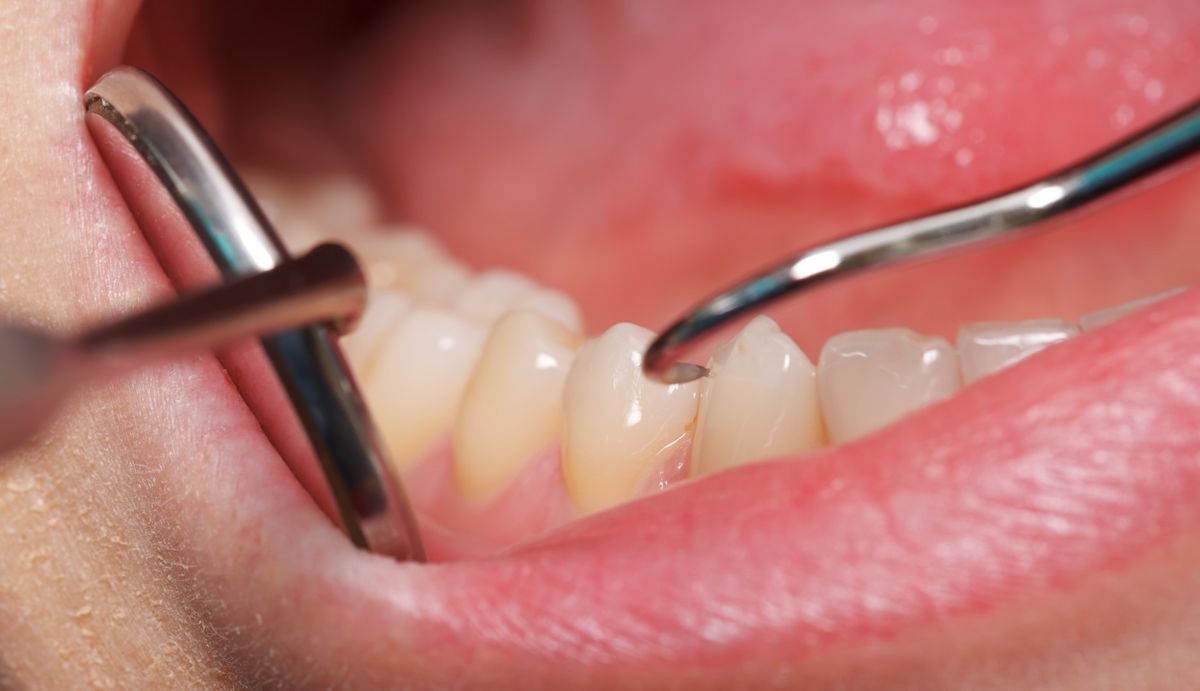
Bleeding gums aren't normal
Healthy gums don't bleed. If blood appears when you brush or floss, it's most likely inflammation caused by a build-up of bacterial plaque between the tooth and the gum. That first stage is gingivitis: red, swollen gums that bleed easily. The good news is that, treated in time, it's reversible.
From gingivitis to periodontitis
If the inflammation continues, bacteria move below the gumline and the problem stops being superficial: the bone that holds the teeth in place starts breaking down. This is periodontitis, and its signs are receding gums, persistent bad breath, sensitivity and, in advanced stages, loose teeth. Unlike gingivitis, lost bone doesn't recover on its own: the aim of treatment is to stop the disease and stabilise it to keep the teeth.
Why it's best not to leave it
Periodontal disease usually progresses without pain, which makes it easy to play down bleeding gums for years. The earlier it's diagnosed, the simpler the treatment: early stages usually just need professional hygiene and deep cleaning, while advanced stages may require periodontal surgery. After that, regular maintenance is what prevents relapse.
Periodontal surgery and frenula
Periodontics also covers minor procedures on the soft tissue of the mouth. The most common is a frenectomy, used when a lip or tongue frenulum restricts movement or causes gum problems.
If your gums bleed or you notice any of these symptoms, book an appointment: a timely periodontal check-up can save you a much bigger treatment later.
Frequently asked questions
Does a dental cleaning wear away the enamel?
This is one of the most common fears. The professional answer is a firm “no”. Ultrasonic tips are designed to vibrate at a frequency that breaks up tartar but respects the mineral structure of the tooth. In our clinics, patient safety is our ethical priority.
Can I have a scale and polish if my gums bleed?
If your gums bleed, that is precisely when you need it most. Bleeding is a sign of gingivitis (inflammation caused by bacteria). A deep cleaning will remove the source of infection and allow the gum tissue to heal.
Is it normal for my gums to bleed when I brush?
No. A healthy gum does not bleed. Bleeding is the first sign of inflammation caused by bacterial plaque, and stopping brushing that area for fear of bleeding makes the problem worse. It is a reason for a check-up, not for waiting to see if it passes.
What is the difference between gingivitis and periodontitis?
Gingivitis is superficial inflammation of the gum and it is reversible with cleaning and good hygiene. Periodontitis appears when the infection progresses to the bone that supports the tooth: at that point the damage can no longer be fully recovered and the aim becomes stopping it.
Can periodontitis be cured?
It is controlled, which is not the same thing. Treatment eliminates the infection and halts bone loss, but the bone already lost does not come back on its own, and the disease tends to reactivate if maintenance is abandoned. That is why periodic check-ups are part of the treatment.
Can you lose a tooth because of your gums even if it has no decay?
Yes, and it is the leading cause of tooth loss in adults. The tooth can be perfect and still work loose because the bone holding it has disappeared. It tends to give little warning: bleeding, bad breath, receding gums or teeth that move or drift apart.
Areas within this specialty
Articles in this specialty

Periodontal disease: symptoms and gum treatment
Bleeding or receding gums and bad breath: how periodontal disease progresses, how it is diagnosed and which treatments stop it in …
Dr Manuel Díaz Cano ·