
Implantology: get your fixed teeth back
Digital planning and guided surgery, from a single implant to complex cases with zygomatic implants.
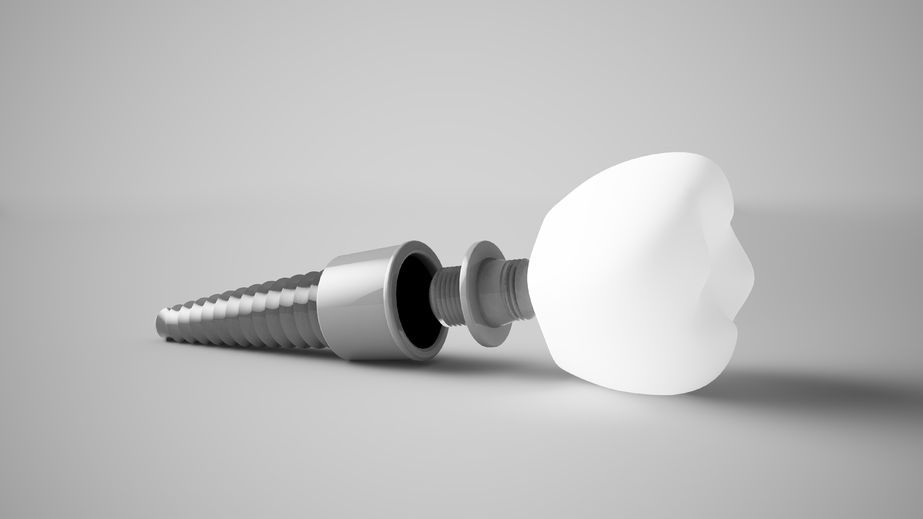
What is implantology
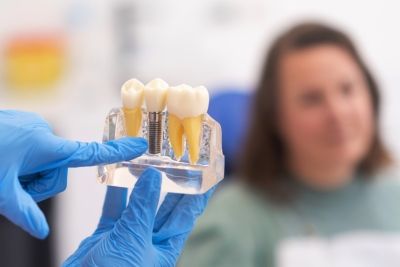
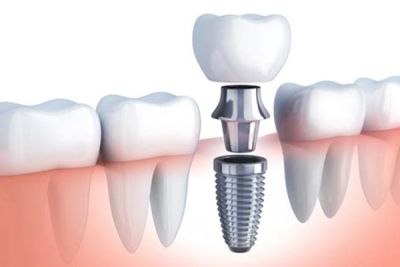
Implantology is the branch of dentistry that replaces missing teeth with implants: titanium posts placed into the maxilla (upper jaw) or mandible (lower jaw) bone that act as a root. Once the implant has fused with the bone, a crown, bridge, or full prosthesis is fixed onto it, so the new tooth remains fixed and functions like a natural one.
Here is an overview: who they are suitable for, what benefits they offer, and which treatment fits each case. The step-by-step details of the implant procedure itself are explained in dental implants.
Who can get a dental implant
Implants are indicated for anyone who has lost one or more teeth, or is going to lose them, and wants to restore a fixed set of teeth. Before recommending them, a thorough evaluation is carried out, focusing primarily on three factors:
- Bone volume. There must be sufficient volume to support the implant. If bone is lacking, it can often be regenerated or alternative implants anchored in other bone areas can be used.
- Gums. They must be healthy. If there is gum disease, it is treated first, because the same infection that caused the tooth loss can later affect the implant.
- General health and habits. Certain medical conditions, treatments, and smoking affect how the bone heals, which is why they are reviewed in the medical history before making a decision.
The assessment is supported by a 3D dental scan, which reveals the actual amount of bone available and the exact location of nerves and the maxillary sinus.
Advantages over a bridge or removable denture
- Adjacent teeth remain untouched. A conventional bridge relies on neighbouring teeth, which must be prepared or shaved down even if healthy. An implant is self-supporting.
- It is fixed. Unlike a removable denture, it does not move when speaking or eating and does not cover the palate.
- It helps preserve bone. When a root is missing, the surrounding bone gradually reabsorbs; the implant takes its place and helps prevent this bone loss.
This does not mean it is always the best option: a fixed prosthesis supported by natural teeth or a removable prosthesis still have their place when bone availability, overall health, or patient preferences advise it.
What the process involves
- Examination and planning. Clinical assessment, 3D scan, and digital planning of how many implants are needed and where. Any gum treatment or bone regeneration required is performed beforehand.
- Placement. Carried out in the clinic under local anaesthesia. Guided surgery is used when appropriate for the case.
- Integration. The implant requires a few months to integrate with the bone. In certain cases, a temporary prosthesis can be worn in the meantime.
- Definitive prosthesis. A custom-made crown, bridge, or full prosthesis.
- Maintenance. Home hygiene and regular check-ups at the clinic, which are the main factors ensuring the long-term success of the implant.
Which treatment fits each case
The solution depends on how many teeth are missing and how much bone remains:
- Single tooth implant or implant-supported bridge, to replace one tooth or several adjacent teeth.
- Full-mouth implants, when all teeth in a dental arch are missing or cannot be saved: a full fixed prosthesis supported by several implants.
- Sinus lift, to gain bone height in the upper molar region, prior to implant placement or during the same procedure.
- Zygomatic, pterygoid, and transnasal implants, for upper jaws with severe bone loss: they anchor into areas of firm bone — the cheekbone, posterior maxilla, or nasal cavity margin — and, in selected cases, enable fixed teeth without requiring a prior bone graft.
Computer-guided surgery
Guided surgery is used to place implants with maximum precision. Using the dental scan, the data is loaded into planning software that generates a full-scale 3D model of the mouth, allowing the exact position of each implant to be planned prior to surgery.
Based on this plan, a custom surgical template is fabricated to fit the patient's anatomy, reproducing in the mouth the position simulated on the computer and guiding implant placement.
In suitable cases, it allows implants to be placed without opening the gum or placing sutures, making the procedure simpler, shorter, and more comfortable. As it is a minimally invasive technique, post-operative discomfort and swelling are usually reduced, allowing a quicker return to daily and work life.
Frequently asked questions
Does having a dental implant placed hurt?
Placement is done under local anaesthetic, so you feel no pain during the procedure. Afterwards discomfort and swelling are normal, most intense between 24 and 48 hours, and are well controlled with the prescribed painkillers and usually settle within two or three days.
How long does a dental implant last?
With good hygiene, regular check-ups and no smoking, an implant can last many years and often a lifetime. What usually fails first is not the screw, but the gum and bone surrounding it: that is why periodic periodontal maintenance is part of the treatment, not an extra.
How long is it from having the implant placed until I have the tooth?
It depends on the bone and the technique. A few months usually pass between placement and the final crown, the time the implant needs to integrate into the bone. In some selected cases a temporary prosthesis can be fitted beforehand, so you are not left without a tooth.
What does the price of an implant depend on?
On whether a bone graft or sinus lift is needed, the number of implants, the type of crown and the prior tests. That is why there is no single price: the case is assessed with a 3D scan and a written quote is given before anything starts.
Areas within this specialty
Articles in this specialty
Peri-implantitis: what it is, how it is detected and how to prevent it
What peri-implantitis is, how it differs from peri-implant mucositis, the symptoms, how it is diagnosed and treated, and the habit…
Dental implant failure and ‘rejection’: warning signs and why it happens
Can your body reject a dental implant? What dental implant failure really means, signs to get checked, why it happens and whether …
How long do dental implants last? What affects their lifespan
How long dental implants last, why the crown usually needs replacing before the implant, what shortens their lifespan and what mai…
Dental implants: process, benefits and care
How long a dental implant lasts, what care extends its lifespan, and which signs of infection or peri-implantitis should be checke…
Dental implants
Implantology with guided surgery and 3D diagnostics: what the dental implant process looks like and what to expect from treatment.

What is a dental implant and when is it fitted?
A dental implant replaces the root of a missing tooth. What exactly it is, when it's indicated, and what role the crown and the bo…
Based on reliable sources
Prepared by our team from the references listed below. This is general information and does not replace a consultation.
Content pending review by one of our dentists.
References (4)
- SEPA (Sociedad Española de Periodoncia y Osteointegración) · Cuida tus encías (2021). ¿Qué son los implantes dentales y quién es candidato a este tratamiento? Open
- SEPA (Sociedad Española de Periodoncia y Osteointegración) · Cuida tus encías (2024). Cuidados y mantenimiento de implantes dentales: garantizando una sonrisa saludable y duradera Open
- Herrera D et al. (European Federation of Periodontology) (2023). Prevention and treatment of peri-implant diseases—The EFP S3 level clinical practice guideline Open
- Tahmaseb A et al. (2018). The accuracy of static computer-aided implant surgery: A systematic review and meta-analysis Open