
Invisible orthodontics: straighten your teeth unnoticed
Custom-made Spark aligners: comfortable, discreet and with proven results.
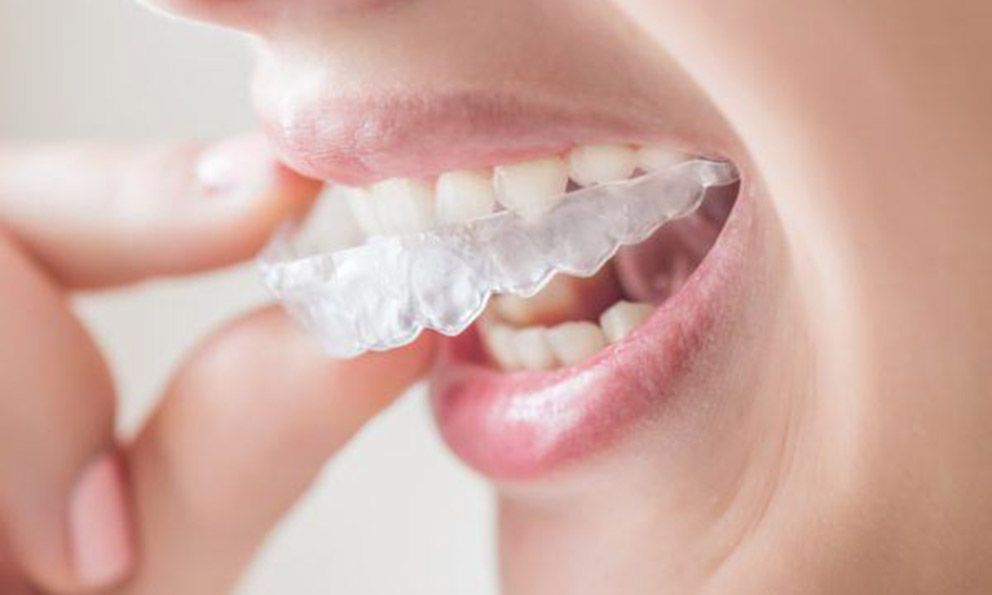
We work with Spark
At Clínicas Rincón Dental, invisible orthodontics is carried out with Spark, and our orthodontists are trained and accredited in this system.
Spark aligners are made from TruGEN™, a clear material developed specifically for aligners, and the patented three-layer ClearQuartz™ material. They're designed to fit the tooth more closely, show less and stain less than conventional aligners.
Each set is custom-designed from a digital scan of the mouth, with the full movement of every tooth planned before treatment begins.
What does invisible orthodontics involve?
It's one of the most popular options for correcting problems such as crowding or other dental issues like overbite. This invisible orthodontic treatment at any Rincón Dental clinic will make a real difference to your day-to-day life by giving you a cleaner, more attractive smile. That, in turn, means better self-confidence and how others perceive you.
The breakthrough in this treatment came from replacing traditional braces with splint-shaped aligners that do the same job while being barely noticeable. If you're considering invisible orthodontics in Torremolinos, for example, you'll first need an assessment carried out by our specialists, who will look after your oral health at every stage.
What do invisible orthodontics specialists do?
When you need to know whether you're a candidate for invisible orthodontics, our specialists will simply review the necessary information. They'll then guide you on the steps to follow. Today, invisible orthodontics in Rincón de la Victoria offers many advantages:
A minimally invasive treatment with barely any pain. This tends to appear at the start, though the most common symptoms are mild discomfort during the first few days. The result achieved with invisible orthodontics is very natural-looking and almost unnoticeable.
With the right professionals, there's little margin for error and timelines can be predicted well, as it's a very well-studied technique.
Frequently asked questions
Is invisible orthodontics painful?
Invisible orthodontics is one of the least painful systems available today. The specialists at Rincón Dental will take care of giving you the best treatment.
How many hours a day do you have to wear the aligners?
Between 20 and 22 hours a day. They are only taken out to eat, to drink anything other than water and for brushing. This is where the result is most decided: a treatment with poorly worn aligners drags on and stops matching the planning.
Can people tell you are wearing invisible braces?
The aligners are transparent and at normal conversational distance they go unnoticed. What can be seen are the small tooth-coloured attachments bonded to some teeth so that the aligner can apply the necessary force.
Does it work for any case?
It resolves most crowding, spacing and many bite problems, but not every case: there are complex movements where braces remain more predictable. At the initial study you are told frankly which option best fits your case.
Does invisible orthodontics hurt?
It does not usually hurt, but it is normal to feel pressure and discomfort in the first days with each new aligner, easing off within a couple of days. It tends to be more bearable than braces because there are no metal parts rubbing against the cheek.
Which is better, invisible orthodontics or braces?
It depends on the case and on you. Aligners are more comfortable, more discreet and easier to keep clean, but they demand discipline: 20-22 hours a day. Braces do not depend on your consistency and remain more predictable for complex movements. At the initial study you are told which option gets you to your result more reliably, not which one sells best.
What are the drawbacks of invisible orthodontics?
That the result depends on how many hours a day you wear them; that you have to take them out to eat and to drink anything other than water; that they require visible tooth-coloured attachments on some teeth; and that for certain complex movements braces are still more effective. It is also common to feel pressure during the first days with each new aligner.
Which is more expensive, invisible orthodontics or braces?
As a general rule, invisible orthodontics works out somewhat more expensive than metal braces, with aesthetic braces in between. The difference depends on the expected duration and the complexity of the case, not on the material itself. At the first visit the study is carried out and the quote is provided in writing, with the options that suit your case.
How long does treatment with aligners take?
The average is between 12 and 18 months, with straightforward cases resolved in less and complex ones that can reach 24. The duration depends on the movement required and, above all, on how many hours a day the aligners are worn.
Can I eat with the aligners in?
No. They are taken out to eat and to drink anything other than water, especially coffee, tea or soft drinks, which stain them. Afterwards you need to brush before putting them back in: otherwise food stays trapped against the tooth for hours.
What happens if I lose an aligner?
Let the clinic know as soon as possible. Depending on the stage of treatment, you will be told to go back to the previous one or move on to the next until it is replaced. What you should not do is go several days wearing nothing: teeth tend to drift back to their old position.
Do you have to wear retainers afterwards?
Yes, and it is non-negotiable. Once orthodontic treatment is finished, teeth tend to shift back; the retainer —fixed, removable or both— is what consolidates the result. It is the number one reason why a well-executed treatment relapses years later.
Who is not suitable for clear aligners?
Anyone who is not going to wear the aligners for the required number of hours is the first case: without consistency they do not work. On top of that, there are significant skeletal malocclusions, very complex movements or teeth with compromised periodontal support where other options are indicated. Active gum disease has to be treated before starting any orthodontic treatment.
Does invisible orthodontics change the shape of your face?
Orthodontics moves teeth and in doing so can alter lip support and the smile, particularly in cases with significant crowding or badly altered bites. It is not facial surgery: the changes are subtle and generally favourable. If the goal is a change of profile, that is assessed separately and sometimes involves orthognathic surgery.
Which is faster, aligners or braces?
There is no fixed winner: the duration is set by the movement that needs to be achieved. In mild cases aligners can be very quick; in complex cases braces usually finish sooner. What does lengthen any aligner treatment is not wearing them for the prescribed number of hours.
Areas within this specialty
Articles in this specialty
Complete guide to invisible orthodontics: aesthetics and health without braces
How clear aligners work, their advantages over braces, how long treatment takes, and who they're suitable for.
Invisible orthodontics with Spark: how it works step by step
From 3D scanning to aligners: how Spark invisible orthodontic treatment works, how long it takes and what advantages it has over b…