
Dental implants
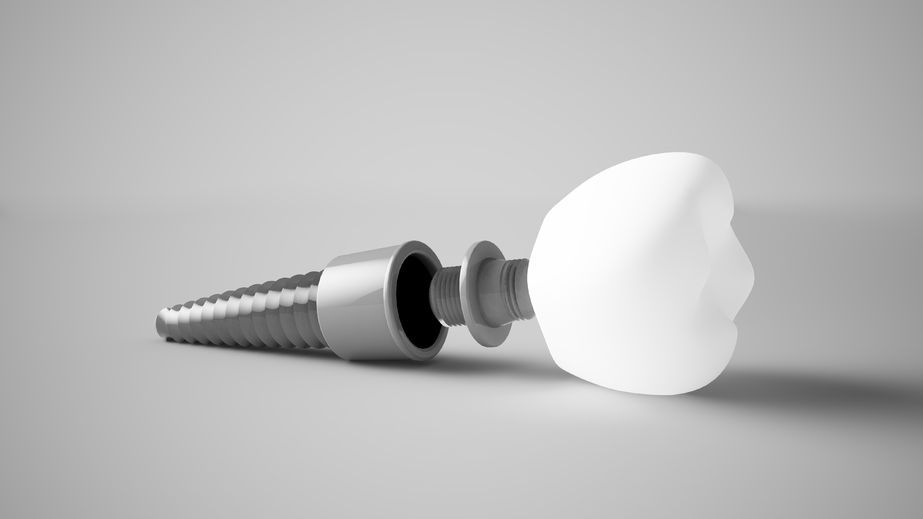
Titanium pieces anchored to the jawbone that replace the root of the lost tooth and support the new crown. How they integrate and what they make possible.
Dental implant treatment is the technique that anchors hypoallergenic metal pieces to the upper or lower jawbone to replace the natural roots of the teeth, acting as a kind of artificial root. Once these anchor points have integrated firmly, crowns can be fitted onto them. The purpose of these metal pieces is to replace teeth lost for various reasons, providing the best possible foundation for recovering your best smile.
Osseointegrated implants are ideal for anyone who wants to improve their oral health and appearance by recovering lost teeth, with full function and an excellent look
Titanium is the material used; its properties make it biocompatible, which means it can integrate perfectly with the body, especially where the bone is healthy
The dental implant is anchored inside the bone, providing a stable support onto which crowns or full arches are later fitted to replace missing teeth.
Osseointegrated implants achieve an ideal replacement for lost teeth, but that is not the most remarkable part: the technique offers a natural appearance and function that comes close to perfect.
How dental implants are placed
1. PLANNING
During this stage the patient undergoes all the assessments and tests needed to determine exactly the characteristics of their teeth and oral anatomy. This is when the number of teeth to be replaced and their size are established, along with the exact type of implant required in each case.
2. SURGERY
This is the crucial moment, the point at which the implants are fixed in place. Local anaesthetic is required. It is a procedure that causes no pain at all. The clinician may consider it appropriate to prescribe oral painkillers to support the procedure.
Once the procedure is complete, a soft diet must be followed for a certain period, and you may also need to take antibiotics and/or anti-inflammatories to reduce the risk of infection or discomfort afterwards; this will be prescribed by the clinician.
3. INTEGRATION
Over some eight to twelve weeks the implants become fixed in the bone.
This period prepares the way for the final pieces to be fitted.
A temporary prosthesis may be needed to cover any functional or aesthetic gap in the meantime.
4. FITTING THE PROSTHESIS
Once the implant that will serve as the base is firmly in place, a series of measurements and impressions are taken to determine the final result precisely. With this information, the definitive prostheses are made in the laboratory. There are three possible scenarios: crowns, a full fixed arch, or an overdenture.
This is where all the simulations and try-ins take place to complete the process, and when everything is right the prosthesis is fitted at the dental clinic.
5. MAINTENANCE
Once the dental implants have been placed, it is essential to attend the scheduled check-ups regularly, where the progress of the treatment can be assessed. Thorough oral hygiene following the specialist's guidance is required. You also need to attend each of the appointments scheduled for you.
The success of this procedure depends on keeping to the six-monthly check-ups and on careful cleaning of the mouth and teeth.
Frequently asked questions
Can I have an implant if I don't have enough bone?
In many cases yes, using regeneration techniques: a bone graft or a sinus lift to restore the volume needed. The 3D scan is what tells us how much bone there really is and whether this is necessary. When there is very little bone at the back, there are also alternatives such as zygomatic implants.
Can your body reject an implant?
There is no immune rejection as there is with a transplant: titanium is biocompatible. What can happen is that it fails to integrate into the bone or that it is lost years later through a gum infection (peri-implantitis), strongly associated with smoking and with a lack of maintenance.
What care does an implant need?
The same as a tooth and a little more: brushing, interdental brushes or a water flosser, and periodic maintenance appointments to clean the area below the gum. An implant cannot decay, but the gum around it does get infected if it is neglected.
What are the risks of a dental implant?
The main ones are failure to integrate into the bone, infection of the surrounding gum (peri-implantitis) and, in the lower jaw, injury to the dental nerve if the planning is not done properly. They are minimised with a prior study using a 3D scan, careful technique and, afterwards, hygiene and check-ups. Smoking is the factor that increases the risk the most.
Which is better, a denture or an implant?
The implant fixes the tooth to the bone: it does not move, it does not cover the palate and it preserves the bone better, since bone is resorbed when the root is missing. A removable denture is cheaper, requires no surgery and is the answer when the bone or general health make implants inadvisable. The decision is made by assessing bone, gums, the number of missing teeth and expectations.
What happens after 20 years with dental implants?
A well-integrated, well-maintained implant can still be working beyond 20 years. What usually needs replacing sooner is the part on top: the crown or the prosthesis wears down and is replaced. The long-term risk lies in the gum: without regular periodontal maintenance, peri-implantitis can appear and bone can be lost around it.
Related articles
Dental implants: process, benefits and care
How long a dental implant lasts, what care extends its lifespan, and which signs of infection or peri-implantitis should be checke…
Dental implants
Implantology with guided surgery and 3D diagnostics: what the dental implant process looks like and what to expect from treatment.

What is a dental implant and when is it fitted?
A dental implant replaces the root of a missing tooth. What exactly it is, when it's indicated, and what role the crown and the bo…