
Tratamientos
Published on
Dental implant failure and ‘rejection’: warning signs and why it happens
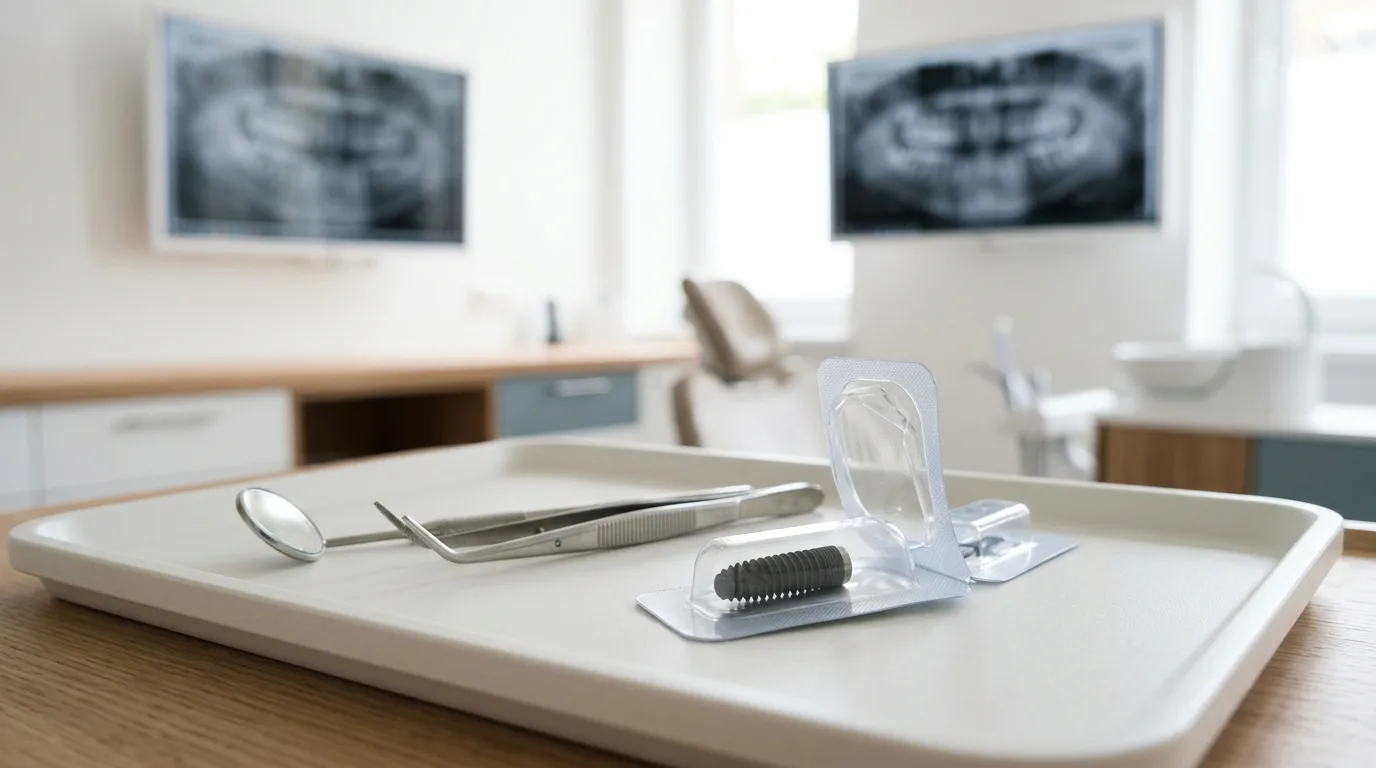
Can your body reject a dental implant? What dental implant failure really means, signs to get checked, why it happens and whether it can be replaced.
Can your body reject a dental implant? What ‘rejection’ really means
The word ‘rejection’ comes up a lot when talking about dental implants, but it can be misleading. It makes you think of what happens with a transplanted organ, when the immune system recognises it as foreign and attacks it. With implants, that is not what usually happens.
An implant is an artificial root, usually made of titanium, that is placed in the bone. Over the following weeks and months, the bone grows in direct contact with its surface and holds it firmly in place. This process is called osseointegration, and it is what then allows a crown or a fixed prosthesis to be fitted on top.
When someone says their body has ‘rejected’ an implant, one of these two things has almost always happened:
- The implant never integrated with the bone.
- The implant integrated, but over time it lost the bone that held it in place, because of an infection of the surrounding tissues or excessive load.
What about titanium allergy?
Titanium is a biocompatible material: the body tolerates it well, which is why it has been used for decades in dental implants and in other prostheses and plates placed in bone. Cases of hypersensitivity to titanium have been described, but they are exceptional, and when an implant fails there is usually another explanation. It's not that the allergy doesn't exist; it's that it is rarely the cause. If you have a history of allergy to metals, mention it during the initial assessment so the specialist can take it into account.
Warning signs that need checking
Some discomfort is normal in the days after surgery: a little pain, swelling or a small bruise that gets better day by day. What is not normal, and should be checked, is:
- Pain that doesn't ease or that gets worse after the first few days, instead of getting better.
- Swelling that comes back or increases, especially if it comes with a fever.
- Bleeding or pus around the implant.
- Movement: feeling that the implant, the crown or the prosthesis is moving.
- A bad taste in the mouth or a bad smell in the area that won't go away.
Although it has nothing to do with rejection, there is another sign you should report straight away: tingling or numbness of the lip or chin that persists once the anaesthetic has worn off, after implants have been placed in the lower jaw.
None of these signs on its own tells you what is happening. That requires an examination of the area and, usually, an X-ray.
Early and late implant failure
Specialists distinguish between two points at which an implant can fail, and each has different causes:
| Early failure | Late failure | |
|---|---|---|
| When | Before the implant integrates: in the weeks or months after surgery, usually before the permanent crown is fitted. | When the implant had already integrated and had its crown or prosthesis. It can appear months or years later. |
| What happens | The bone never bonds to the implant, which ends up surrounded by soft tissue and is not held firmly. | The implant gradually loses the bone that held it in place. |
| Common causes | Infection of the area, poor initial stability of the implant, insufficient or poor-quality bone, excessive trauma to the bone during surgery, smoking or loading the implant too early. | Peri-implantitis (inflammation of the gum and bone around the implant) and overload from bruxism or from a prosthesis that distributes the bite poorly. |
| How you notice it | Discomfort that doesn't ease, swelling or movement; sometimes it is picked up at a check-up, with no symptoms. | Bleeding, pus, receding gums and, eventually, movement. It usually progresses without pain. |
Peri-implantitis is one of the main causes of late failure. It starts as inflammation of the gum and, if it is not treated, spreads to the bone. Regular check-ups are there precisely to detect it before the implant starts to move.
Why do dental implants fail? The factors that matter most
No implant is free of risk, but that risk is not the same for everyone. These are the factors that come up most often:
- Smoking. It reduces the blood supply to the gum and bone, hinders healing and is linked to more implant failures. Stopping smoking before surgery and during integration helps.
- Hygiene. The plaque that builds up around the implant is behind most infections of the surrounding tissues.
- Poorly controlled diabetes. It slows down healing and makes infections more likely. You can have implants if your diabetes is well controlled; the important thing is that your doctor and your dentist know about it.
- A history of periodontitis. Anyone who has lost teeth to gum disease needs to have it under control before surgery, and closer follow-up afterwards.
- Bruxism and overload. Clenching or grinding your teeth, or a prosthesis that distributes the bite poorly, puts forces on the implant that can compromise its hold or damage the prosthesis.
- Bone quantity and quality. That is why the initial assessment with a 3D scan is so important: it shows whether there is enough bone or whether it needs to be regenerated first.
Some general illnesses and treatments also play a part, such as radiotherapy to the head or neck or certain bone medications. Always mention them at your first appointment, even if they seem unrelated to your mouth.
What to do if something doesn't feel right, and why you shouldn't wait
- Book an appointment without waiting for your next check-up, and explain what you have noticed and since when.
- Don't take antibiotics on your own initiative or use ones left over from a previous occasion: they may bring relief for a few days and mask the problem without solving it.
- Keep the area clean, gently, even if it bleeds. Stopping cleaning makes the inflammation worse.
- If the prosthesis moves, don't force it or try to adjust it yourself: sometimes it's just a loose screw, which can be sorted out at the clinic.
Waiting almost never helps. A gum problem caught in time usually has a simple treatment; advanced bone loss calls for more complex treatment and can end with the implant having to be removed.
Can a failed dental implant be replaced?
In many cases, yes. When an implant fails, it is removed, the area is cleaned and left to heal. After a period of time, which depends on each case, the available bone is assessed again.
Before trying again, the most important thing is to understand why the first one failed. If it was smoking, hygiene, overload or lack of bone, that needs to be corrected so it doesn't happen again. Sometimes bone loss means the bone has to be regenerated before the new implant is placed; in the back of the upper jaw a sinus lift may be needed. And when the upper jaw has lost a lot of bone after implants or grafts that didn't work, there are alternatives such as zygomatic implants, which are anchored in the cheekbone.
Maintenance: what protects an implant most
An implant needs the same care as a natural tooth, and a little more:
- Careful brushing twice a day and cleaning between your teeth with interdental brushes or a water flosser.
- Check-ups and professional cleaning as often as you are advised, which is usually more frequent if you have had gum disease or if you smoke.
- A night guard (occlusal splint) if you clench or grind your teeth.
- Letting your dentist know about any change in your general health or your medication.
At check-ups the gum is examined and the bone is monitored with X-rays, which makes it possible to detect problems long before they cause symptoms.
If you have questions about an implant
If you have an implant and something isn't going as you expected, or if you are worried about the risk of failure before having one fitted, the best thing is to have it assessed at the clinic. In our dental implant unit we look at each case and explain the real risks and how to reduce them.
Based on reliable sources
Prepared by our team from the references listed below. This is general information and does not replace a consultation.
Article pending review by one of our dentists.
References (4)
- Sicilia A et al. (2008). Titanium allergy in dental implant patients: a clinical study on 1500 consecutive patients Open
- Chrcanovic BR et al. (2015). Smoking and dental implants: A systematic review and meta-analysis Open
- Do TA et al. (2020). Risk Factors related to Late Failure of Dental Implant-A Systematic Review of Recent Studies Open
- Herrera D et al. (European Federation of Periodontology) (2023). Prevention and treatment of peri-implant diseases—The EFP S3 level clinical practice guideline Open