
Full mouth implants (All-on-4)
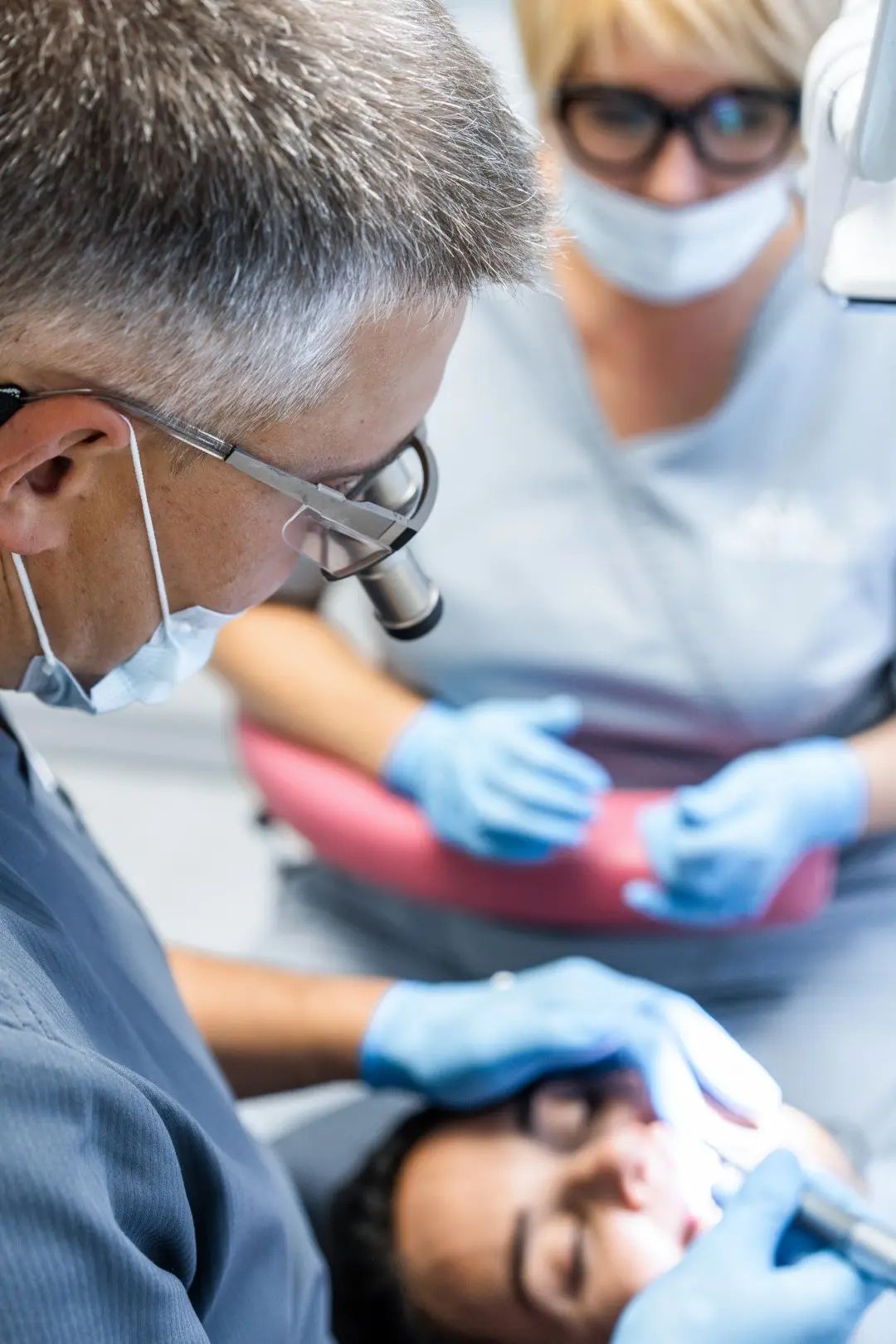
Full rehabilitation with implants: fixed teeth on 4 or more implants (All-on-4), with digital planning and immediate loading where feasible.
Oral rehabilitation restores the patient's appearance and occlusal function through accurate diagnosis and the delivery of a treatment plan.
These are complex treatments that address and restore complete dental arches, whether in the upper jaw or the lower jaw.
They may involve fixed or removable dental prostheses, periodontics, endodontics, orthodontics and other dental specialities.
Our centres have an operating theatre, so if the patient wishes, this treatment can be carried out under sedation or general anaesthetic
1. OVERDENTURES ON MILLED BARS AND LOCATORS OR PRECISION ATTACHMENTS
This is a prosthesis supported by two, three or four implants. The overdenture can be easily removed and put back by the patient for cleaning, and it is more stable than more traditional prostheses. This avoids the drawbacks that so often come with complete removable dentures: movement when speaking or chewing, the discomfort of artificial palates, having to take them out several times a day to clean them, and so on.
This type of rehabilitation is mainly indicated in cases involving severe bone atrophy.
These prostheses usually include bars made using CAD-CAM systems. Milled bars of this kind offer a number of advantages over conventional overdentures: a better fit for the prosthesis, easier design, less laboratory time and a simpler technique.
The support or retention they offer can also be provided by devices known as precision attachments, which stop the prosthesis from rocking when you speak or chew.
2. HYBRID PROSTHESES
These prostheses are supported by around four, five or six implants, depending on whether they are fitted in the upper or lower jaw, and consist of a metal framework, also designed and manufactured using CAD-CAM systems, covered by acrylic or resin that holds the teeth.
Unlike overdentures, the patient CANNOT take the prosthesis in and out. They will need to see their dentist periodically for more thorough cleaning and maintenance of the prosthesis.
As this is a fixed prosthesis, like the previous one it gives the patient greater comfort, appearance and function than conventional prostheses. You could say they are like traditional full dentures, except the upper one has no palate and both are held by implants.
3. FIXED PROSTHESES ON IMPLANTS
Six to eight implants are usually placed for this type of prosthesis. The metal-porcelain prosthesis on implants combines a metal framework with porcelain teeth to make the fixed teeth look more natural and give a better aesthetic result than hybrid prostheses, which are bulkier.
4. “ALL ON FOUR”
This is an implant-supported rehabilitation of the lower jaw using the All on Four concept.
The all-on-four (all-on-4) technique, developed by Dr Paulo Maló, is a system that allows full fixed rehabilitation with implants of the upper jaw and/or lower jaw in patients with no teeth at all. Its name comes from the use of 4 implants per jaw, although 5 or 6 may be needed in certain upper jaw cases.
Focusing on the lower jaw, the philosophy of the system is based on: - The use of four implants in the anterior interforaminal area of the lower jaw. - Angling the posterior implants with their apices towards the mesial, so that the point of insertion can be placed vertically in line with the mental foramina, or even slightly distal to them, in order to reduce the distal cantilever of the future prosthesis.
Implant-supported prostheses have been shown to be an excellent option for the rehabilitation of fully edentulous patients, since rehabilitation of the edentulous patient with the all on four technique, with a lower implant-supported prosthesis and a full upper denture, restores their
function and appearance, allowing them to improve their social and psychological wellbeing. This type of prosthesis has also been observed to offer many advantages, among them: less bone loss, better access for oral hygiene and more room to correct discrepancies in the relationship of the dental arch, as well as improved retention and stability of the prosthesis.
“At our centres we offer fixed zirconia (white metal) prostheses, which provide high aesthetic quality and durability”
Frequently asked questions
How many implants are needed for a full mouth?
You do not need one per tooth. Full-arch rehabilitations are usually supported by four to six well-distributed implants per arch, on which a fixed prosthesis is placed. The exact number depends on the available bone and the type of prosthesis, and is decided by the prior assessment.
Will I be left without teeth during the treatment?
The aim is that you will not. In many cases a fixed temporary prosthesis is placed on the implants within the first few days, and the final one is fitted once integration is complete. You are told before starting what you will be wearing at each stage.
Is it better than dentures?
An implant-supported prosthesis does not move, allows you to bite with far more force and does not cover the palate, which changes taste and speech. Removable dentures remain a valid and more affordable option; the difference lies in the fixation and in the comfort.
What is the most advanced option in dental implants?
Rather than a miracle implant, what is advanced is how it is planned: 3D scanning, digital planning and guided surgery with a surgical stent, which make it possible to place them very precisely and, in selected cases, to load a temporary prosthesis within a few days. Be wary of anything sold as a novelty without a prior study: the technique is chosen on the basis of your bone, not from a catalogue.
Related articles
Types of dental prosthetics: which one is right for you
Fixed, removable or implant-supported: the types of dental prosthetics available, how they're custom-made and what maintenance eac…
Dental implants: process, benefits and care
How long a dental implant lasts, what care extends its lifespan, and which signs of infection or peri-implantitis should be checke…
Dental implants
Implantology with guided surgery and 3D diagnostics: what the dental implant process looks like and what to expect from treatment.

What is a dental implant and when is it fitted?
A dental implant replaces the root of a missing tooth. What exactly it is, when it's indicated, and what role the crown and the bo…