
Consejos
Published on
Videonystagmography (VNG) test: what this vertigo test involves and how to prepare
By Dr Irene Mayorga Chamorro
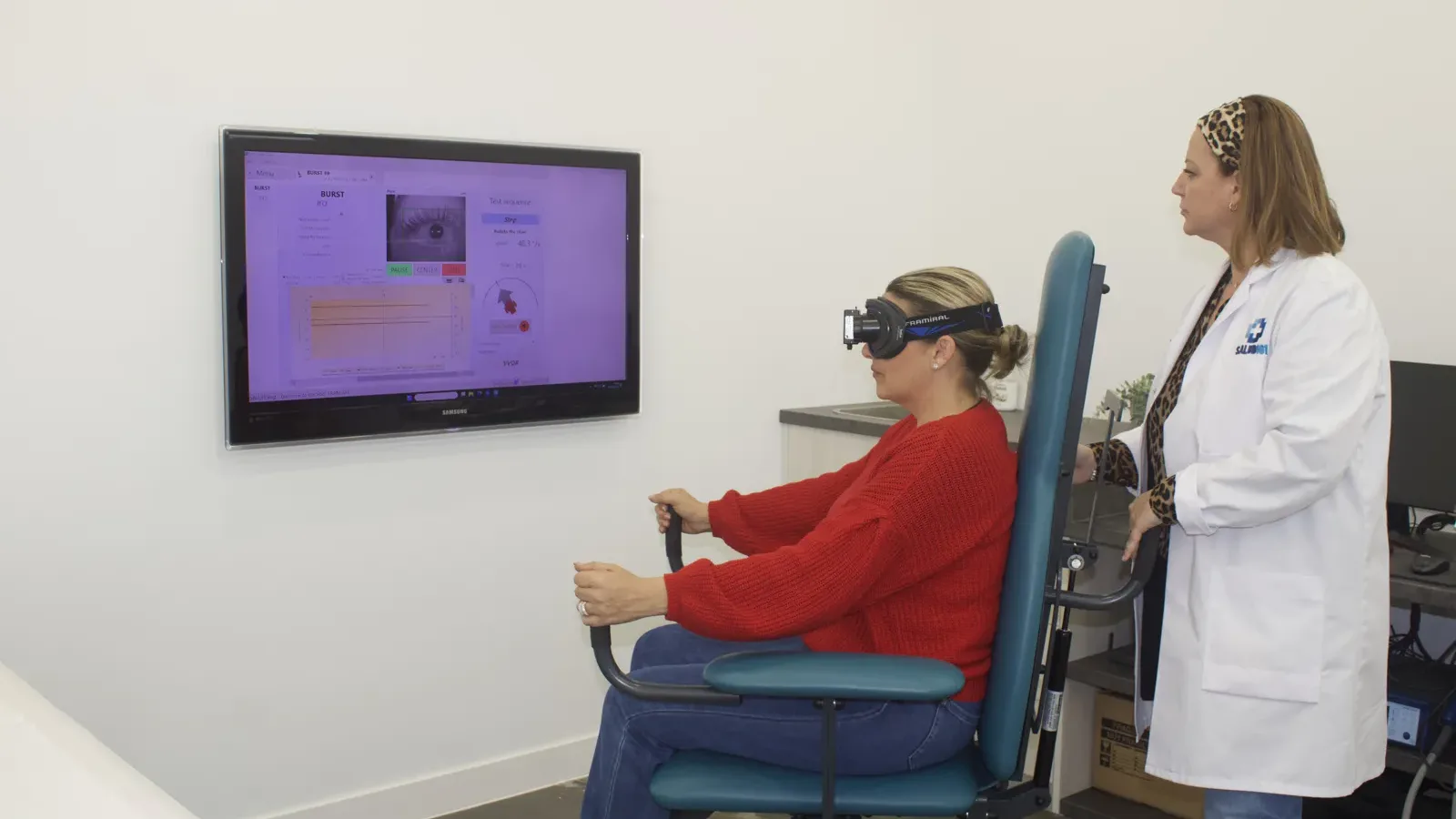
What a VNG test is, when it's requested, how it's done step by step, how long it takes, if it's uncomfortable and how to prepare for this vertigo test.
If you've been asked to have a videonystagmography test, you've most likely been dealing with vertigo, dizziness or a feeling of unsteadiness for some time, and the specialist wants to find out where it's coming from. The name sounds daunting, but it's a test with no needles and no radiation. Knowing what it involves and how to prepare helps you go in feeling calmer and makes the result more useful.
What is a VNG test and what does it measure?
Videonystagmography, or VNG, records your eye movements using goggles fitted with infrared cameras. Why the eyes, if the problem is balance? Because the inner ear and the eyes are linked by a reflex that keeps your gaze steady when you move your head. When the balance system isn't working properly, that link is disrupted, which can cause nystagmus: an involuntary, rhythmic movement of the eyes that the specialist knows how to interpret.
The infrared cameras make it possible to observe the eyes in darkness, without your gaze being able to fix on a point. This matters, because fixing your gaze can hide part of the nystagmus. VNG is the modern version of electronystagmography, which recorded the same movements using electrodes placed around the eyes.
The test assesses:
- Whether there is nystagmus at rest or when looking in different directions.
- How the eye movements controlled by the brain are working, such as following an object or jumping from one point to another.
- Whether vertigo appears in certain head positions.
- How each inner ear responds separately, thanks to the caloric test.
Taken together, this helps to tell whether the problem appears to lie in the inner ear or in the central nervous system, on which side and to what degree.
When the specialist requests it
A VNG isn't done on everyone who feels dizzy. The specialist requests it when your medical history and the examination in clinic aren't enough to pin down the cause of the problem. For example, in cases of:
- Recurrent vertigo attacks.
- Dizziness or unsteadiness lasting weeks or months with no clear cause.
- A suspected inner ear disorder, such as vestibular neuritis or Ménière's disease.
- Vertigo that comes on with changes in position but doesn't behave like typical positional vertigo.
- The need to check whether the brain has compensated for old damage to the inner ear, or to monitor how it is progressing.
It is usually part of a wider assessment. On our vertigo tests page, we go through the other examinations that may be done alongside it.
How the test is done, step by step
Before starting, the specialist examines your ears to check that the ear canal is clear and the eardrum is in good condition, especially if the caloric test is going to be done. The goggles are then fitted snugly and the room is usually left in semi-darkness. From there, the test has several parts:
- Eye movements. Sitting down, you follow points of light with your eyes as they move or jump from one side to the other. This shows how the brain controls eye movement.
- Spontaneous and gaze nystagmus. You look straight ahead and to the sides, with and without being able to fix your gaze, while the cameras record any involuntary movement.
- Positional tests. You're laid down and your head or body is turned to different sides. If any position triggers vertigo, the camera records the nystagmus, which helps to identify which part of the inner ear is involved.
- Caloric test. Water or air at a temperature slightly above and slightly below body temperature is introduced into each ear in turn. This change stimulates the inner ear on that side and causes a spinning sensation similar to vertigo for a few minutes. Comparing the response of the two ears shows whether one is working less well than the other.
The order and the parts included may vary depending on what the specialist needs to study in each case.
How to prepare: medication, make-up and food
Preparing well avoids having to repeat the test. These are the usual instructions, although the written instructions you're given when your appointment is booked always take priority:
- Medication. Some drugs, such as the vestibular sedatives used for dizziness and certain tranquillisers, can suppress the very response the test is trying to measure. The specialist will tell you whether you need to stop any of them and how far in advance. Don't stop any treatment on your own, including any you take for other conditions.
- Alcohol. Avoid it in the days beforehand, as it affects the balance system.
- Make-up. Come without mascara, eyeshadow or eyeliner: they interfere with the camera that detects the pupil.
- Food. Have a light meal a few hours beforehand. Some parts of the test can cause nausea, and it's better not to arrive on a full stomach.
- Contact lenses and glasses. Ask whether you need to remove your contact lenses, and bring your glasses if you wear them.
- A companion. If you get dizzy easily, bring someone with you: you may feel unsteady for a while afterwards.
- Medical reports. Bring your medical reports and previous test results, and a list of the medicines you take.
Does a VNG test hurt? How long does it take?
It doesn't hurt. It's a non-invasive test: there are no needles and no radiation. What it can cause is temporary discomfort, mainly dizziness during the caloric test and some of the positional manoeuvres, sometimes with nausea. This is an expected, short-lived sensation, and you can let the team know at any time if you're finding it hard.
As for how long it takes, the full test usually lasts around an hour, although this depends on which parts are carried out and how well you tolerate each one. Afterwards, it's normal to stay seated for a few minutes until the dizziness passes. If you feel unsteady, it's best not to drive straight afterwards.
What happens next: from results to treatment
VNG results aren't read in isolation. The specialist interprets them together with your history, the examination and, if they've been done, other tests such as a hearing assessment or the head impulse test. All of this together leads to the diagnosis and, with it, the plan:
- If positional vertigo is confirmed, treatment usually involves manoeuvres to reposition the inner ear particles that cause it.
- If one ear responds less than the other, vestibular rehabilitation helps the brain compensate for that difference.
- If there are signs pointing to the central nervous system, the investigation is completed with other tests or a neurology assessment.
A normal VNG result doesn't mean the dizziness is imaginary, either. Some causes of dizziness leave no trace on this test, and the specialist may need other examinations to reach a diagnosis.
If you've been advised to have a videonystagmography test or have had unexplained vertigo or dizziness for some time, on our Otoneurology page you'll find out what the consultation involves and how to book an appointment.
Who signs this article

Dr Irene Mayorga Chamorro
ENT and Otoneurology · Medical Director of the Vestibular Unit
Medical registration number: 292910588 · Ilustre Colegio Oficial de Médicos de Málaga
I am a specialist doctor in Otorhinolaryngology, with a specific focus on Otoneurology and the study of balance disorders. My clinical practice focuses on the assessment of patients with vertigo, dizziness and unsteadiness, particularly when symptoms persist,…
Vestibular UnitOtorhinolaryngology
See the full profile →Questions and comments
Ask the author of this article or leave us a comment. Everything is reviewed before it is published.
To write, first confirm your email: we will send you a code.