
Published on
Fixed or automatic CPAP? What changes for the person using it
By Miguel Ángel Sánchez de Toro
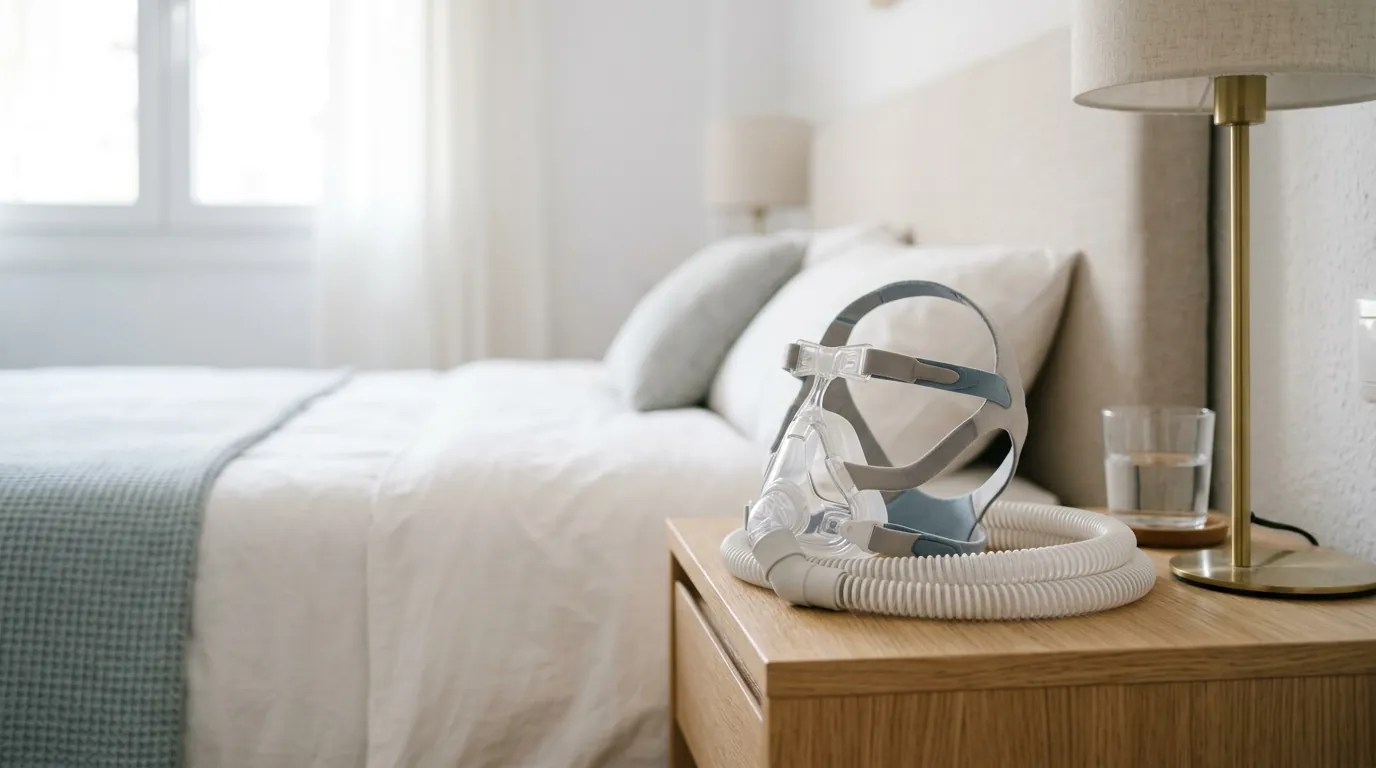
A CPAP holds a fixed pressure; an autoCPAP adjusts it on its own during the night. What sets them apart, when each is chosen, and what really determines the outcome.
When a sleep study confirms moderate or severe apnea, the standard treatment is CPAP: a small device that delivers pressurized air through a mask and keeps the airway open all night. Almost always the same question comes up then, and it's not a minor one: fixed or automatic?
There's an analogy that explains it in one line: CPAP machines are like cars — some are manual, some are automatic. Both get you to the same place. What changes is who decides the gear at each moment.
What a CPAP does, whichever type it is
In obstructive sleep apnea the throat narrows or closes while you sleep, air stops flowing, and the brain has to wake you for a few seconds to reopen it. This can happen dozens or hundreds of times a night.
CPAP is neither oxygen nor medication: it's room air at a pressure slightly higher than atmospheric. That pressure acts like a pneumatic splint — it holds the airway open from the inside — and the pauses stop happening. The difference between a fixed and an automatic device lies only in how that pressure is decided.
Fixed CPAP: one prescribed pressure for the whole night
The doctor determines the pressure your airway needs and the device keeps it constant from start to finish. It's the classic model — simple and very predictable.
For years, finding that number required a titration: spending a monitored night while the pressure was raised little by little until the one that made the apneas disappear was found. Today that laboratory night is on its way out, because automatic devices themselves do that work at home, over several nights, which is where you can really see how you breathe.
AutoCPAP: a range, and the machine adjusts
An autoCPAP doesn't work with a single number but between a minimum and a maximum. It detects when the airway starts to narrow and raises the pressure just enough to open it; when it's not needed, it lowers it.
This makes sense because the pressure you need isn't the same all night, nor every night. It changes depending on whether you sleep on your back or on your side, it changes during REM sleep, and it changes with a cold, one drink too many, or a few kilos up or down. A fixed pressure has to cover the worst moment of the night; an automatic one can stay lower the rest of the time.
So, which is better?
Whichever one you actually end up using. Both treat apnea with the same effectiveness when properly indicated, and the best CPAP in the world is useless sitting in a closet. That said, there are practical differences:
- The automatic one adapts on its own to changes in posture, weight or nasal congestion, and saves you the titration night. It tends to be comfortable when the night's pattern is variable or when the right setting is still being found.
- The fixed one is more predictable. Some people notice the pressure rising and falling and rest better with constant air.
- There are situations where the decision isn't a free choice. Certain associated respiratory or cardiac conditions, or particular apnea patterns, call for a specific type of device or even another ventilation mode. The specialist assesses that with the test results in hand.
What really determines the outcome
In the consulting room you see it again and again: the type of device matters much less than people fear, and these three things matter much more than people expect.
- The mask. Size, type — nasal, full-face — and fit explain most dropouts. A leak means the pressure doesn't get through and the air ends up in your eyes.
- The first few weeks. This is the adjustment period, and also when the easily-fixed discomforts appear: dry mouth, congestion, marks on the face. Almost everything resolves if it's reported in time.
- Follow-up. The devices record how many hours are actually used, whether there are leaks, and whether apneas remain despite treatment. With that data, the adjustment stops being a guess and becomes a fact: you can read about it in monitoring your CPAP without leaving home.
How it's decided at the Sleep Unit
The choice comes from the whole picture: the apnea-hypopnea index from the sleep study, what your airway is like, any associated conditions, and what you can sustain every night. In our Sleep Unit the respiratory treatment is directed by pulmonology, and when behind the snoring there's a correctable obstruction, it's assessed together with otolaryngology before deciding anything.
Two clarifications that usually help. First: the decision isn't forever — the type of device and the pressure are reviewed over time and with the data. Second: whatever path the device arrives through, the assessment and follow-up are the same.
And if CPAP isn't the right fit, there are alternatives evaluated case by case, such as mandibular advancement devices in selected mild and moderate apneas.
When to see a specialist
If you snore loudly, if someone has seen you stop breathing at night, or if you wake up tired after sleeping enough hours, the first step isn't choosing a device: it's finding out whether you have apnea and how severe it is. You can start with our sleep test, which in one minute tells you whether you should be assessed by a specialist, or book an appointment directly at the Sleep Unit.
Who signs this article
Miguel Ángel Sánchez de Toro
Sleep Unit · Specialist Physician in Pulmonology and Allergy
Medical registration number: 292603493 · Ilustre Colegio Oficial de Médicos de Málaga
My approach to work is responsible and committed. Throughout my life, I've worked on developing empathy, sociability, initiative and leadership. In my free time, I enjoy moderate sport, and enjoy it even more outdoors, in nature. Awards and mentions: Award…
AllergyRespiratory medicineSleep Unit
See the full profile →Questions and comments
Ask the author of this article or leave us a comment. Everything is reviewed before it is published.
To write, first confirm your email: we will send you a code.