
Published on
CPAP monitoring without leaving home: what telemonitoring is
By Miguel Ángel Sánchez de Toro
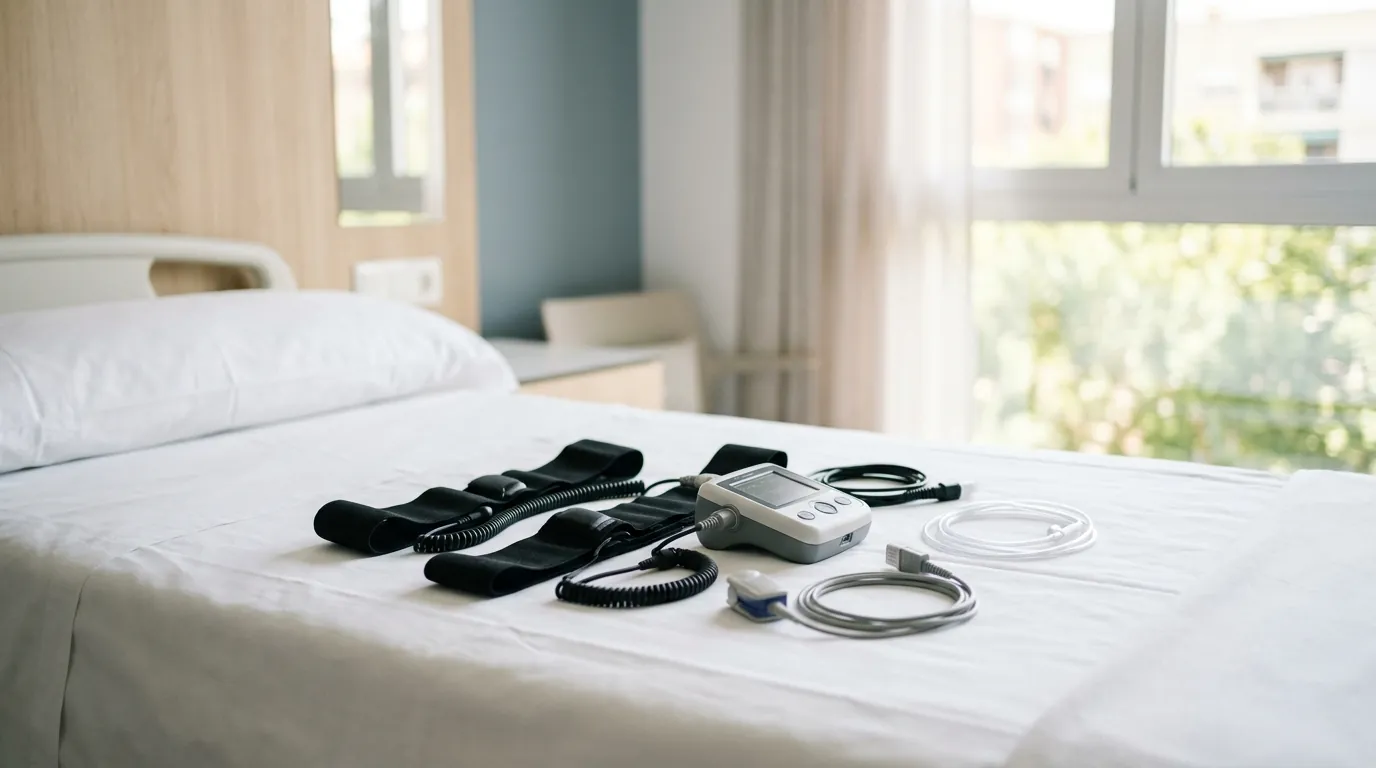
The device records hours of use, leaks and residual apnoeas. What CPAP telemonitoring reveals, who it suits and what it does not replace.
Starting CPAP is not like starting a pill. The device arrives at home, is fitted that very night and from then on everything happens far from the clinic: the mask that pinches, the dry mouth at five in the morning, the night you take it off without realising. That is why, in the treatment of sleep apnoea, follow-up matters just as much as the device itself.
Why follow-up matters as much as the device
A properly prescribed CPAP makes apnoeas disappear from the very first night it is used correctly. That is never the problem: the problem is using it, and using it all night long. The first few weeks decide whether the treatment becomes part of the routine or ends up in a cupboard, and these are precisely the weeks when easily solvable discomforts appear.
The difference is that today you do not have to rely on anyone's memory. The device records what happens every night.
What the device records
- Actual hours of use. How many nights it is used and how many hours per night. This is the data that correlates most with improvement, and also what surprises people the most: sleeping six hours with the mask on for the first three is not treating apnoea, because the REM phase is concentrated in the second half of the night.
- Leaks. If air escapes around the edge of the mask or through the mouth, the pressure does not reach where it needs to go. A high leak rate instantly explains irritated eyes, noise and the feeling that the machine "is doing nothing".
- Residual events. The apnoeas and hypopnoeas that continue to occur with the treatment on. If more than expected remain, something needs adjusting.
- Pressure curves. What pressure the device required, at what times during the night and with what variability.
Read together, these four pieces of data tell a very precise story. Low hours of use with high leaks is almost never a lack of willpower: it is a mask of the wrong size. Impeccable use with high residual events points to insufficient pressure, a positional component or something beyond obstructive apnoea.
What telemonitoring is
Connected devices send this information to the specialist without you having to bring anything to the clinic. It allows us to see the pattern over the last few weeks — rather than the impression from one specific morning —, detect early if someone is struggling and adjust parameters remotely, without the patient having to leave home.
In other words: it brings forward adjustments to the exact moment they are needed — usually the second or third week — rather than a month and a half later.
How we do it at the Sleep Unit
To be frank: our standard follow-up is in-person. We hold clinics virtually every week, and for most of our patients — many of whom already have follow-ups covered by their insurance — meeting in consultation remains the best way to resolve mask discomfort face-to-face. An exclusively remote model would not fit that approach, and we are not going to sell it as if it did.
Alongside this option, those who prefer more flexible monitoring can opt for telemonitoring: a schedule of four reviews over roughly two months, by phone or video call, reviewing the device data together during each one. It is an option, not the norm, and is agreed upon during consultation.
Who it is suitable for
- Anyone who travels or works away and finds it difficult to fit appointments in.
- Anyone who lives far away or has reduced mobility, where every journey takes up half a day.
- Anyone in the middle of the adaptation period who appreciates having their data reviewed every few weeks without waiting for the next check-up.
And for those who prefer to come to the clinic — who are the majority — nothing is missed: the exact same data is reviewed sitting face-to-face.
What it does not replace
Neither telemonitoring nor any remote consultation replaces what needs to be done in person: the initial assessment, the airway examination, the sleep study confirming the diagnosis, and check-ups where a mask needs to be inspected, felt or tried on. Nor does it replace pulmonology or ENT (ear, nose and throat) when a joint assessment is required. It is a follow-up tool, and it works precisely because the diagnosis has already been made.
What you can do
- Use it every night and for the whole night, including short nights and when travelling.
- Report any discomfort early. Facial marks, dryness, congestion, noise, air in the stomach: almost everything can be corrected by changing the size, mask type or humidification.
- Do not give up on it in silence. If you have gone nights without wearing it, that is clinical information, not a failure: it is what allows us to change strategy in time.
- Report any changes. Weight gain or loss, a new treatment or nasal surgery can alter the pressure you need.
When to book an appointment
If you already use a CPAP and notice no improvement, if you wake up just as tired or if you have stopped wearing it, request a review: adjustments can almost always be made. And if you do not yet know whether you have apnoea, start with the sleep test or book an appointment at our Sleep Unit.
Who signs this article
Miguel Ángel Sánchez de Toro
Sleep Unit · Specialist Physician in Pulmonology and Allergy
Medical registration number: 292603493 · Ilustre Colegio Oficial de Médicos de Málaga
My approach to work is responsible and committed. Throughout my life, I've worked on developing empathy, sociability, initiative and leadership. In my free time, I enjoy moderate sport, and enjoy it even more outdoors, in nature. Awards and mentions: Award…
AllergyRespiratory medicineSleep Unit
See the full profile →Questions and comments
Ask the author of this article or leave us a comment. Everything is reviewed before it is published.
To write, first confirm your email: we will send you a code.