
Diabetic foot
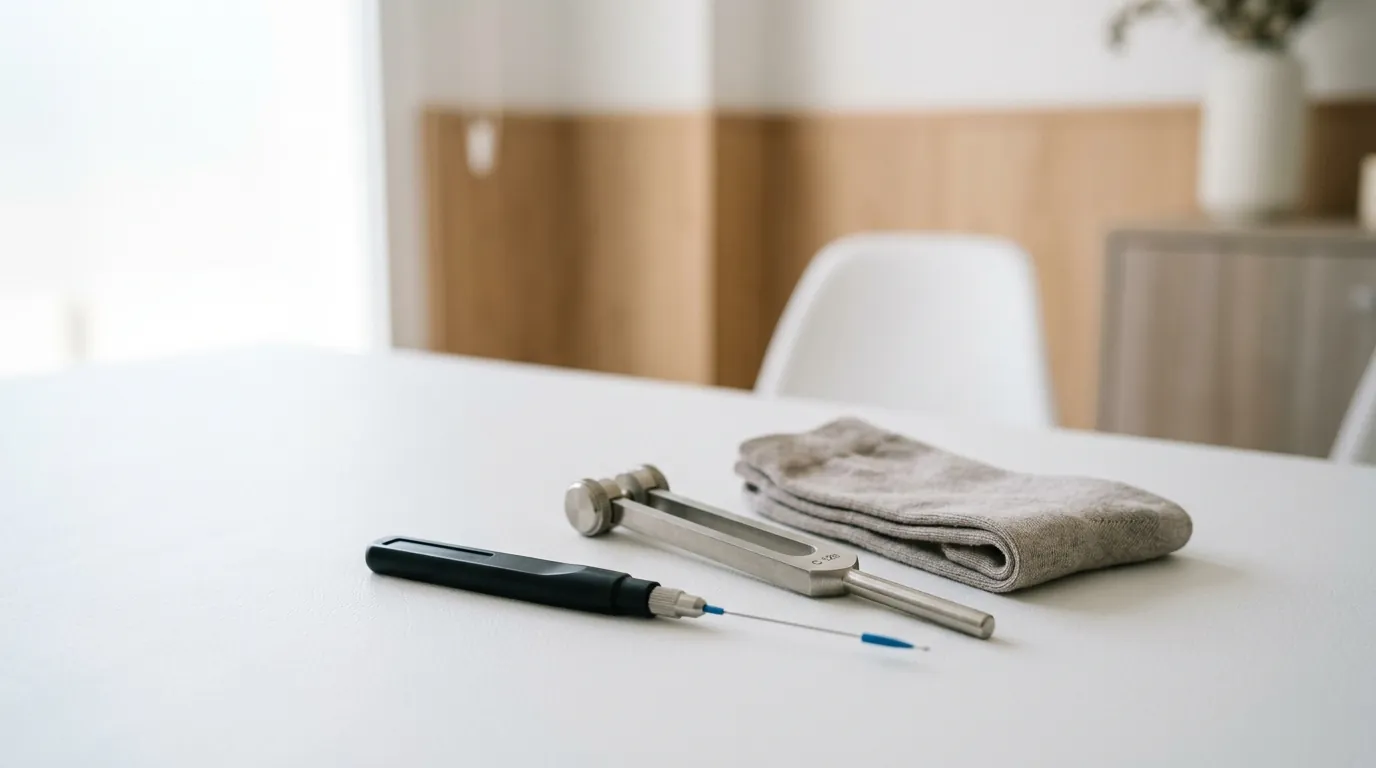
Diabetic foot check-ups: examining sensation and circulation, preventive care of nails and hard skin, and guidance to avoid ulcers.
Why a diabetic foot is different
Years of diabetes can damage two things: the nerves, which stop warning you about pain, and the arteries, which carry less blood and make everything heal more slowly. The combination is dangerous: a shoe rub or a small wound can go unnoticed for days and turn into an ulcer. The good news is that most of these complications are preventable with regular check-ups and simple habits.
What the check-up involves
- Testing sensation with a monofilament and tuning fork: it catches neuropathy before it causes symptoms.
- Assessing circulation: foot pulses and, where needed, an ankle-brachial index.
- Checking the skin and nails, and removing hard skin — which on a diabetic foot are risky pressure points.
- Assessing how you bear weight and your footwear, with offloading or insoles if needed.
- Education: how to check your feet, how to cut your nails, what footwear to buy.
Golden rules at home
- Check your feet every day, including between the toes; use a mirror if you can't reach.
- Wash with lukewarm water — tested with your hand or elbow, never your foot — and dry well between the toes.
- Never use corn removers, blades or pointed scissors; no direct heat and no walking barefoot.
- Break in new shoes gradually and check inside them before putting them on.
When to see us the same day
A wound, blister, crack or red area that isn't improving; a change in colour; swelling; a bad smell; or sudden pain. With a diabetic foot, acting quickly is always the right call: don't wait for your next scheduled check-up.
Frequently asked questions
Why does the diabetic foot need regular check-ups?
Because years of diabetes can damage the nerves, which stop warning of pain, and the arteries, which makes everything heal more slowly. A small graze can go unnoticed and turn into an ulcer. Most of those complications are prevented with check-ups and simple habits.
What should I never do at home?
Use corn removers, blades or pointed scissors, apply direct heat with blankets or hot water bottles, or walk barefoot. Wash with lukewarm water checked with your hand or elbow, dry well between the toes and check inside your footwear before putting it on.
When do I need to be seen the same day?
With a wound, blister, crack or reddened area that is not improving, a change in colour, swelling, bad odour or pain of sudden onset. With diabetic foot, hurrying is a good thing: you are seen without waiting for the next check-up.
How does the diabetic foot start?
Almost always silently: tingling or loss of sensation, dry and cracked skin, hard skin at pressure points and nails that change. On top of that, a rub from a shoe or a small wound that goes unnoticed can turn into an ulcer. That is why regular check-ups are the main treatment.
What are the symptoms of diabetic foot?
Tingling, burning or numbness, loss of sensitivity to heat or pain, dry skin, changes in colour or temperature, wounds or blisters that do not heal, bad odour and pain when walking that eases when you stop. Any of them is a reason to seek care without delay.
Questions and comments
Ask the specialist who reviews this page or leave us a comment. Everything is reviewed before it is published.
To write, first confirm your email: we will send you a code.
Content reviewed by Dr María Francisca Pérez Saavedra