
Plantar warts
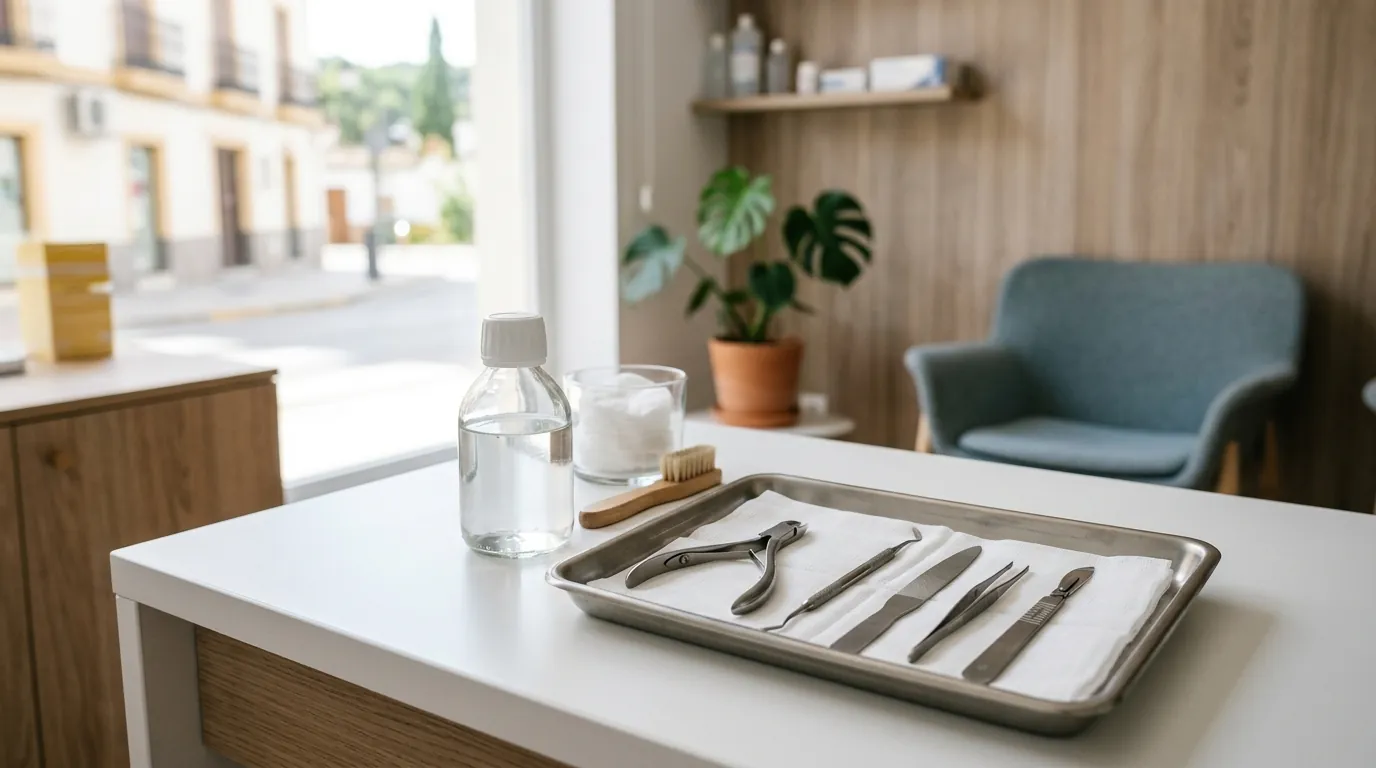
Treating plantar warts: telling them apart from corns and effective treatment options, including in children and stubborn cases.
Wart or callus: they are not the same
A plantar verruca or plantar wart is a benign lesion caused by the cutaneous human papillomavirus. It lodges in the top two layers of the skin and can become a nuisance for those who suffer from it. It is often confused with a callus, but they can be easily distinguished:
- The verruca hurts when pinched laterally, whereas a callus hurts when direct pressure is applied onto it.
- The verruca interrupts the skin lines; the callus respects them.
- When pared down, small black dots appear, which are thrombosed capillaries.
An accurate diagnosis matters because the treatment is completely different.
How it is spread
The virus is caught on wet, shared floors: gym showers, changing rooms, swimming pools. It is more common in children and adolescents, and in people with a weakened immune system. Excessive sweating weakens the skin barrier, facilitating infection. Wearing flip-flops in these places, drying your feet thoroughly and not sharing towels significantly reduces the risk — and prevents spreading it to your family.
Treatment
There are several options and none is a magic cure: the choice depends on size, location, age and whether it has been treated before. Keratolytics and chemical agents applied in the clinic on a regular schedule are used, alongside cryotherapy and other techniques for resistant cases. It usually requires several sessions and patience: plantar verrucas are stubborn, and incorrectly applied home treatments often cause them to spread.
When to consult a specialist without delay
If it hurts to walk, if the lesions grow or multiply, if it bleeds, or if you have diabetes or circulation problems. In these cases, do not self-medicate: it should be assessed in a podiatry consultation.
Frequently asked questions
How do I tell a verruca from a callus?
A verruca hurts when you pinch it sideways and a callus hurts when you press on top of it. In addition, a verruca interrupts the lines of the skin's print and, when it is pared down, tiny black dots appear. Getting the diagnosis right matters because the treatment is completely different.
Is it contagious?
Yes, the virus is picked up on damp, shared floors: gym showers, changing rooms and swimming pools. Wearing flip-flops in those places, drying your feet properly and not sharing towels greatly reduces the risk and avoids passing it on to the rest of the family.
How many sessions are needed?
Usually several, and it is worth being patient: plantar warts are stubborn. The technique is chosen according to the size, the location, the age and whether it has been treated before. Home remedies poorly applied often spread them instead of curing them.
How long does it take to get rid of a plantar wart?
With treatment, several sessions over weeks or months are usually needed; they are especially stubborn on the sole because the skin is thick and the pressure of walking keeps them there. Taking time does not mean it is going badly: progress is reviewed and the technique changed if there is no response.
How can I remove verrucas on the foot at home?
Pharmacy products applied incorrectly tend to burn the healthy skin around the lesion and spread it, and cutting or scratching the verruca spreads it further. If you have diabetes or circulation problems, you should not self-medicate at all. The sensible thing is first to confirm that it is a verruca and not a callus.
Questions and comments
Ask the specialist who reviews this page or leave us a comment. Everything is reviewed before it is published.
To write, first confirm your email: we will send you a code.
Content reviewed by Dr María Francisca Pérez Saavedra