
Intolerance testing
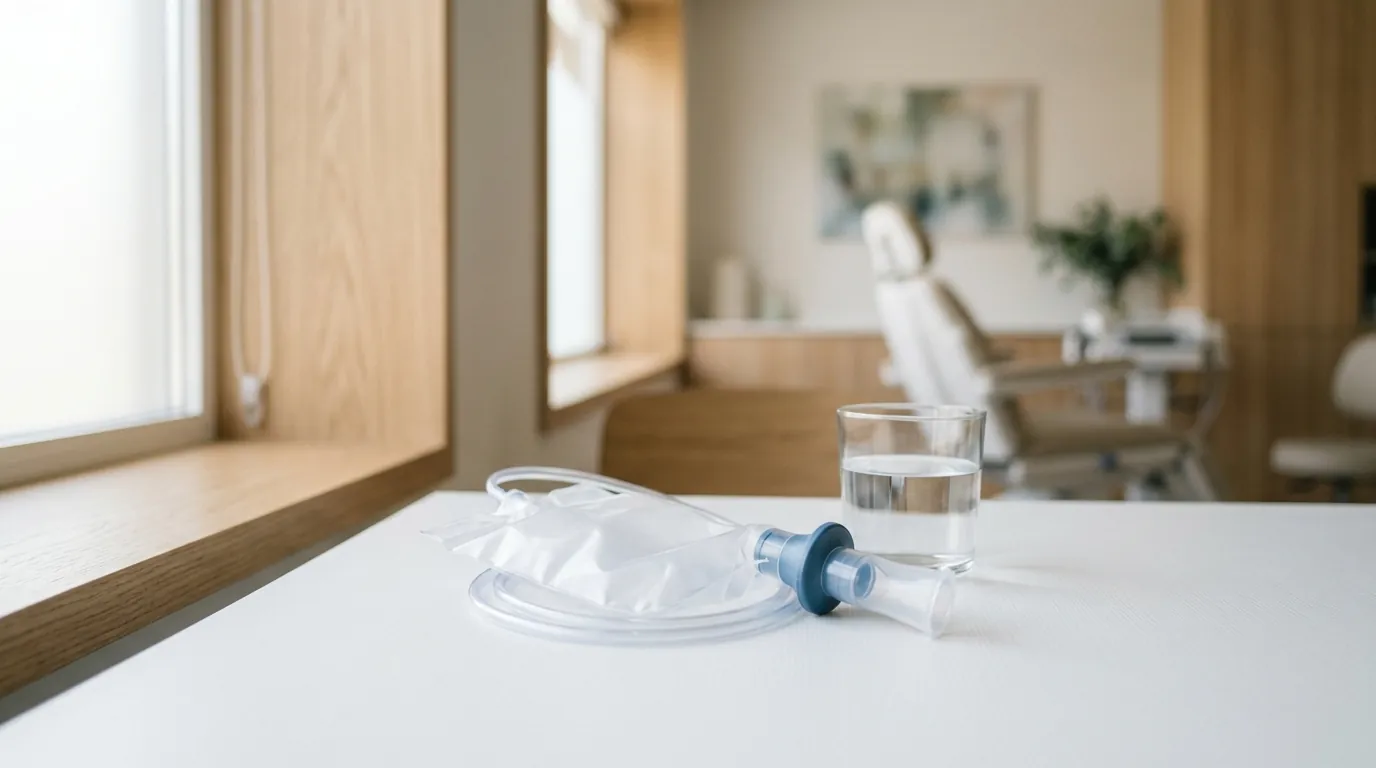
Breath test for lactose, fructose and sorbitol intolerance: a non-invasive test that measures exhaled hydrogen after taking the sugar.
What an intolerance is
In an intolerance, the gut doesn't properly digest a specific sugar. What isn't absorbed carries on and gets fermented by bacteria in the colon: that's where the gas, bloating, rumbling, pain and diarrhoea come from. The immune system isn't involved, so it isn't an allergy , and the severity is different, though quality of life can still suffer.
How it's measured: the breath test
It's a simple, non-invasive test. You take a measured amount of the sugar being investigated — lactose, fructose or sorbitol — and then breathe into a device at set intervals over a couple of hours. The device measures exhaled hydrogen: if it rises above a threshold, that sugar isn't being absorbed properly. Symptoms are also noted during the test, because the diagnosis is the sum of both things.
How to prepare
- Fast for at least eight hours before the test.
- The day before, keep to a simple diet: no pulses, no high-fibre foods and no dairy.
- Don't smoke or do intense exercise that day, and avoid sleeping during the test.
- Let us know if you've taken antibiotics, laxatives or had a colonoscopy recently: these can alter the result and it may need to be delayed.
What happens with the result
A positive test doesn't mean a diet for life. There's almost always a tolerance threshold: the amount is adjusted, spread through the day, or alternatives are used. And a negative test is useful too, because it means looking for the real cause of the discomfort instead of cutting out foods blindly.
Frequently asked questions
How is the breath test carried out?
You take a measured amount of the sugar being studied — lactose, fructose or sorbitol — and then you blow into a device at set intervals for about two hours. The equipment measures the hydrogen you breathe out: if it rises above a threshold, that sugar is not being absorbed properly. It does not hurt and there are no needles.
If it comes back positive, do I have to give up milk forever?
Hardly ever. In intolerance there is a personal tolerance threshold: the amount is adjusted, spread across the day, or alternatives and lactose-free products are used. The aim of the appointment is for the list of what you avoid to be as short as possible, not as long as possible.
Where does it hurt if you are lactose intolerant?
The symptoms are diffuse abdominal ones: bloating, rumbling, cramps and often diarrhoea, between thirty minutes and two hours after consuming dairy. There is no exact point of pain; if there is, or if blood or weight loss appear, other causes must be investigated.
Which test do I need to find out whether I am lactose intolerant?
The hydrogen breath test after taking a measured amount of lactose is the usual test: it is non-invasive and takes a couple of hours. Cutting out milk on your own to see what happens does not give a diagnosis and may mask another digestive problem.