
Walk-in blood test
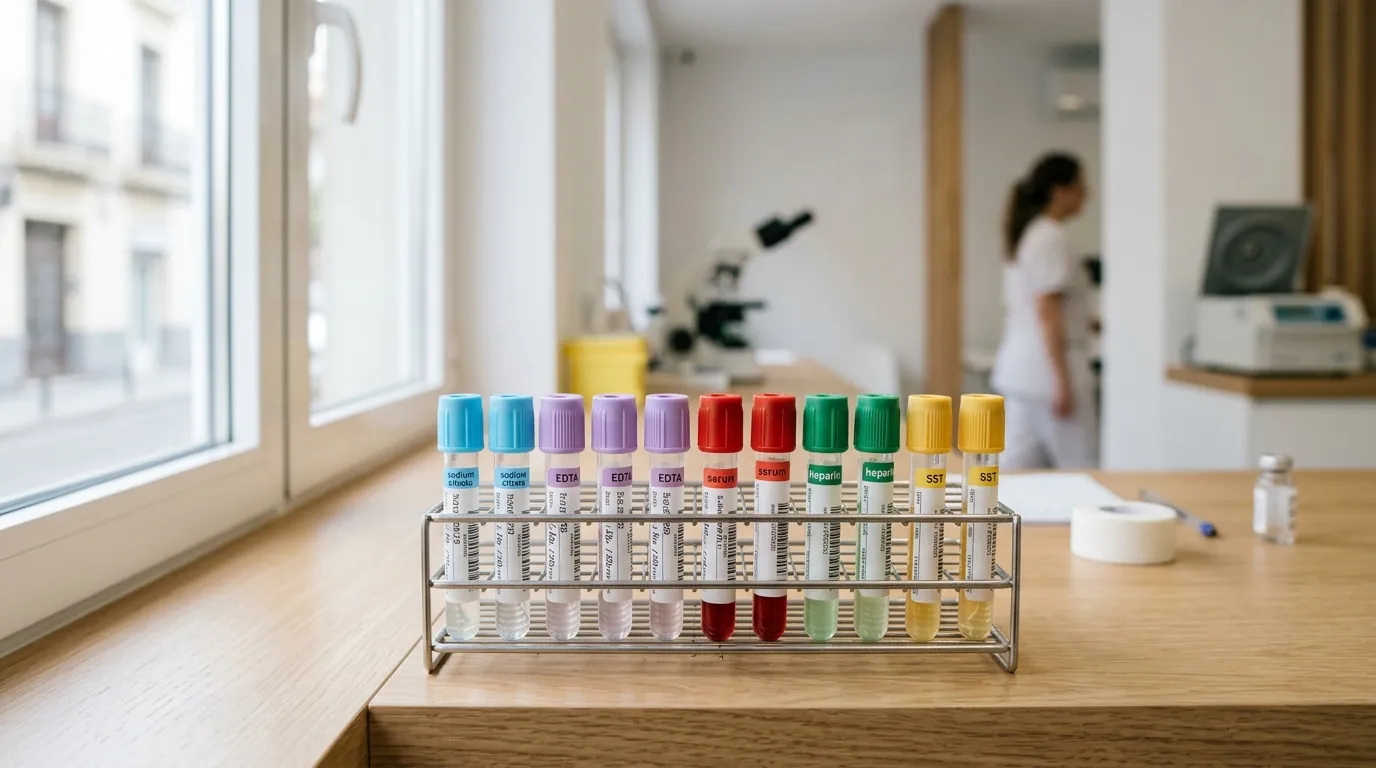
General blood test and biochemistry panels: full blood count, blood sugar, cholesterol, kidney, liver and thyroid, with morning sample collection and fast results.
What a general blood test measures
A routine blood test is the X-ray of what you can't see. From a single sample you get a fairly complete picture of how your body's doing:
- Full blood count: red cells, white cells and platelets. Picks up anaemia, infection and clotting problems.
- Basic biochemistry: glucose, cholesterol and triglycerides, kidney and liver function, uric acid, electrolytes.
- Specific panels: thyroid, iron, vitamins, markers depending on your age, your history and what needs ruling out.
What exactly gets requested depends on why: an annual check-up isn't the same as investigating tiredness that won't go away.
How to prepare
- Fasting for eight to twelve hours when glucose, cholesterol or triglycerides are requested. You can drink water.
- Bring a note of your usual medication; unless you're told otherwise, don't stop taking anything on your own.
- Avoid intense exercise the day before: it alters some values.
- If blood tests make you feel faint, say so beforehand: it's done lying down and it's not a problem.
And once the results are in
A value out of range isn't a diagnosis. The numbers are read alongside your age, your treatment and what's going on with you; some minor changes mean nothing, while other, subtler ones are worth following up. That's why the report is reviewed at a consultation — with general practice or whichever specialty applies — rather than being left as a printout with red arrows.
Other laboratory tests
Besides the general blood test, we also carry out hormone testing, STI screening and food intolerance testing.
Frequently asked questions
Do I have to come fasting?
If the blood test includes glucose, cholesterol or triglycerides, yes: between eight and twelve hours without eating, although you can drink water. For other parameters it is not necessary. Take your usual medication unless you have been told otherwise, and avoid intense exercise the day before because it alters some values.
How long do the results take?
Most routine parameters are ready within a few days. Some special tests are processed off site and take longer; if that applies to you, you are told when the blood is taken. What matters comes afterwards: going over the report at an appointment, because a value outside the range is not in itself a diagnosis.
Can I have blood drawn if I faint easily?
Yes, and it is best to say so beforehand. The blood draw is done lying down, unhurriedly, and you are monitored for a few minutes afterwards. It helps to arrive well hydrated and not to have spent too many hours on your feet. It is more common than it seems and it is not a problem at all.
What should you avoid before a blood test?
Do not eat if glucose or lipids are being requested —eight to twelve hours, water is fine—, do not do intense exercise the day before, do not drink alcohol the night before and do not smoke before the blood draw. Your usual medication is continued unless told otherwise; note it down so it appears in the report.
Which conditions can be detected with a blood test?
Anaemias, infections, diabetes, cholesterol disorders, thyroid, kidney and liver problems, iron or vitamin deficiencies and clotting disorders, among others. Not everything shows up in blood: some diagnoses need imaging or functional tests, and an isolated value is not a diagnosis.