
Hormone testing
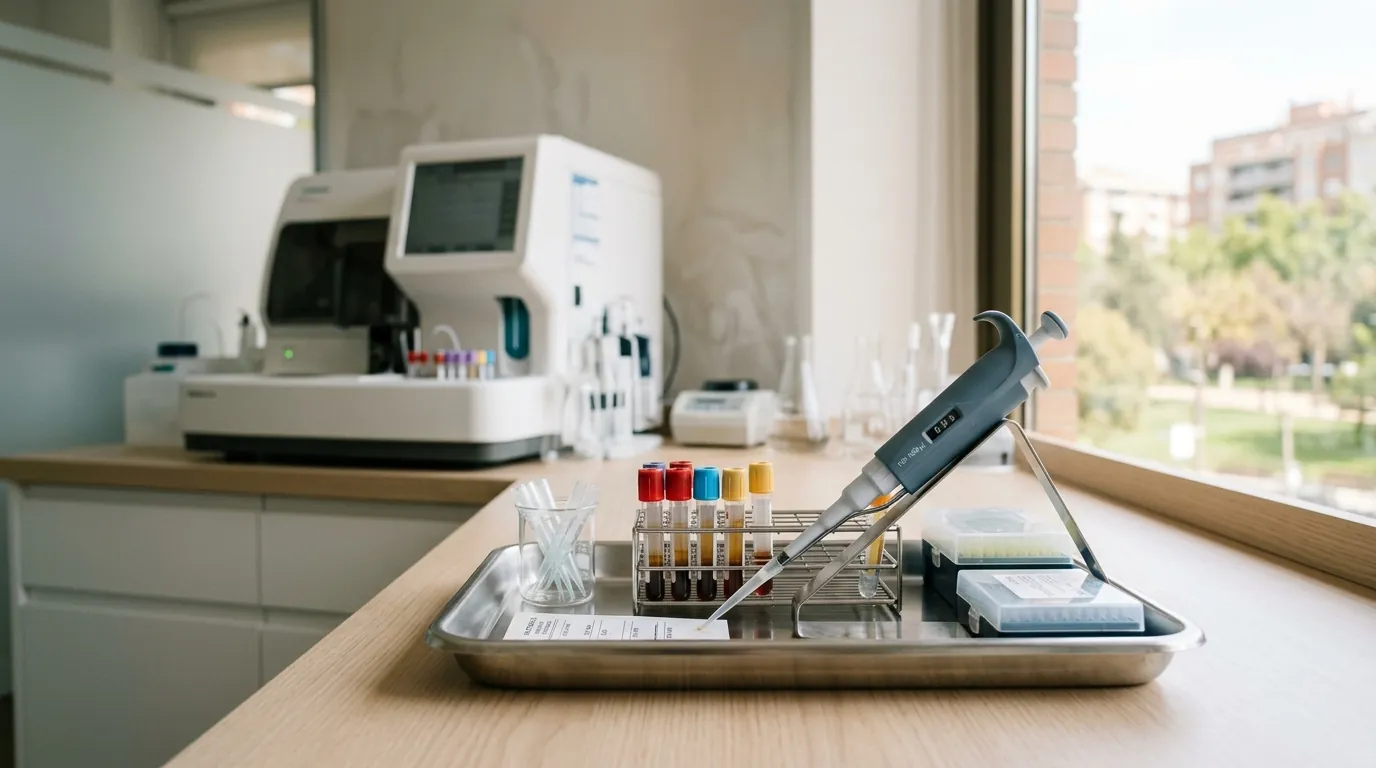
Full hormone panel: thyroid, sex hormones, prolactin, cortisol and vitamin D, interpreted at the clinic and not just handed over as a list.
When it's requested
Hormones explain a lot of symptoms that seem unrelated. A hormone test makes sense when you notice:
- Persistent tiredness, poor tolerance of heat or cold, unexplained weight changes.
- Irregular periods, absent periods, acne or hair growth that's appeared recently.
- Difficulty getting pregnant.
- Noticeable hair loss.
- Menopause symptoms, or falling hormone levels in men.
- Monitoring a hormone treatment already under way.
What's tested
The most common panels are thyroid (TSH, free T4 and antibodies where needed), the sex hormone panel (FSH, LH, oestradiol, progesterone, testosterone), prolactin and cortisol, along with vitamin D and metabolic monitoring. We request what the suspicion justifies: requesting everything isn't more thorough, just more expensive and more confusing.
Timing matters
Many hormones change over the course of the day and the cycle. Prolactin and cortisol are taken in the morning at rest; several sex hormones only make sense on specific days of the menstrual cycle. That's why, when booking, it's worth mentioning the date of your last period and what medication you're on: that decides the right day and avoids repeating the blood draw.
Reading the result
A value close to the limit isn't always a problem, and a normal value doesn't always rule one out. Interpretation happens at the relevant consultation —gynaecology, general practice, nutrition— together with the examination and your history.
Frequently asked questions
Does the day of my cycle matter for a hormone blood test?
Yes. Several sex hormones only make sense on specific days of the cycle, and others, such as prolactin or cortisol, are taken in the morning and at rest. When booking, give the date of your last period and any medication you take: with that the right day is chosen and a repeat blood draw is avoided.
Which hormones are checked when there is fatigue or weight change?
The usual approach is to start with the thyroid profile (TSH and free T4) and add whatever the suspicion justifies: sex hormones, prolactin, cortisol, vitamin D and metabolic control. Requesting everything is not more thorough: it is more expensive and produces incidental findings that confuse more than they help.
Can I take my medication before the blood test?
As a rule yes, and it is worth noting down exactly what you take and at what time, because some treatments —hormones, corticosteroids, contraceptives— affect the result. Never stop anything on your own initiative: if something has to be stopped before the blood draw, you will be told so at the consultation.
What does a hormone blood test include?
It depends on what is suspected. The most usual are the thyroid profile (TSH, free T4 and antibodies where appropriate), the sex hormones (FSH, LH, oestradiol, progesterone, testosterone), prolactin and cortisol, to which vitamin D or metabolic control is added when the case calls for it.
When is a hormone panel recommended?
With persistent fatigue, weight changes for no reason, poor tolerance of cold or heat, irregular or absent periods, recent-onset acne or hair growth, noticeable hair loss, difficulty getting pregnant, menopause symptoms or to monitor hormone treatment that has already been started.