
STI testing
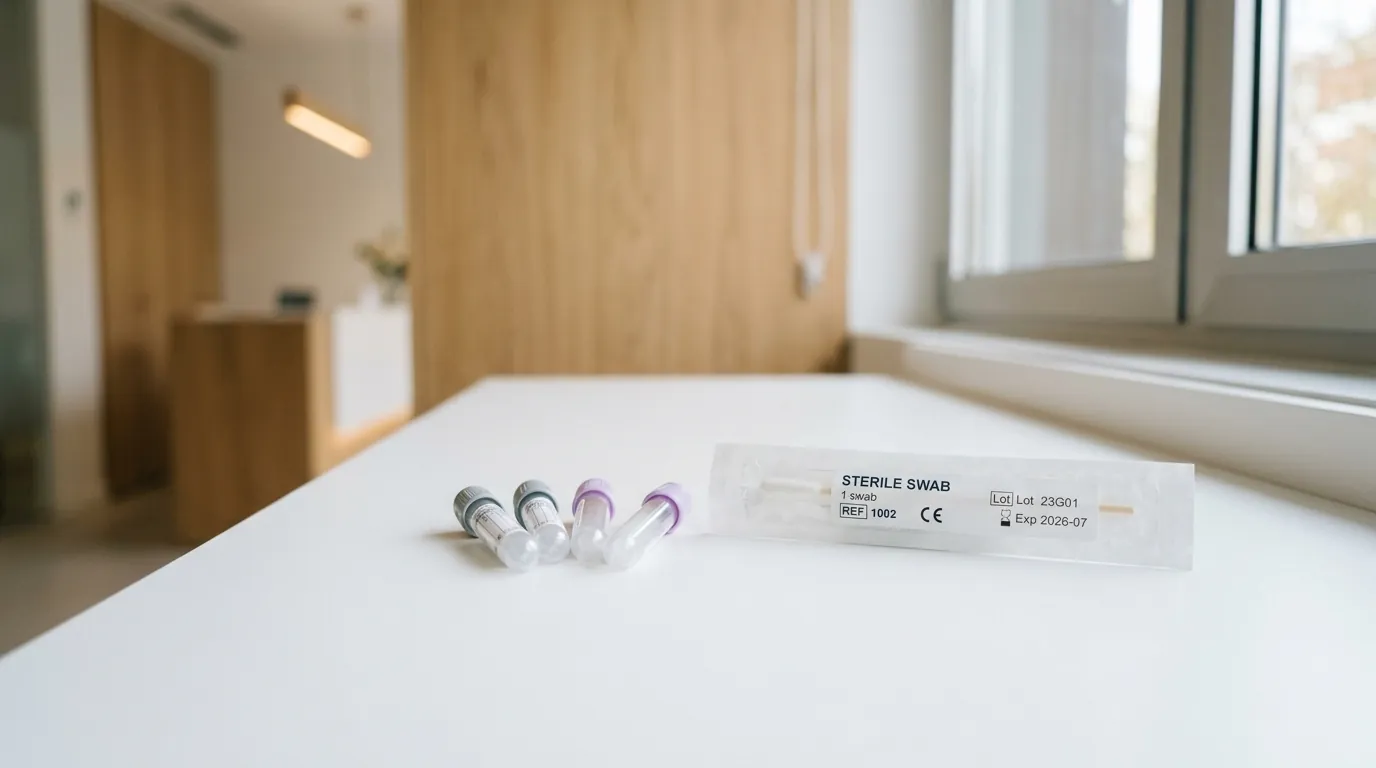
Sexually transmitted infection testing: HIV, syphilis and hepatitis serology, and chlamydia and gonorrhoea PCR, with confidentiality and medical advice.
Getting tested is the normal thing to do
Many sexually transmitted infections cause no symptoms for months, and yet can still be passed on and can leave lasting effects. Getting tested after a risky encounter, at the start or end of a relationship, or simply as a routine check, is a sensible decision. Here you're seen with confidentiality and without unnecessary questions.
What's tested
- Blood serology: HIV, syphilis, hepatitis B and hepatitis C.
- Sample PCR: chlamydia and gonorrhoea, and other organisms depending on the case.
- Further tests where there are symptoms: unusual discharge, stinging when urinating, lesions on the skin or genitals, pelvic pain.
The window period
This is the part that causes the most confusion. After a risky contact, tests don't give a reliable result straight away: each infection has its own timeframe. Testing the next day can give false reassurance. At the appointment you'll be told when the tests are due based on the date of contact, and whether any should be repeated later.
If it comes back positive
Most have treatment, and several are fully curable. The important thing is to start it promptly, complete it and let sexual partners know so they can be tested too: it's the only way to break the chain and avoid reinfection. All of this is explained at the appointment, with the same discretion the test itself was carried out with.
Frequently asked questions
How long do I have to wait after unprotected sex?
Each infection has its own window period: getting tested the next day can give false reassurance. At the appointment you are told which tests are appropriate given the date of exposure and whether any should be repeated later on. That is precisely the part that causes most confusion and the one it matters most to get right.
Can it be done confidentially?
Yes. It is a medical appointment like any other, with confidentiality and no unnecessary questions. You can come for a routine check, at the start or end of a relationship, or after a specific situation; you do not have to justify anything. The results are given to you and explained at an appointment.
If it comes back positive, is there treatment?
Most do, and several are cured completely. What matters is starting early, completing the treatment and telling sexual partners so they can be tested too: it is the only way to break the chain and to avoid reinfection. All of that is explained at the appointment, with the same discretion.
What tests are done to detect STDs?
Blood serology for HIV, syphilis and hepatitis B and C, and PCR on a sample —urine or swab— for chlamydia and gonococcus, which are the most common and the ones that most often cause no symptoms. Depending on sexual practices and symptoms, testing is extended to other sites and microorganisms.
Which STDs or STIs have no cure?
The bacterial ones —syphilis, chlamydia, gonorrhoea— are cured with antibiotics. The viral ones are controlled: HIV has treatment that keeps it undetectable and untransmittable, genital herpes runs in treatable outbreaks and HPV is usually cleared by the body itself. Hepatitis B is controlled and hepatitis C can indeed be cured today with antivirals.