
Prostate check-up
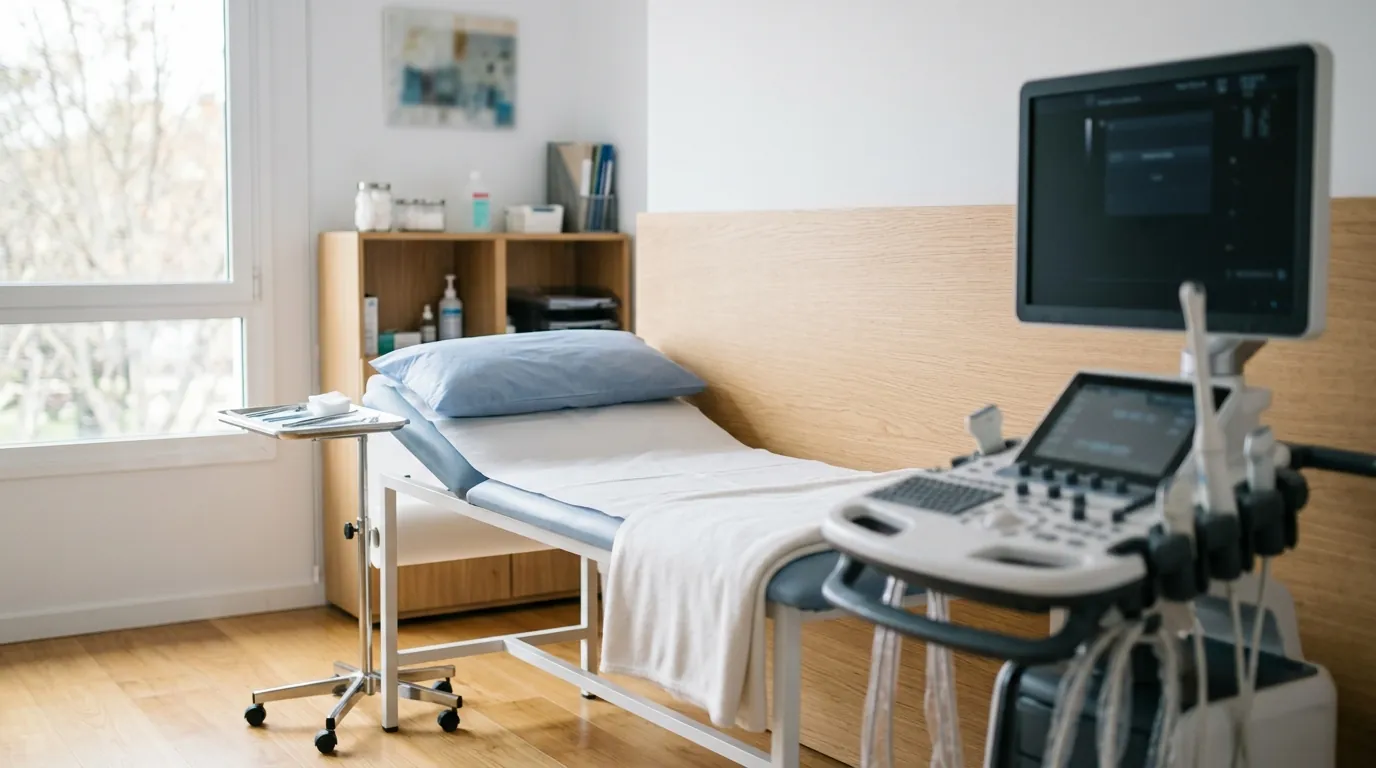
Prostate clinic: assessing urinary symptoms, examination, PSA and ultrasound, treating benign enlargement and screening advice.
The symptoms that bring people in
- Getting up once or several times a night to urinate.
- A weak stream, that starts with difficulty or stops and starts.
- A feeling of not fully emptying the bladder.
- Urgency and needing to go more often during the day.
- Dribbling at the end.
The most common cause in men from their fifties onwards is benign prostatic hyperplasia: the gland grows and presses on the urethra. It's benign, as the name says, but it affects sleep and daily life, and it can be treated.
What happens at the consultation
A history and symptom questionnaire, an examination — including a rectal exam, brief and well tolerated, which gives information no blood test can —, a urine test, PSA when indicated, and ultrasound to measure the prostate and check how well the bladder empties.
PSA, with nuance
PSA is useful, but it isn't a simple yes-or-no switch: it can rise because of the enlargement itself, prostatitis, sexual activity, cycling or an examination. A high value doesn't mean cancer, and a normal one doesn't fully rule it out. That's why it's interpreted alongside the examination, your age, how the value changes over time and your family history. Whether or not to screen is decided by discussing it with you.
Treatment
From simple measures — spreading out fluids, cutting alcohol and caffeine at night, reviewing medication — to medication, which resolves most cases. When symptoms are severe, there's retention, or medication isn't working, surgery is considered. All follow-up is carried out at the urology.
Frequently asked questions
Does a high PSA mean cancer?
No. PSA can rise because of hyperplasia itself, because of prostatitis, after sexual intercourse, after cycling or after an examination. And a normal value does not rule it out completely. It is interpreted alongside the examination, your age, how the value changes over time and your family history.
Is a digital rectal examination necessary?
It provides information that no blood test gives and it is brief and well tolerated. Together with the urine test, PSA when indicated and the ultrasound scan to measure the prostate and check bladder emptying, it completes an assessment that in most cases is resolved with medical treatment.
At what age should the prostate be checked?
The conversation usually comes up from the age of 50, and earlier — around 45 — if there is a family history of prostate cancer. It is not an automatic screening: it is decided together with you, weighing the pros and cons of the PSA test. With urinary symptoms, a consultation is appropriate at any age.