
Abdominal ultrasound
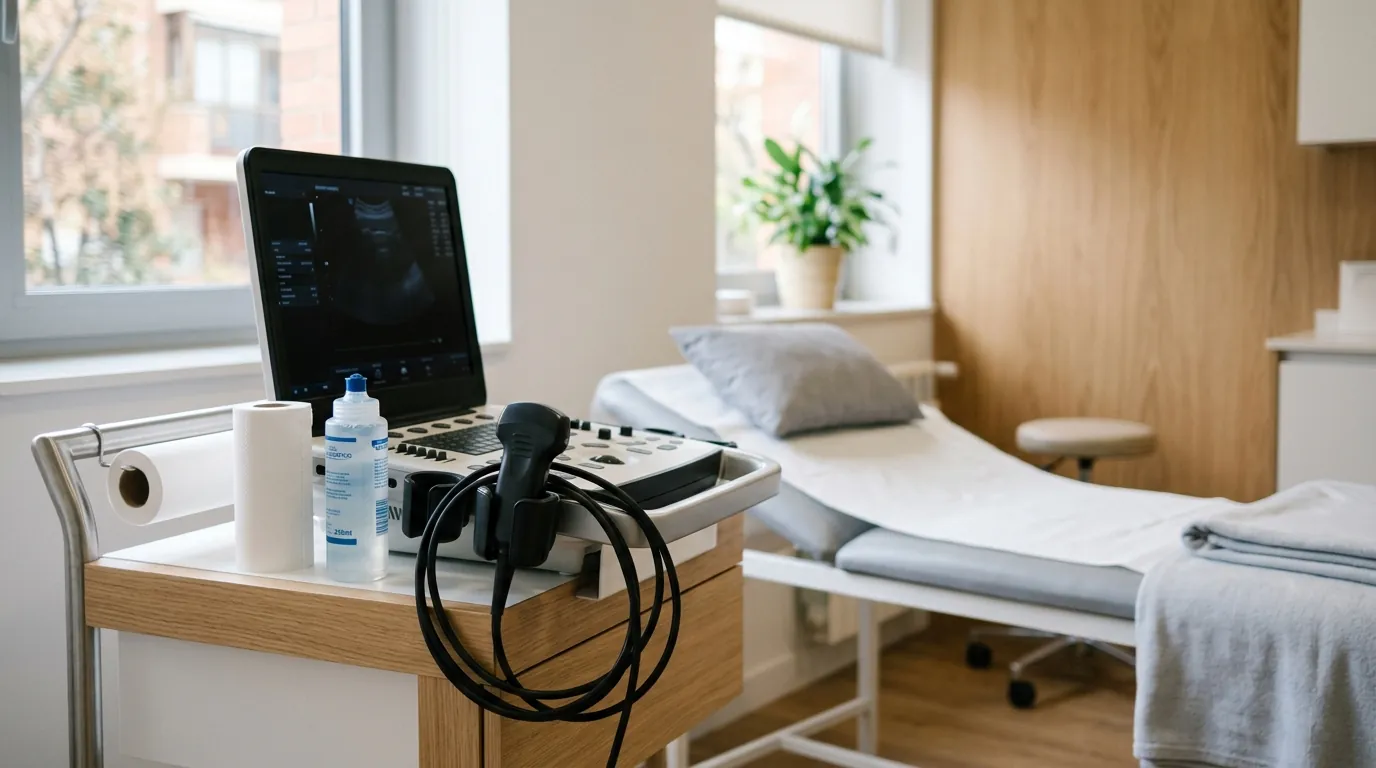
Abdominal and renal ultrasound: examining the liver, gallbladder, pancreas, spleen and kidneys with no radiation. Needs a few hours' fasting. With a radiologist's report.
What's examined
Abdominal ultrasound uses sound waves — no radiation — to see the organs of the abdomen moving in real time. It can assess:
- Liver: size, fatty liver, focal lesions.
- Gallbladder and bile duct: stones, inflammation.
- Kidneys and urinary tract: stones, cysts, dilation.
- Pancreas, spleen and major vessels, and the bladder and prostate via the abdomen.
When it's requested
Abdominal pain, heavy digestion, abnormal liver blood tests, suspected renal colic, monitoring a previous finding, a general review at a check-up or investigating a palpable lump.
How to prepare
- Fast for 6 to 8 hours: food fills the bowel with gas and blocks the view. You can drink water and take your usual medication.
- Avoid fizzy drinks and chewing gum the day before.
- If the bladder or prostate is also being examined, you'll be asked to come with a full bladder.
- Comfortable clothing: the abdomen needs to be uncovered.
What it involves and what happens afterwards
You lie on the table, a warm gel is applied and the radiologist moves the probe over the abdomen, occasionally asking you to breathe in or turn. It takes between fifteen and twenty minutes and doesn't hurt. Afterwards you can eat and carry on as normal. The report is issued by the radiologist together with the images; depending on the finding, it may be completed with other tests or referred to the relevant clinic.
Frequently asked questions
Why do I have to fast?
Because food fills the bowel with gas and hides exactly what needs to be seen, particularly the gallbladder and the pancreas. Six to eight hours of fasting are required; you may drink water and take your usual medication, and it is advisable to avoid fizzy drinks and chewing gum the day before.
Do I need to come with a full bladder?
Only if the bladder or the prostate are also going to be studied via the abdominal route; in that case you are told when booking your appointment. For studying the liver, gallbladder, pancreas and kidneys it is not necessary.
Does an ultrasound scan involve radiation?
No. It uses ultrasound waves, so it can be repeated as many times as necessary and it is also performed during pregnancy. It takes between fifteen and twenty minutes, it does not hurt, and afterwards you can eat and go about your day normally.
Which conditions show up on an abdominal ultrasound?
Gallstones, fatty liver and liver lesions, kidney cysts and stones, dilation of the urinary tract, an enlarged spleen, abdominal aortic aneurysms and fluid collections. It does not see everything: the bowel and the pancreas are better studied with other tests.
How should I prepare for an abdominal ultrasound?
Six to eight hours of fasting, with water and your medication allowed, avoiding fizzy drinks and chewing gum the day before. If the bladder or prostate is also being examined, you will be asked to come with a full bladder. Wear comfortable clothing: the abdomen has to be uncovered.