
Kidney stones
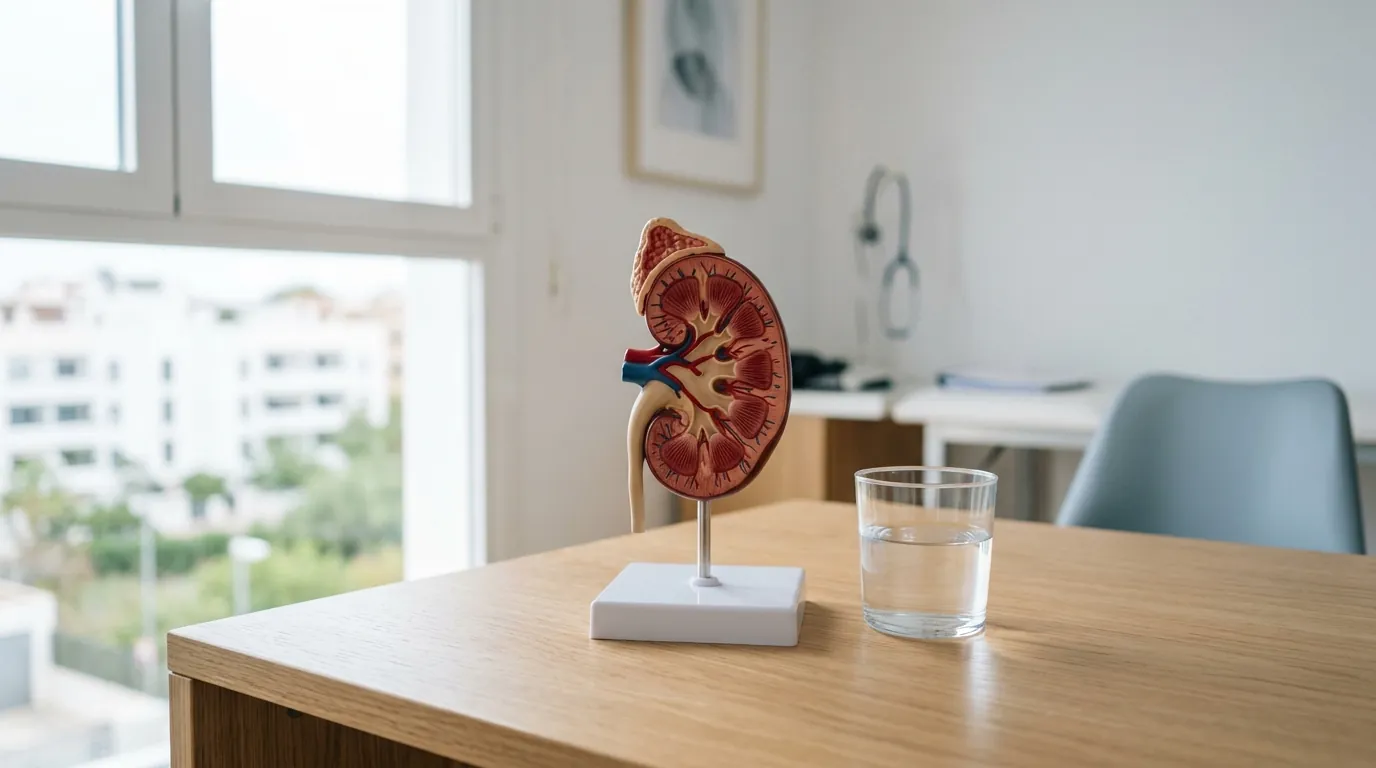
Kidney stones: managing renal colic, imaging tests, treating the stone and a metabolic workup to stop them forming again.
What it is and how it shows up
Kidney stones form when certain substances in the urine become concentrated and crystallise. While they stay still they may cause no symptoms; the problem starts when they move down the ureter and block it: that's renal colic, intense pain in the lower back that radiates towards the abdomen and groin, comes in waves, doesn't ease in any position, and comes with nausea and a constant urge to urinate.
When it's an emergency
Colic with fever, uncontrollable vomiting, heavy blood in the urine, or in someone with only one kidney needs immediate attention: the combination of obstruction and infection is a genuine emergency.
Diagnosis
With blood and urine tests and imaging: ultrasound shows whether the kidney is dilated and locates many stones, and a non-contrast CT scan is the most accurate test when needed. Size is also assessed, as that's what decides treatment: small stones usually pass on their own with hydration and medication.
Treatment and, above all, prevention
Frequently asked questions
When is renal colic an emergency?
When it comes with fever, vomiting that does not settle, heavy blood in the urine, or when it happens in someone with a single kidney. The combination of obstruction and infection is a genuine emergency and requires immediate care.
Do all kidney stones have to be operated on?
No. Small ones are usually passed on their own with hydration and medical treatment. Size and location decide: when a stone does not pass or causes obstruction, there are techniques to break it up or remove it, and which one applies is assessed case by case.
How do I stop them from coming back?
Anyone who has had a stone is at high risk of having another, so prevention is the most important part: drinking around two litres of water a day, going easy on salt and animal protein and not cutting calcium out of the diet, which is a common mistake. If they keep recurring, a metabolic work-up is carried out.
How is a kidney stone passed?
Small ones usually come out on their own with plenty of fluids, pain relief and, in selected cases, medication that relaxes the ureter. It is worth filtering the urine to collect the stone so that it can be analysed. If it does not come out, causes obstruction or there is infection, lithotripsy or endourological surgery are considered.
What should you avoid eating if you have kidney stones?
It depends on the type of stone, and that is why it is analysed. In general: cut down on salt, do not overdo animal protein or cola drinks, and watch foods very high in oxalate if that is your type of stone. The most common mistake is removing calcium from the diet: that usually increases the risk rather than reducing it.