
Paediatric speech therapy
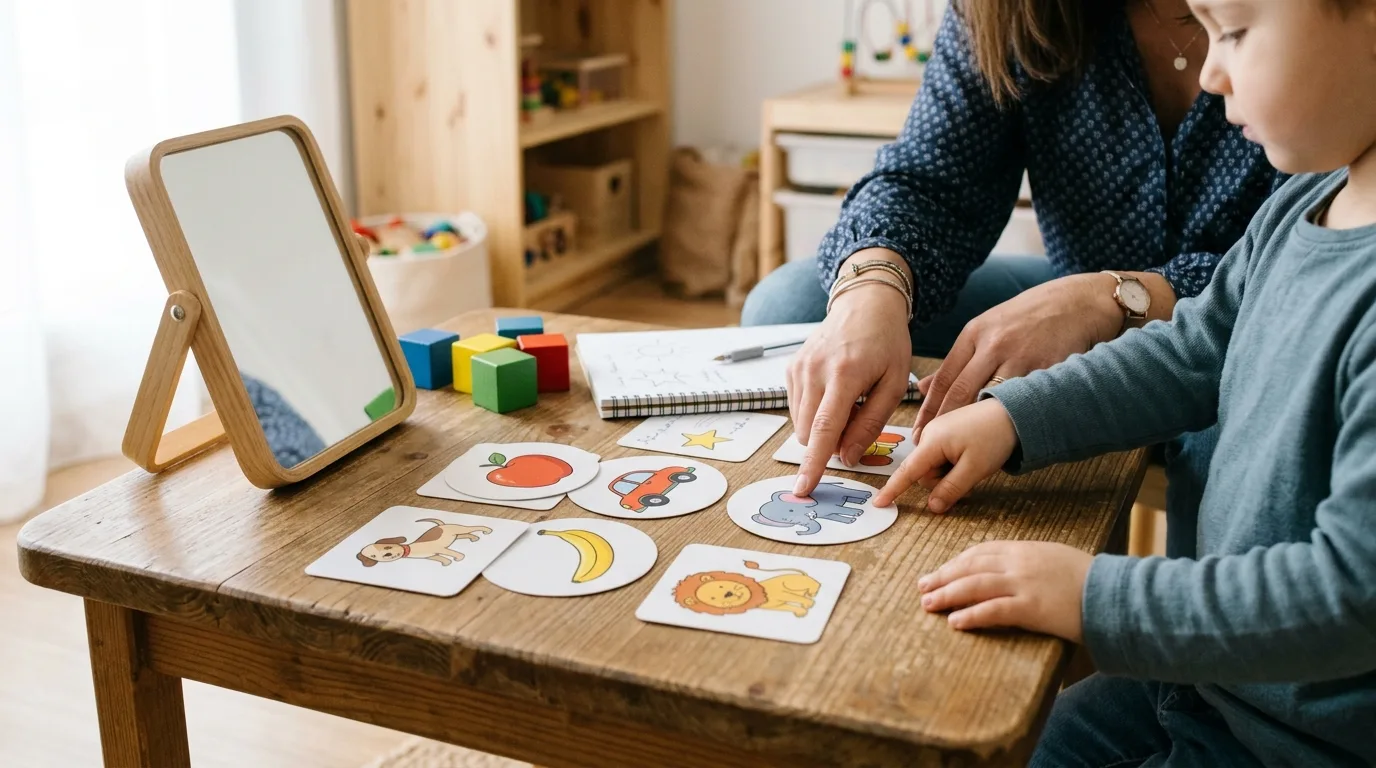
Paediatric speech therapist: language delay, pronunciation, stammering, atypical swallowing and dyslexia in children and adolescents. In English, French and German.
Paediatric speech therapist: what it is for and when to consult
A paediatric speech therapist assesses and treats difficulties in children and adolescents when speaking, understanding, reading, writing or swallowing. There is no need to wait and see if they will "eventually talk": if something concerns you, an assessment helps clear up any doubts. Often, a few home guidelines and a follow-up review are enough.
At Rincón Salud, our speech therapist offers consultations at the medical centres in Torre del Mar, Rincón de la Victoria and Málaga (La Rosaleda). Book an appointment for an initial assessment.
When to take a child to the speech therapist
Every child develops at their own pace, but there are signs that justify consulting a specialist without waiting for the next check-up:
- Around 18 months: they do not say any words, do not point to show you something or do not seem to understand what you say to them.
- At 2 years old: they do not put two words together, such as "more water".
- At 3 years old: people outside the home almost always find them difficult to understand, or they do not form sentences.
- At 4 or 5 years old: they struggle to explain what they have done, get frustrated when speaking or avoid doing so.
- At any age: they stop saying words they used to say, get stuck or make an effort when speaking, or you have doubts about whether they can hear properly.
If the concern is hearing, the first step is a paediatrics consultation: to learn to speak, a child needs to hear well. In "My child doesn't talk much: what to observe before seeing a speech therapist" we tell you what to note down before your visit.
What we treat in children and adolescents
Late talkers or children who talk little
This is the most common reason for consultation in young children. Sometimes it is a language delay: the child follows the same developmental steps as others, but more slowly. Other times, the difficulty in learning words, understanding spoken language or building sentences persists over the years and cannot be explained by a hearing problem or another cause. This is what is now known as developmental language disorder (formerly specific language impairment or SLI). In both cases, starting early helps, and older children also improve with treatment.
Difficulty pronouncing certain sounds
Substituting one sound for another, skipping it or pronouncing it differently is called dyslalia. This is normal in the early years while speech matures, and some sounds take longer than others: the trilled 'r' sound is usually among the last to develop, around five or six years old. If it is still difficult after that age (known as rhotacism), or if they are hard to understand for their age before then, it is advisable to get an assessment. It is addressed through mouth, tongue and listening exercises that the child practises like a game.
Struggles or gets stuck when speaking
Between the ages of two and five, it is common for a child to repeat syllables or words as their language grows, and most outgrow it. It is advisable to consult a specialist if the repetitions last for months, if they block or struggle to get words out, if they start avoiding speech, or if there are other cases of stammering in the family. With younger children, much of the work involves guiding the family on how to speak to them and how to react. With older children and adolescents, work also focuses on fluency and confidence when speaking.
Swallowing by pushing with the tongue or mouth breathing
When swallowing, the tongue should rest against the palate. When it pushes against the teeth or slips between them, this is known as atypical swallowing. It often goes hand in hand with other habits: mouth breathing, keeping the lips constantly parted, or prolonged dummy use or thumb sucking. It is frequently detected by the dentist, as these habits can affect the bite.
Myofunctional therapy consists of exercises to re-educate the tongue, lips and breathing. It is coordinated with the paediatric dentist or with dentofacial orthopaedics when the child wears or is going to wear braces. If they breathe through their mouth because of a blocked nose, they should first see the paediatrician or the ENT specialist.
We also work on tongue mobility in cases of a short lingual frenulum (tongue-tie), before and after a frenectomy if recommended by the dentist.
Difficulties reading and writing
When a child with normal vision and hearing, who attends school regularly, experiences persistent difficulty learning to read and write, it may be a case of dyslexia. It usually becomes noticeable in the early years of primary school: they read slowly, confuse or skip letters, and it requires much more effort than for their classmates. It has nothing to do with intelligence or effort. The speech therapist assesses reading and writing skills, works with the child on techniques to read more fluently, and provides guidance to the family.
Communication in autism and other developmental disorders
In children with autism or other developmental difficulties, speech therapy works on communication in a broad sense: understanding and making oneself understood, making requests, taking turns in conversation and, when necessary, using gestures or picture aids. The plan is tailored to each child and developed alongside the family. If you are concerned about how your child interacts or plays, you can also discuss it with paediatrics or child psychology.
Speech therapy for adolescents
At this age, the reasons for consulting change: persistent stammering, a sound that was never fully mastered, tongue thrusting while wearing invisible orthodontics, or slow reading that affects schoolwork. The approach also changes: the teenager actively participates in setting their goals, and sessions are planned together with them, not just with their parents.
What to expect during the first visit
The initial consultation is an assessment. We speak with the family about your concerns and the child's development, and observe them while playing or talking to see what they understand, how they express themselves and how they pronounce sounds. Based on this, we explain what is happening, whether treatment is required, and set clear goals. No prior report is needed; if you have reports from the paediatrician, ENT specialist or school, please bring them along.
The work does not stop at the clinic: we provide home guidelines so you can continue practising between sessions. When necessary, we coordinate with the paediatrician and dentist.
Also in English, French and German
Sessions can be conducted in Spanish, English, French or German, allowing the child to work in whichever language they feel most comfortable with.
Book an appointment with our speech therapist or call us free on 900 52 52 84.
Frequently asked questions
What does a speech and language therapist do with a child?
First, they assess what the child struggles with and why: how they understand, how they express themselves, how they pronounce words and, if necessary, how they swallow or read. They then work with the child through age-appropriate games and exercises, and provide the family with guidelines to practise at home.
At what age is it concerning if a child does not speak?
It is advisable to seek advice if, by 18 months, they do not say any words or, by 2 years of age, they do not put two words together. You should also consult a specialist earlier if they do not point, do not respond to their name, or do not seem to understand what is being said to them. Every child develops at their own pace, but these milestones help to ensure you do not wait too long.
My child cannot pronounce the 'r' sound, when should I seek advice?
The strong 'r' sound is one of the last sounds to develop and it is normal not to master it until five or six years of age. If after that age they still cannot pronounce it, or if before then it is difficult to understand them because they substitute many sounds, an assessment is recommended.
Does a young child's stammering go away on its own?
In most children, yes. It is advisable to seek advice if it lasts for more than a few months, if the child gets stuck or struggles to speak, if they feel embarrassed, or if there is a family history of stammering. An early assessment does no harm and helps the family know how to act.
Is paediatric speech therapy covered by my insurance?
Speech therapy is covered by many of the insurance companies we work with. You can check yours when booking an appointment on the website, in the list of insurance providers and mutual societies, or by calling free on 900 52 52 84.
What is atypical swallowing and why does a speech therapist treat it?
It is the bad habit of pushing the teeth with the tongue when swallowing. The speech therapist retrains the muscles of the mouth to stop the teeth from shifting.
Do I need a report from the paediatrician to see a speech and language therapist?
It isn't usually essential, but reports from the paediatrician or ENT specialist help at the first assessment. If there are doubts about hearing or general development, it's a good idea for the paediatrician to see your child as well.
At what age is it advisable to operate on a tongue-tie?
If it interferes with breastfeeding, as soon as possible, within the first few weeks. If the problem appears later — pronunciation, tongue mobility, gum recession — it is assessed together with speech therapy and dentistry and the timing is decided then; there is no single right age. What makes no sense is operating on a tongue-tie that is not causing any problem.
Questions and comments
Ask the specialist who reviews this page or leave us a comment. Everything is reviewed before it is published.
To write, first confirm your email: we will send you a code.
Professional review
This content was reviewed by Alicia Marín López (Speech therapy), registration no. 29/0227 (Colegio de Logopedas de Andalucia), to check that the information is accurate and up to date.
Review date: November 2026
References (9)
- NIDCD (National Institutes of Health). Etapas del desarrollo del habla y el lenguaje Open
- Centros para el Control y la Prevención de Enfermedades (CDC). Indicadores del desarrollo: lo que debe saber Open
- NIDCD (National Institutes of Health). Trastorno del desarrollo del lenguaje Open
- MedlinePlus. Trastorno fonológico Open
- MedlinePlus. Tartamudeo Open
- NIDCD (National Institutes of Health). La tartamudez: causas, síntomas y quiénes la desarrollan Open
- American Speech-Language-Hearing Association (ASHA). Orofacial Myofunctional Disorders Open
- MedlinePlus. Trastorno del desarrollo de la lectura Open
- NIDCD (National Institutes of Health). Trastornos del espectro autista: problemas de comunicación Open