
Consejos
Published on
Speech delay: what to look for if your child doesn't talk much
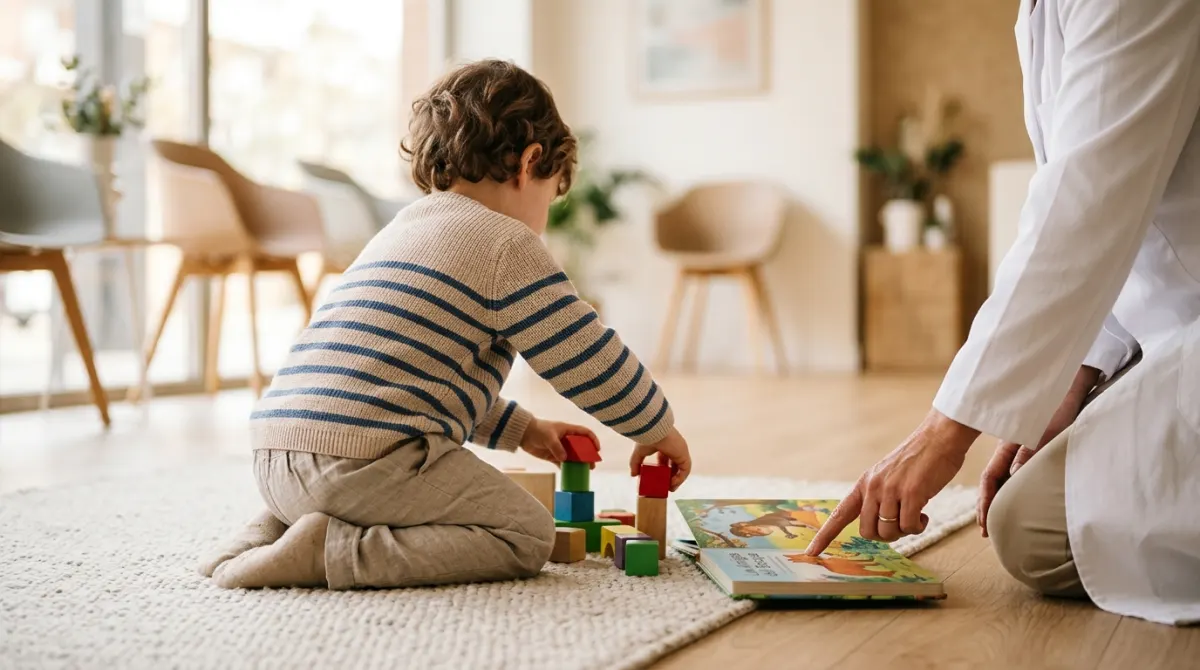
If your child doesn't talk much, look at how they communicate, what they understand and whether they hear well. Milestones by age and when to get advice.
If your child doesn't talk much, the first thing to do isn't to count words, but to observe how they communicate, how much they understand and whether they hear well. Every child goes at their own pace, but there are rough guides by age and some signs of speech delay that justify an assessment. Seeking advice early doesn't mean there's a problem: it helps to settle your doubts.
Talking is more than saying words
Before the first words, language is already under way. A child is communicating when they look at you to show you something, point at what they want, copy a gesture, respond to their name or turn at a noise. And also when they understand what you say without you pointing.
That is why, when a child doesn't talk much, three things are looked at together:
- Understanding: what they understand without supporting gestures.
- Expression: how many words they use, whether they combine them and whether they can be understood.
- Communication and interaction: whether they try to share things with you, whether they look, point, copy and play with you.
A child who says few words but understands well, points and seeks interaction isn't in the same situation as one who also doesn't understand or barely communicates in any way.
Speech and language milestones by age, as a guide
These milestones reflect what most children do at each age. They aren't a test: they help you know what to look for.
- Around 12 months: waves goodbye, calls "mama" or "dada" (or another special name) and understands "no".
- Around 18 months: tries to say at least three words besides "mama" or "dada" and follows a simple instruction without gestures, such as "give it to me".
- Around 2 years: puts two words together ("more milk"), points to things in a book when asked, points to at least two parts of the body and uses more gestures, such as blowing kisses or nodding yes.
- Around 3 years: holds a short conversation of at least two exchanges, asks "what", "where" or "why" questions, says their name and can be understood most of the time.
For children born prematurely, during the first few years their age is counted from the date they were due to be born (corrected age).
Signs that it's time to ask for an assessment
It's a good idea to seek advice, without waiting for the next check-up, if your child:
- Doesn't reach one or more of the milestones for their age.
- Has stopped saying words or doing things they used to do. Losing skills is worth getting checked at any age.
- Doesn't seem to understand simple instructions or doesn't respond when you call them.
- Hardly ever points, makes little eye contact or doesn't try to share what interests them.
- At around 3 years, people outside the home find them hard to understand almost all the time.
And also if you are worried, even if you can't explain why. None of these signs is a diagnosis: they mean it's worth taking a calm look with a professional.
First of all, check their hearing
To learn to talk, you need to hear well. A common cause that is easy to miss is glue ear: fluid behind the eardrum, without an acute infection, which doesn't usually hurt but makes it harder to hear. It can linger after a cold or an ear infection and last for weeks.
Possible signs include a child who hears poorly when they aren't looking at the person speaking, who struggles to follow a group conversation, who asks for things to be repeated or whose speech and language are delayed. You may also notice a lack of attention or concentration.
If you notice any of this, or if your child has one cold, runny nose and ear infection after another, mention it at the paediatrics clinic. Hearing is usually monitored at well-child check-ups and, if necessary, an ENT specialist can assess it further. Glue ear often gets better by itself, but checking how your child hears avoids putting down to language delay what is really an ear problem.
If your child doesn't talk much, what to note before the appointment
What the family reports is one of the most useful parts of the assessment, because at an appointment a child may feel shy and talk less than at home. For one or two weeks, write down:
- The words they say, even if they pronounce them in their own way ("wawa" for water). If two languages are spoken at home, note the words in both.
- Whether they put words together and how they ask for what they want: by speaking, pointing, leading you by the hand or crying.
- What they understand without gestures: "bring your shoes", "where's daddy?".
- How they play: whether they copy what you do, whether they show you things and whether they respond when you call them from another room.
- How they hear: whether they turn up the volume, sit very close to the television or respond less well when they have their back to you.
- Their history: pregnancy and birth, whether they were premature, frequent ear infections or colds, snoring, and whether anyone in the family was slow to start talking.
- What the nursery or school says.
A short video of a play session at home can help the professional to see how your child really communicates. Also bring any reports from the paediatrician or ENT specialist if you have them: they aren't usually essential, but they save time. And avoid comparing them with brothers, sisters or cousins in front of them: the assessment looks at your child, not at the average.
What a speech and language assessment involves
The usual first visit to speech and language therapy involves talking with the family and observing your child at play, to assess what they understand, how they express themselves, how they pronounce words and how they relate to others. With this information it can be decided whether some advice for home and a follow-up are enough, whether therapy would be helpful or whether another assessment is needed, such as a hearing test or a developmental assessment with the paediatrician.
You don't need to have all the answers to seek advice. If anything you have read sounds familiar, an early assessment will guide you on where your child is and what might help them.
Frequently asked questions
Is it better to wait until age 3 to see if they start talking?
If you have doubts, there's no need to wait. Some children who talk late catch up by themselves, but there's no way of knowing in advance which ones, and an assessment doesn't commit you to starting treatment: sometimes advice and a follow-up are enough.
Do I need a report from the paediatrician to see a speech and language therapist?
It isn't usually essential, but reports from the paediatrician or ENT specialist help at the first assessment. If there are doubts about hearing or general development, it's a good idea for the paediatrician to see your child as well.
What can I do at home in the meantime?
Talk about what you are doing, name what they are looking at, read stories together and give them time to answer without finishing their sentences for them. If they mispronounce a word, say it correctly in a natural way, without asking them to repeat it.
Based on reliable sources
Prepared by our team from the references listed below. This is general information and does not replace a consultation.
Article pending review by one of our doctors.
References (4)
- CDC. Indicadores del desarrollo a los 2 años (Aprenda los signos. Reaccione pronto.) Open
- CDC. Indicadores del desarrollo: lo que debe saber (listas por edades, 12 meses a 3 años) Open
- NICE NG233. Otitis media with effusion in under 12s (2023) Open
- MedlinePlus en español. Problemas del habla y de la comunicación Open