
Body composition analysis
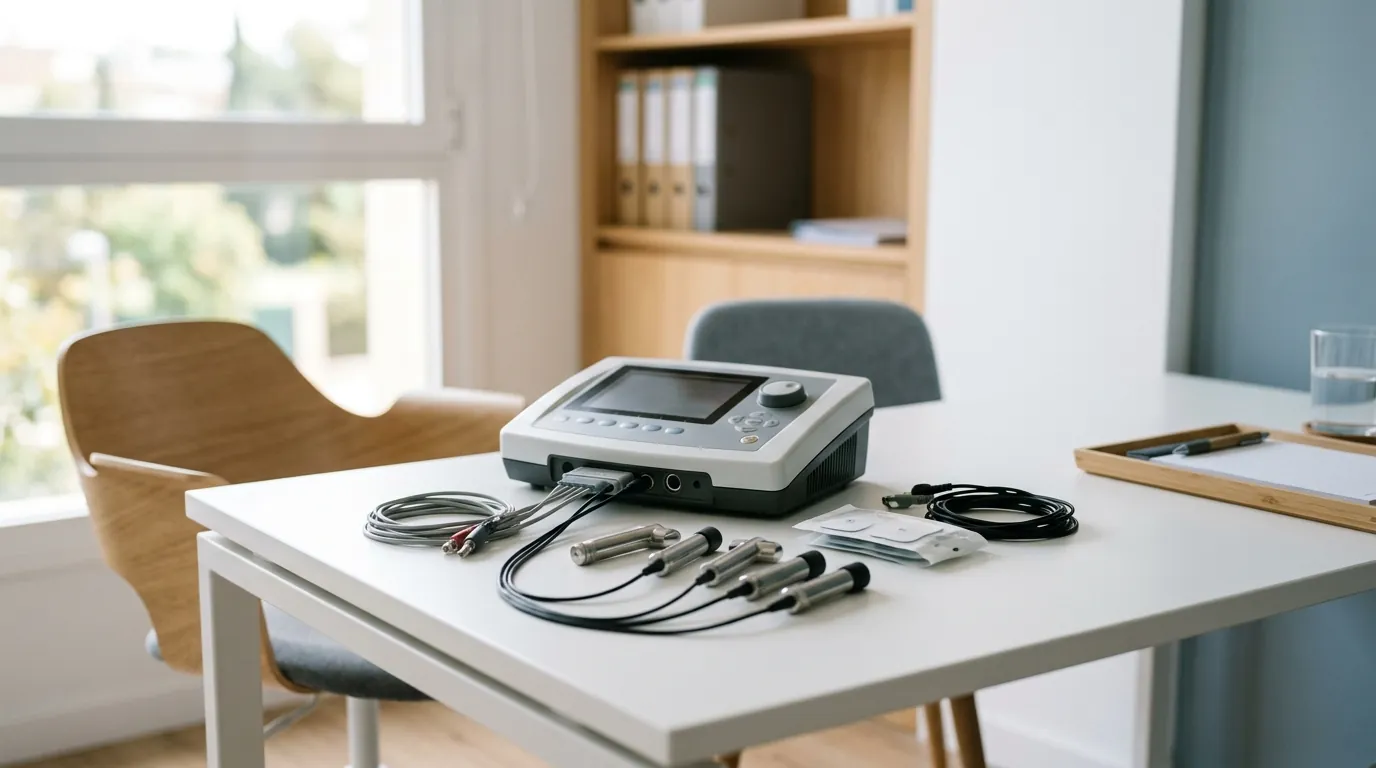
Body composition analysis using bioimpedance and anthropometry: body fat, muscle mass and body water to accurately measure how your body evolves.
Why weight is not enough
Two people of the same weight and height can have completely different bodies. The same thing happens during weight loss treatment: losing three kilos by losing muscle is a poor outcome, even if the scales applaud it. A body composition study breaks down what actually makes up your weight:
- Fat mass and its distribution, especially abdominal fat, which is most closely linked to metabolic risk.
- Muscle mass, the tissue that supports metabolism, strength and independence.
- Body water and its distribution.
How it is measured
Using bioimpedance: the device sends an imperceptible electrical current through the body that behaves differently depending on the tissue it encounters. It is a quick, painless and radiation-free measurement. It is complemented by anthropometry—weight, height, circumferences, and skinfold thickness when required—which provides information that the device cannot give.
How to prepare for accurate results
- Avoid heavy meals and alcohol in the hours leading up to the test; ideally fast for a few hours.
- Stay well hydrated, but avoid drinking large amounts of fluid immediately beforehand.
- Avoid intense exercise or saunas on the same day.
- Empty your bladder beforehand and remove any metallic objects.
- Always repeat the test under similar conditions: the real value lies in tracking your progress, not in a single snapshot.
What the results are used for
To adjust your plan: if you are losing muscle, protein intake and training are revised; if body fat decreases even when your weight has plateaued, you stay the course instead of giving up. It is the tool that transforms a diet into active clinical monitoring. In athletes, it is also used to plan the season. A word of caution: it is not performed during pregnancy or in patients with pacemakers or other implanted devices, as the data would not be reliable; in those cases, body composition is assessed using manual methods.
Frequently asked questions
How do I prepare for a bioimpedance test?
No heavy meals or alcohol in the hours beforehand, well hydrated but without drinking large amounts right before, no intense exercise or sauna that day, with an empty bladder and no metal objects. And always repeat it under similar conditions: what matters is the trend.
Is it the same as weighing myself at home?
No. The scales give a number that mixes fat, muscle and water. Bioimpedance separates them, and that changes decisions: if you are losing muscle, protein and training are corrected; if fat is going down even though weight has plateaued, the course is maintained.
Can anyone have it done?
It is quick, painless and radiation-free, but it should be discussed beforehand in pregnancy and in people with a pacemaker or other implanted devices. At the appointment your situation is checked before it is carried out.
Is bioimpedance reliable?
It is, for tracking progress if it is repeated under similar conditions: after a few hours without eating, well hydrated, without intense exercise beforehand and at the same time of day. The absolute value can vary between devices, so what matters is not one day's number, but the trend over the course of the treatment.
How is a bioimpedance test carried out?
Standing on the device or with electrodes on the hands and feet, in a few minutes and with no discomfort at all: an imperceptible current passes through the body and the amount of fat mass, muscle mass and water is calculated. You have to remove metal objects and empty your bladder beforehand.
Questions and comments
Ask the specialist who reviews this page or leave us a comment. Everything is reviewed before it is published.
To write, first confirm your email: we will send you a code.
Content reviewed by Cristina Nieto Reina