
Biomechanical assessment following a road traffic accident
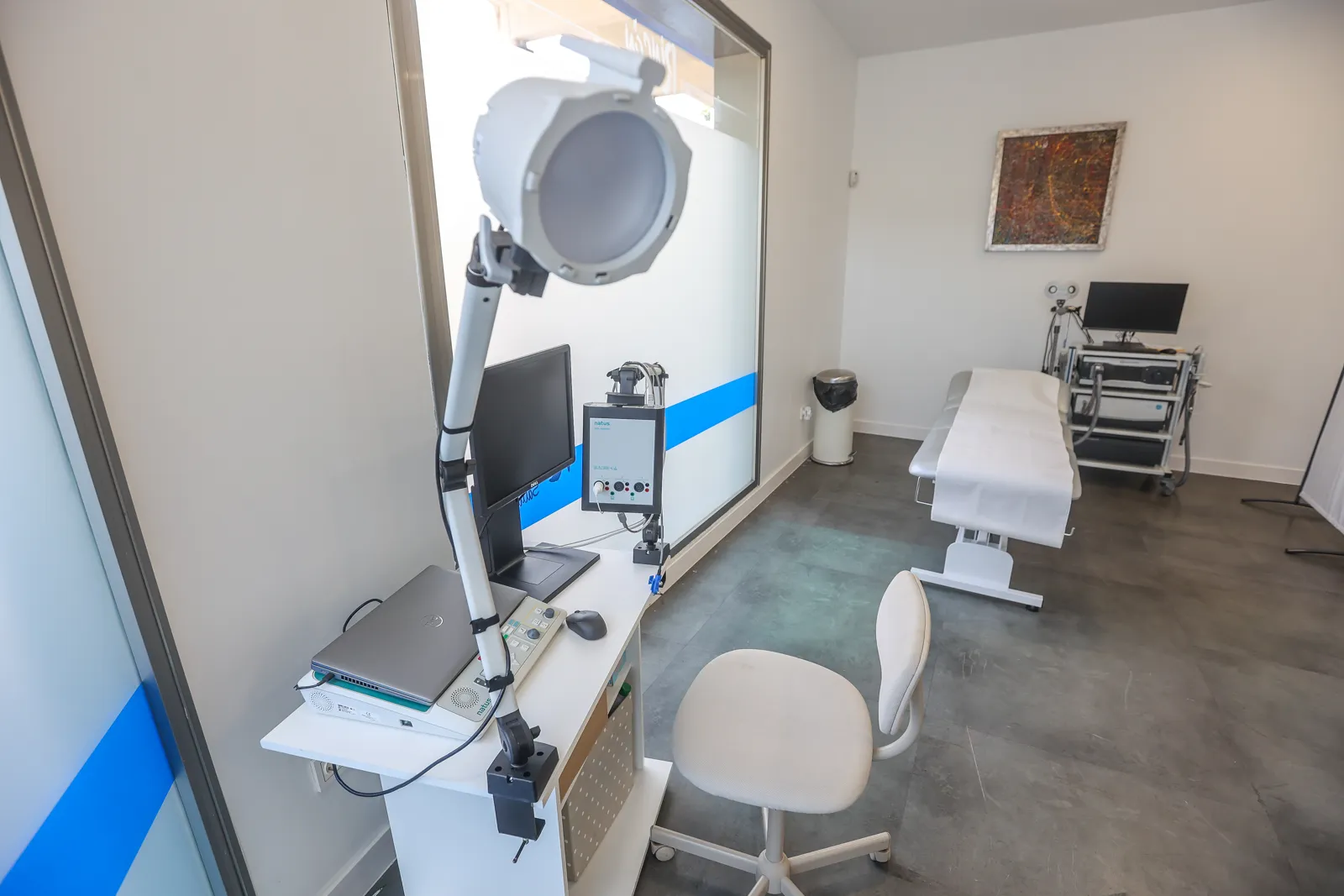
Whiplash, low back pain, fractures or sprains following an accident: biomechanical tests to monitor recovery, decide discharge and document sequelae with objective measurements.
Many injuries following a road traffic accident involve soft tissues, where imaging is often normal: whiplash is not usually visible on an X-ray. What exists is pain, stiffness and loss of function. Biomechanical tests do not measure pain itself, but how it affects mobility and strength. This is why they are used at three stages of the process.
During treatment
An initial assessment and subsequent tests during rehabilitation show whether mobility and strength are improving, plateauing or worsening. This allows the doctor to adjust treatment using objective data and enables the insurer to monitor the case without relying solely on patient reports.
At discharge
Before discharging a patient, it is advisable to verify that the injured region has returned to normal values. If measurements are within the expected range, they support discharge; if not, residual deficits are documented to decide whether to continue treatment.
In the assessment of sequelae
When recovery is incomplete, the report describes the remaining limitation in numerical terms: how many degrees of mobility are missing, how much strength has been lost, how gait has been altered. This provides data that the medical expert can use when applying the compensation scale.
Conditions assessed
- Whiplash (cervical sprain).
- Disc pathology and low back pain.
- Fractures in any location, once consolidated.
- Ligament and meniscal injuries.
- Vertigo and instability following the accident, with the Vestibular Unit.
For law firms and insurers
We work with personal injury lawyers, medical experts and motor insurers. When referring a patient, please state the reason (monitoring, discharge or sequelae) and the affected areas; the report is delivered within the agreed timeframe. Terms for organisations are available upon request. Phone 900 52 52 84, email info@salud101.es.
If you are the patient
The assessment requires a referral: from your treating doctor, your insurer, or a request from your lawyer or medical expert specifying what needs to be evaluated. Please bring this referral and your medical reports, and inform us if legal proceedings are underway, so the report can be tailored to the documentation you require.
Frequently asked questions
Can I have the test done on my own, without a lawyer or insurer requesting it?
Yes, but with a prescription: that of your doctor, or a request from your lawyer or expert witness, specifying which areas need to be evaluated. Bring your reports and, if there are ongoing proceedings, mention it so the report can be tailored to what you need to document.
When is whiplash considered to have left permanent sequelae, and when should it be measured?
A permanent sequela is said to exist when, once treatment is finished and the injury has stabilised, a limitation persists that is no longer expected to improve; this is the point at which medical discharge is assessed and when the compensation scale requires a conclusive report. The most important biomechanical assessment is usually the one carried out at this stage, but it is advisable to have a prior measurement—at the start of or during rehabilitation—so that the report shows progress rather than just a final snapshot. If your case is already at the discharge or claim stage, book an appointment as soon as possible and bring your medical reports and the date of the accident.
If the X-ray and MRI are normal, how is the injury demonstrated?
This is the norm, not an exception: in cervical sprain, X-rays and MRI scans are usually normal. The injury is evident through pain, stiffness, and loss of mobility and strength, and part of this can be documented by measuring how the neck functions. The test does not measure pain, but rather how it affects mobility and strength, and it is interpreted alongside the doctor's examination.
How many impairment points are awarded for whiplash?
The points are not awarded by the test itself: they are assigned by the medical expert applying the scale set out in Law 35/2015, which assesses the residual limitation once the injury has stabilised. What the biomechanical assessment provides is the measurement of that limitation: how many degrees of cervical mobility are missing compared to expected values, how much strength has been lost, or whether movement speed remains altered. With these figures, along with the physical examination and the patient's reported symptoms, the expert can substantiate the sequela.
What is the 'conclusive medical report' required by law to compensate for the sequelae of whiplash?
Article 135 of Law 35/2015 stipulates that the sequela of a minor cervical trauma, whiplash, is only compensated if a conclusive medical report proves its existence after the period of temporary injury. This report is issued by the doctor assessing the injured person, and the biomechanical test is one of the instrumental examinations that can support it, as it adds objective measurements to the doctor's examination. Our report is not in itself the conclusive report nor does it determine compensation: it is the complementary test that the assessing doctor or medical expert incorporates into their expert opinion.
Is it the same as an accident 'biomechanical report' that reconstructs the impact?
No. An impact biomechanics report reconstructs the crash (speeds, deformations, accelerations) to assess whether the impact could have caused the injury, and is carried out by engineers or accident reconstruction experts. Clinical biomechanics measures the person, not the vehicle: how the injured area is functioning and how it is progressing. When an insurer disputes the intensity of the impact, the lawyer may need both reports; here, we perform the clinical one.
Since the accident I have had dizziness and instability, can this be measured?
Yes. Dizziness and instability are common after whiplash and can be caused by the neck itself or by an impairment of the balance system. They are measured using posturography (how you maintain balance while standing, with and without visual support) and gait analysis, in the same centre as the Vestibular Unit, and if necessary, completed with an otoneurological examination.
Based on reliable sources
Prepared by our team from the references listed below. This is general information and does not replace a consultation.
Content pending review by one of our doctors.
References (6)
- Boletín Oficial del Estado. Ley 35/2015, sistema para la valoración de los daños causados a las personas en accidentes de circulación (artículo 135) Open
- Mayo Clinic. Whiplash: diagnosis and treatment Open
- Elliott JM, Parrish TB, Walton DM, et al. American Journal of Emergency Medicine (2020). Does Overall Cervical Spine Pathology Relate to the Clinical Heterogeneity of Chronic Whiplash? Open
- Dall'Alba PT, Sterling MM, Treleaven JM, Edwards SL, Jull GA. Spine (2001). Cervical range of motion discriminates between asymptomatic persons and those with whiplash Open
- Mazaheri M, Abichandani D, Kingma I, Treleaven J, Falla D. PLoS One (2021). A meta-analysis and systematic review of changes in joint position sense and static standing balance in patients with whiplash-associated disorder Open
- Treleaven J, Jull G, Lowchoy N. Journal of Rehabilitation Medicine (2005). Standing balance in persistent whiplash: a comparison between subjects with and without dizziness Open