
Thyroid ultrasound
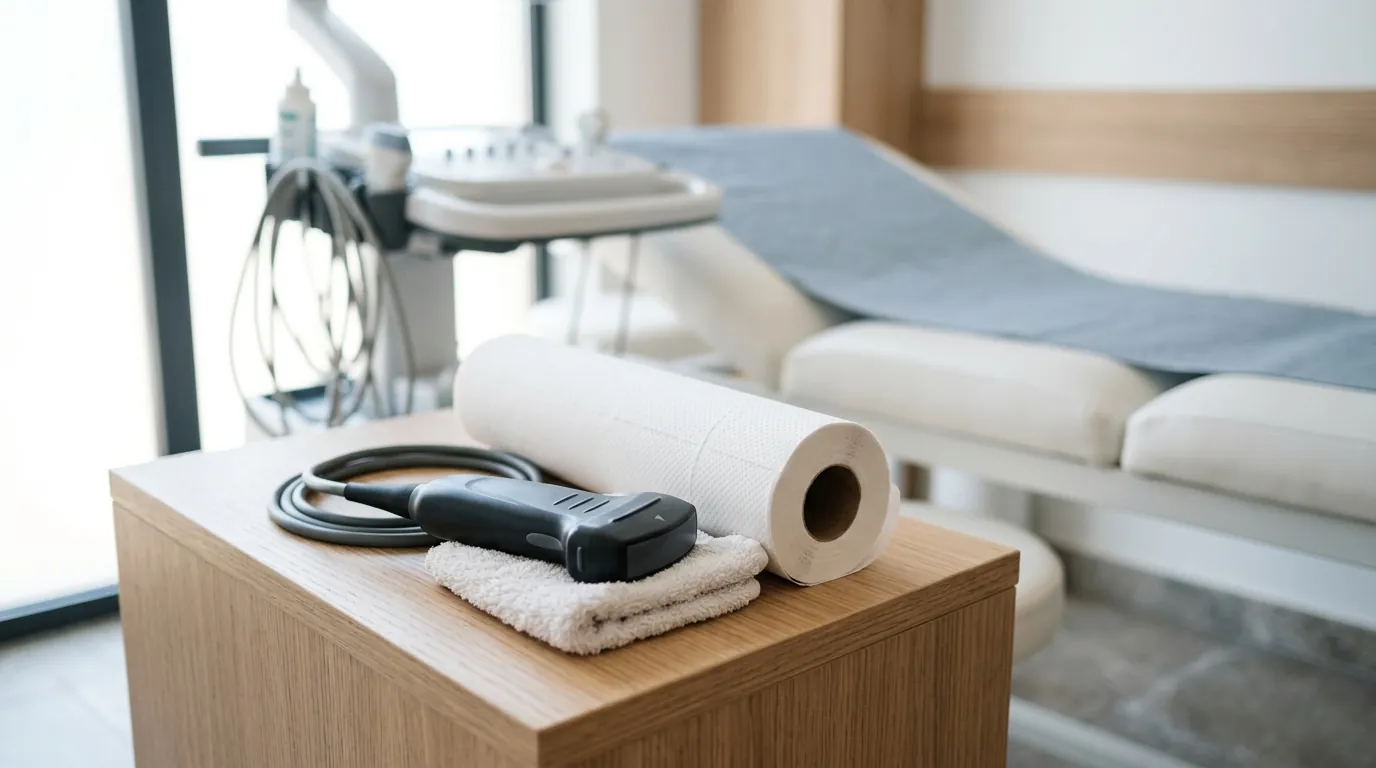
Thyroid and neck ultrasound: examining nodules, goitre and lymph nodes, no radiation or preparation needed, with a radiologist's report.
When it's requested
- A palpable lump in the neck or an enlarged thyroid.
- Abnormal hormone test results — high or low TSH.
- Monitoring an already-known nodule.
- Neck lymph nodes that don't go away.
- A family history of thyroid disease or previous radiotherapy to the neck.
What information it gives
The ultrasound measures the gland, detects nodules — very common and the vast majority benign — and describes their features: size, content, margins, presence of microcalcifications and blood flow. Based on that, the nodule's risk is classified, and from there the decision follows: routine monitoring or further investigation with a biopsy.
What the test involves
You lie on your back with your neck slightly extended, gel is applied and the area is examined with the probe. It takes about ten to fifteen minutes, doesn't hurt, has no radiation and needs no preparation: you can eat normally and take your medication, including thyroid medication.
Afterwards
The report describes the gland and any relevant nodule, and recommends follow-up. Most nodules only need spaced-out check-ups. When the study suggests it, a biopsy to analyse the cells is considered, and the whole picture is assessed at the relevant clinic, alongside your blood tests and symptoms.
Frequently asked questions
Is any preparation needed for a thyroid ultrasound scan?
No. There is no need to fast or to stop any medication, including thyroid medication. You lie on your back with your neck slightly extended, gel is applied and the area is scanned with the probe for about ten or fifteen minutes. It does not hurt and there is no radiation.
They found a nodule. Is it serious?
Thyroid nodules are very common and the vast majority are benign. The ultrasound describes size, content, margins and other features that make it possible to classify their risk. That is what guides the decision: periodic monitoring in most cases, or a needle biopsy when the study calls for it.
Does it replace the blood test?
No, they are complementary. Blood tests tell how the gland works (TSH, free T4, antibodies) and the ultrasound scan tells what it is like inside. There can be nodules with normal blood results and hormonal alterations with an ultrasound showing no findings.
What can a thyroid ultrasound detect?
The size of the gland, the presence of goitre, nodules —along with their risk features—, cysts, signs of inflammation and enlarged neck lymph nodes. It does not measure function: to know whether the thyroid is working too much or too little, hormone blood tests are needed.
What should I avoid before a thyroid ultrasound?
Nothing special: there is no need to fast or to stop your thyroid medication. It is best to come without necklaces and in clothing that leaves the neck free. Bring your recent blood test if you have it, because the two are interpreted together.