
Doppler ultrasound
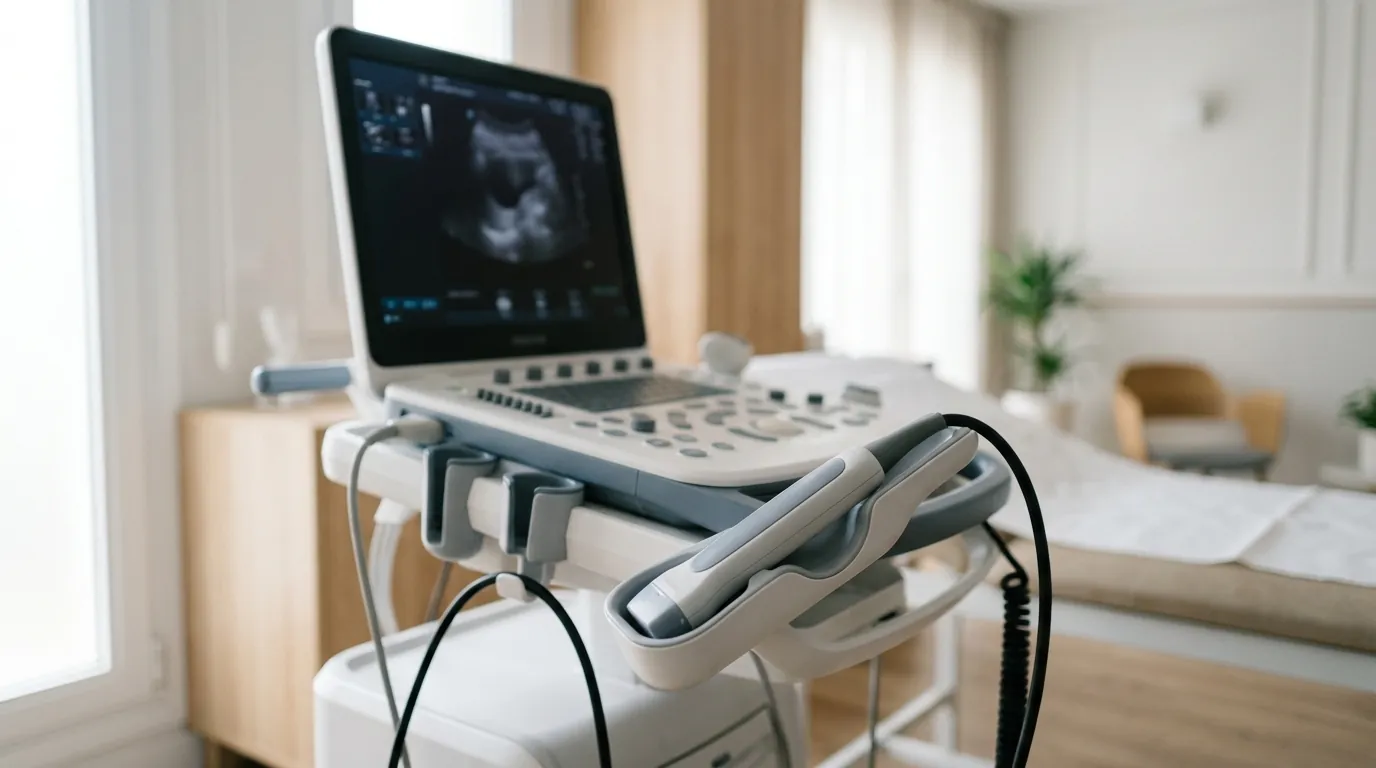
Doppler ultrasound of arteries and veins: examining varicose veins, suspected thrombosis, leg circulation and carotid arteries, no radiation.
What Doppler adds
On top of a standard ultrasound image, Doppler adds information about blood movement: which direction it's flowing, how fast, and whether anything is blocking it. That turns a picture into a study of how the circulatory system is working, with no radiation and no contrast.
What it's requested for
- Leg veins: varicose veins, a feeling of heaviness and swelling, and suspected deep vein thrombosis — which is an urgent indication.
- Leg arteries: calf pain when walking that eases on stopping, wounds that won't heal.
- Carotid arteries : assessing vascular risk, dizziness or a murmur picked up on examination.
- Monitoring fistulas, grafts and other vascular studies.
What it involves
It takes longer than a standard ultrasound — between twenty and forty minutes depending on the area — because the whole length of the vessel needs to be examined. Part of the leg vein study is done standing up, to assess reflux under real conditions. It doesn't hurt, though the radiologist presses with the probe at certain points. Generally no preparation is needed; for abdominal artery studies, fasting is requested.
When not to wait
A leg that's swollen, painful, warm and has come on suddenly could be a thrombosis: this calls for immediate attention, not booking an appointment for two weeks' time. The Doppler report guides treatment and, where appropriate, referral to vascular surgery.
Frequently asked questions
How does it differ from a normal ultrasound scan?
Doppler adds information about the movement of the blood: which direction it flows, at what speed and whether anything is obstructing it. That turns an image into a study of how the vessel is working, without radiation and without contrast.
Why is part of the study done standing up?
Because reflux in the leg veins can only be properly assessed under load, which is how you spend most of the day. That is why the venous examination combines lying on the couch and standing, and takes longer than a conventional ultrasound: between twenty and forty minutes.
My leg has suddenly become swollen and painful, should I wait for my appointment?
No. A leg that is swollen, painful, warm and of sudden onset may be a thrombosis and requires immediate attention. It is one of the few indications for Doppler that cannot wait.
What is the difference between an ultrasound scan and a Doppler ultrasound?
An ultrasound scan shows the image of the tissue; Doppler adds the movement of the blood: direction, speed and whether there is any obstruction. That is why Doppler is the one used to study veins and arteries, and it also takes longer, because the whole course of the vessel has to be followed.
How do you prepare for a Doppler ultrasound?
For a study of the legs or neck no preparation is needed; come in comfortable clothing that is easy to take off, and bear in mind that part of the venous study is done standing up. For a Doppler of the abdominal arteries you are asked to fast for a few hours to reduce intestinal gas.