
Bone density scan
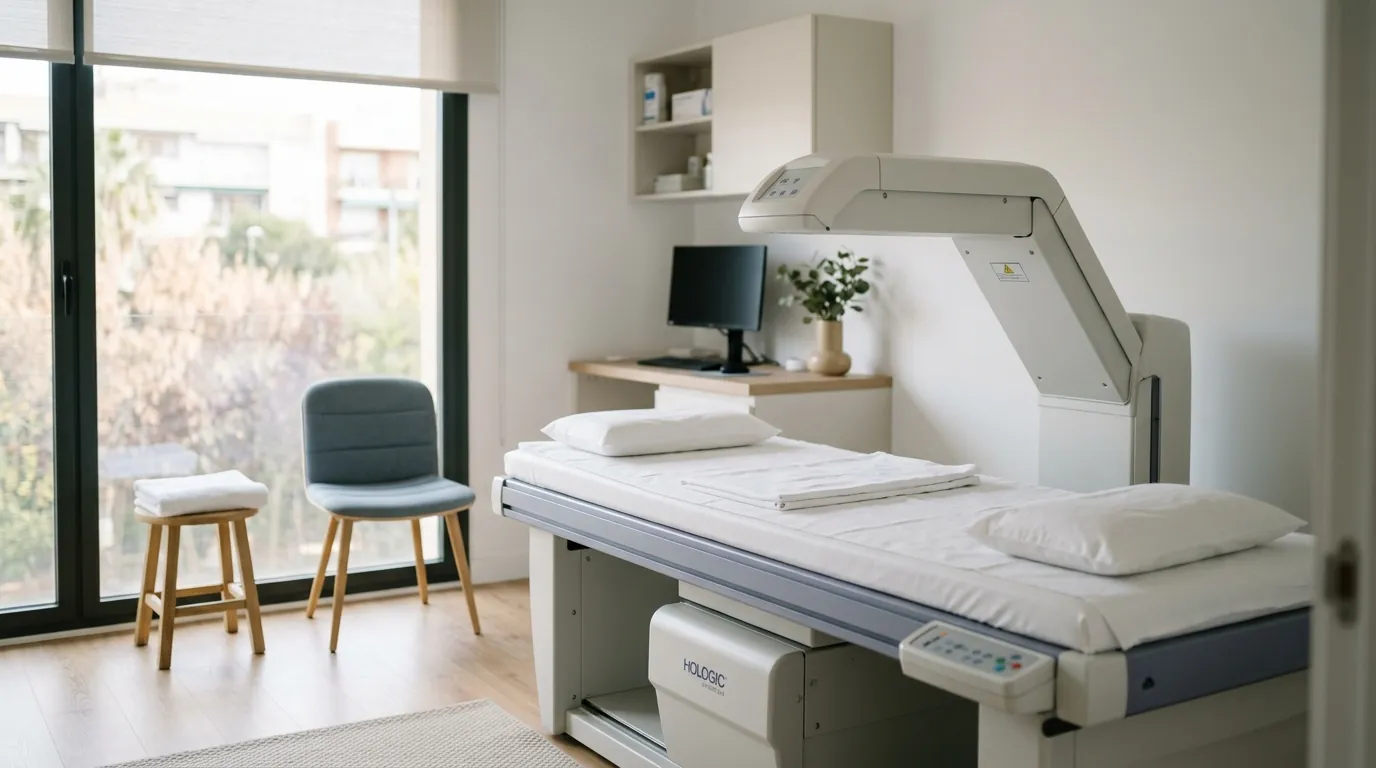
DEXA bone density scan: measures bone mineral density to detect osteopenia and osteoporosis. Quick, painless and very low-dose.
What it measures
A bone density scan — DEXA — measures the amount of mineral in bone, usually in the lumbar spine and hip. Based on that, density is classified as normal, osteopenia or osteoporosis, and fracture risk is estimated. It's the benchmark test for diagnosing osteoporosis, which causes no symptoms until a bone breaks.
Who should have one
- Anyone who's had a fracture from a minor knock.
- Long-term corticosteroid treatment.
- A parent with a history of hip fracture.
- Loss of height or progressive stooping.
- Conditions affecting bone, being underweight, smoking or heavy alcohol use.
What the test involves
You lie clothed on a table while a jointed arm passes over the area without touching you. It takes between ten and fifteen minutes, doesn't hurt and the radiation dose is very low, lower than a conventional X-ray. You don't need to fast. It's best to avoid calcium supplements the day before, and mention if you've recently had a contrast scan, as it can affect the reading. It isn't done during pregnancy.
What happens with the result
The report gives the values and their interpretation. From there, a decision is made: preventive measures — calcium, vitamin D, weight-bearing exercise and fall prevention —, medication where indicated, and the interval for repeating the test, which is rarely yearly. The assessment is completed at the clinic that requested it.
Frequently asked questions
Who is a bone density scan recommended for?
Women from the menopause onwards, especially if it was early; anyone who has had a fracture after a minor knock; people on long-term corticosteroid treatment; those with a parental history of hip fracture; or with loss of height or progressive stooping.
What is the test like?
You lie down fully clothed on a couch and an articulated arm passes over the area without touching you. It takes between ten and fifteen minutes, it does not hurt and the radiation dose is very low, lower than that of a conventional X-ray. There is no need to fast.
How often does it need to be repeated?
Rarely every year: bone changes slowly and repeating it too soon adds no information. The interval is decided according to the result and the treatment, and it is stated in the report. It is best to avoid calcium supplements the day before and to mention it if you have recently had a test with contrast.
What should you avoid before a bone densitometry scan?
Taking calcium supplements the day before and coming with metal objects on your clothing. Let us know if you have recently had a test with iodinated contrast or with isotopes, because they can alter the measurement and it is better to wait. No fasting is required.
Can a bone densitometry detect cancer?
That is not its purpose: it measures bone mineral density to diagnose osteopenia and osteoporosis and to estimate fracture risk. Other imaging tests are used to study suspicious bone lesions. A low result indicates fragile bone, not tumour disease.