
Cervical conditions
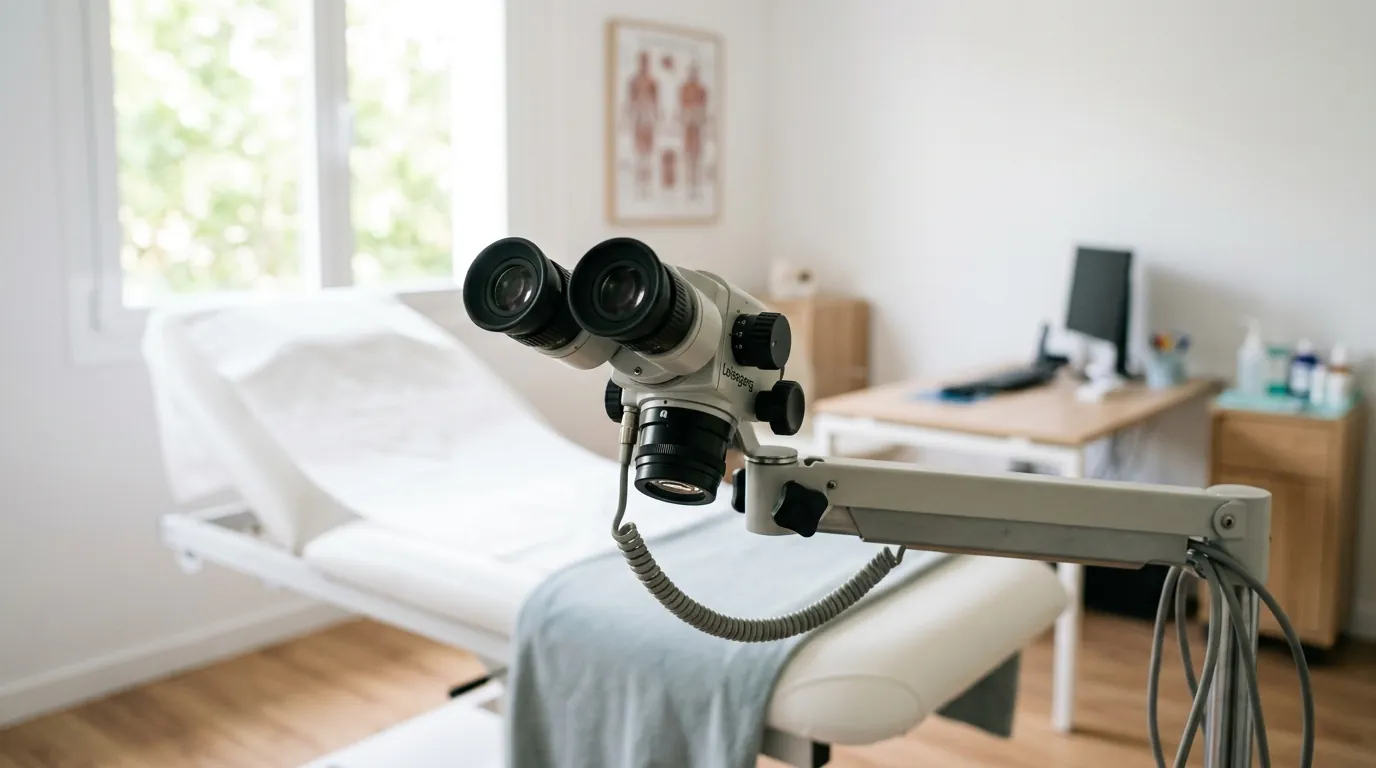
Prevention, diagnosis and follow-up of cervical lesions: smear test, HPV test, colposcopy and targeted biopsy where needed.
What cervical conditions are
Cervical conditions cover changes in the cervix, almost always linked to human papillomavirus (HPV) infection. The vast majority of these infections clear on their own; in a small proportion the virus persists and can cause lesions which, caught in time, are treated before they progress further.
That's the central idea behind this clinic: cervical cancer is one of the few cancers that can be prevented through screening, because years pass between the initial lesion and a serious problem. Plenty of time to act, if you get checked.
When to book an appointment
- It's time for your smear test, or you can't remember when your last one was.
- You've been told about an abnormal smear or a positive HPV test.
- Bleeding after sex or between periods.
- You'd like information about the HPV vaccine.
How we investigate it
The basis is the smear test and, depending on your age and history, the HPV test. If a result comes back abnormal, the next step is colposcopy: examining the cervix under magnification to pinpoint the area to study and, if needed, take a biopsy. An abnormal result almost never means cancer: it means there's something to monitor or treat in time.
How we treat it
It depends on what's found: from routine monitoring — many mild changes go away on their own — to treating the lesion when it needs it. In every case you leave the appointment knowing what you have, what's going to happen and when your next check-up is.
Frequently asked questions
My HPV test came back positive, should I be worried?
Not straight away. HPV infection is very common and in most cases the body clears it on its own. What matters is the follow-up: making sure it does not persist or cause lesions.
How often should you have a cervical smear test?
It depends on your age, your previous results and whether it is combined with the HPV test. At the appointment we tell you the schedule that applies to you, not a generic one.
What is benign cervical pathology?
These are changes in the cervix with no risk of malignancy: ectopy or «sore», cervical polyps, Naboth cysts or inflammation. They are diagnosed at the check-up and many need no treatment; they are only treated if they bleed, cause discomfort or make follow-up difficult.
What are the symptoms of cervical disease?
Very often there are none and it is picked up at a routine check-up, which is exactly the point of screening. When there are symptoms, the most common are bleeding after sex or between periods, a change in discharge or pelvic discomfort. Any of them is a reason to book an appointment, not to wait for the annual check-up.