
Gynaecological check-up and smear test
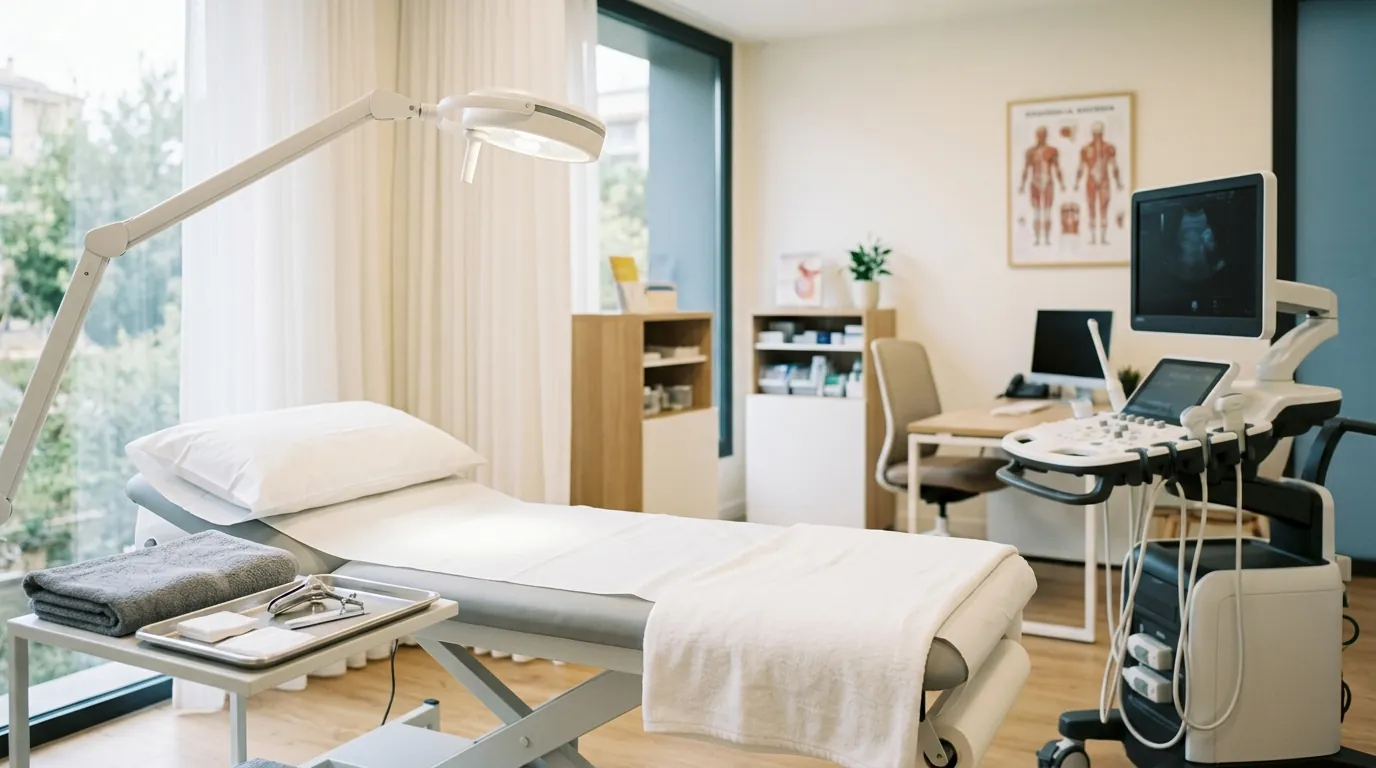
Gynaecological check-up: examination, ultrasound, cervical smear test and HPV test where indicated, with advice suited to your age and stage of life.
What the check-up includes
A full gynaecological check-up isn't just a smear test. It usually covers:
- History and reason for the visit: your cycles, your contraception, your history and whatever's on your mind.
- Gynaecological and breast examination.
- Ultrasound — transvaginal or abdominal — to check the uterus and ovaries.
- Cervical smear test and, depending on your age and protocol, HPV test.
How often
It depends on your age, your history and previous results; generally a yearly check-up is suggested, with the smear test at whatever interval applies — it isn't always every year. If you take contraceptives, are in menopause, or have a family history, the schedule is adjusted at the appointment.
How to prepare
- Avoid booking during your period if you're having a smear test.
- No sex, pessaries or vaginal douching in the 48 hours before.
- Note the date of your last period and bring any previous reports or results.
- Come with your questions written down: the appointment is for that too.
Reasons not to wait for your check-up
Bleeding outside your period or after menopause, pelvic pain that won't ease, foul-smelling discharge or persistent itching, pain during sex, periods becoming very heavy, or a lump in the breast. In these cases, book an appointment when the symptom appears, not within the year. If you're trying to get pregnant or having trouble doing so, the gynaecology clinic guides the workup and coordinates with the fertility unit.
Frequently asked questions
How often do I have to have a cervical smear test?
It is not always annual. The interval depends on your age, your previous results and the screening protocol that applies, and nowadays in many cases it is spaced out because it is combined with the HPV test. The gynaecological check-up itself is usually considered every year, even when no smear test is due.
Can I come while I have my period?
For a smear test it is better to avoid it, because blood makes the sample harder to read. It is also advisable not to have intercourse or use pessaries or vaginal douches in the previous 48 hours. If you are coming about a symptom that cannot wait, you will be seen anyway and we decide what can be done that day.
Which symptoms should not wait for the annual check-up?
Bleeding between periods or after the menopause, pelvic pain that does not settle, foul-smelling discharge or persistent itching, pain during sex, periods that become very heavy and any lump in the breast. In those cases you book an appointment as soon as the symptom appears.
What happens at a gynaecological check-up?
Medical history and reason for the visit, gynaecological and breast examination, an ultrasound —transvaginal or abdominal— to see the uterus and ovaries and, depending on age and protocol, a smear test and HPV test. It is also the moment to review contraception, cycles and any questions you bring with you.
What happens if I go to the gynaecologist without shaving?
Absolutely nothing. It has no bearing on the examination or on the smear test, and it is not something anyone notices. What you should do is avoid scheduling the appointment during your period if a smear test is due, and not use pessaries or vaginal douches in the previous 48 hours, because that does alter the sample.