
COPD
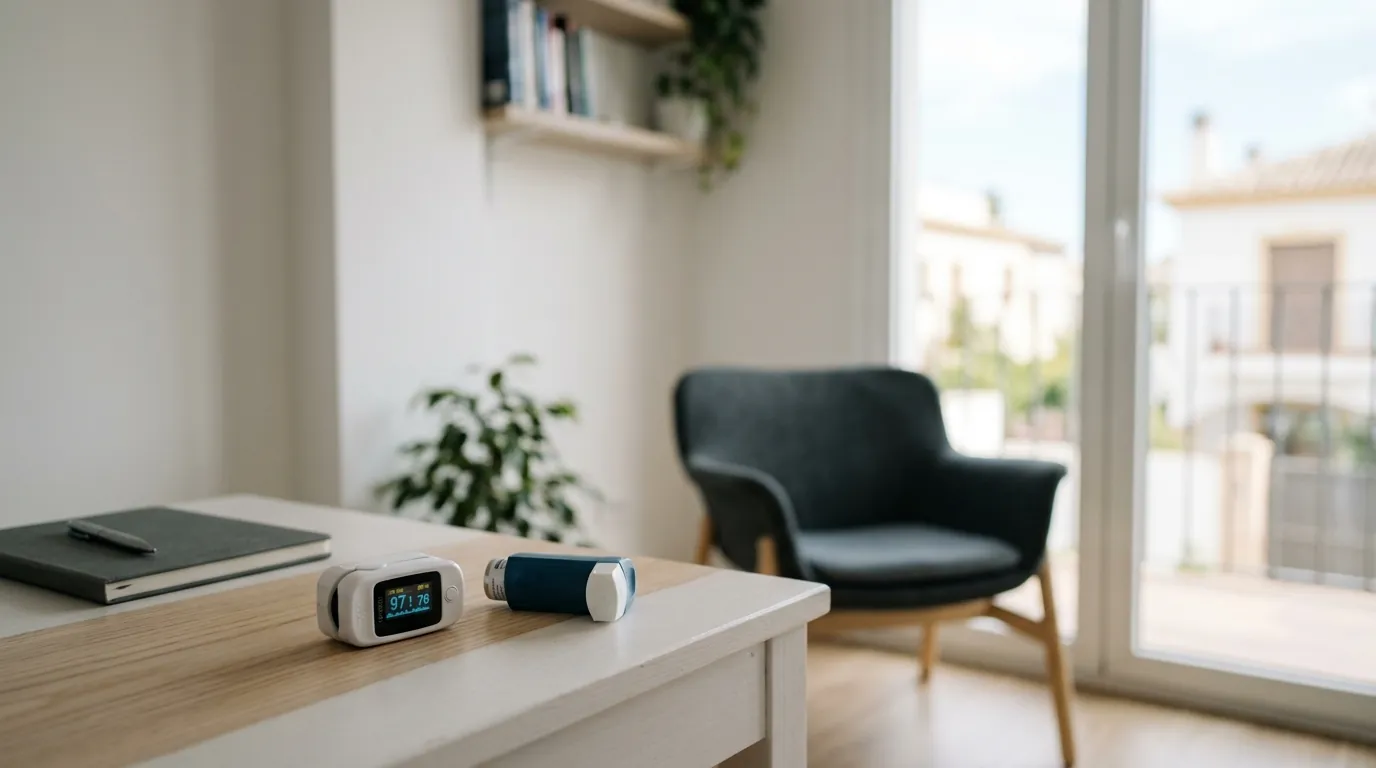
Diagnosis and monitoring of COPD with spirometry: inhaled treatment, preventing flare-ups, vaccination and a smoking cessation programme.
What COPD is
Chronic obstructive pulmonary disease is a narrowing of the airways that sets in gradually, almost always caused by smoking. It progresses silently over years: the cough gets put down to «smoker's cough» and the breathlessness to age or extra weight, and by the time someone comes in, lung function has already been lost that won't come back. That's why spirometry matters for smokers and ex-smokers, even if they feel fine.
When to suspect it
- Over 35 with a history of smoking, even if you quit a long time ago.
- Coughing, with or without phlegm, most days.
- Breathlessness climbing hills or stairs that never used to bother you.
- Chest colds several times a year that take a long time to clear.
How it's treated
The goal is twofold: breathing better now, and slowing the disease's progress as much as possible. The plan includes inhaled treatment adjusted to your severity and flare-ups, flu and pneumococcal vaccination, physical activity — muscles play a part in breathing too — and managing other conditions that often go alongside it.
What really changes the outlook
Frequently asked questions
Can COPD be cured?
No, but it can be slowed and controlled. The damage already done cannot be recovered, and that is why it matters to detect it early with a spirometry in smokers and ex-smokers even if they feel well. With treatment, vaccines and physical activity, breathing improves and flare-ups are reduced.
I gave up smoking years ago, can I still have it?
Yes. COPD appears after years of exposure and can be diagnosed long after giving up tobacco. If you are over 35, you have smoked and you notice a cough, phlegm or breathlessness going uphill, spirometry is indicated.
How do I know I am having a flare-up?
When breathlessness increases, phlegm increases or changes colour, beyond your usual variation. This is not something to wait and see about: flare-ups treated early resolve better and leave fewer after-effects. Seek advice as soon as those changes appear.
What should someone with COPD avoid doing?
Smoking, first and foremost: it is the only thing that slows the decline in lung function. It is also unwise to abandon the inhalers once you feel better, to skip the flu and pneumococcal vaccines, or to fall into a sedentary lifestyle, because untrained muscle makes breathlessness worse.
What are the 4 stages of COPD?
It is classified by lung function measured with spirometry, from mild to very severe, and combined with symptoms and the flare-ups of the past year. That classification is what guides treatment; the number on its own says little without the clinical picture that goes with it.