
Spirometry
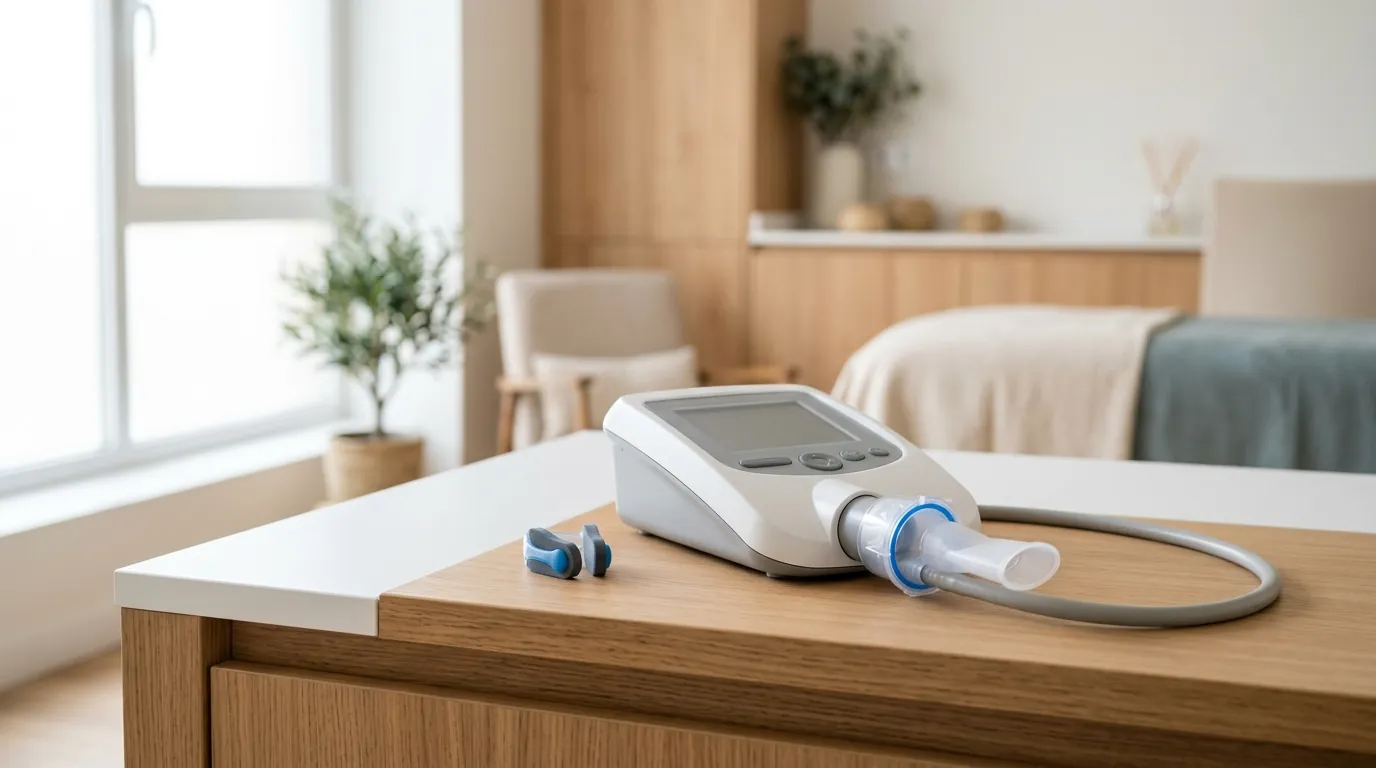
Forced spirometry with a bronchodilator test: measures lung function to diagnose and monitor asthma and COPD. Quick, simple and painless.
What it measures
The bronchodilator test adds a step: spirometry is repeated after an inhaler. If the values clearly improve, that obstruction is reversible, which points towards asthma.
When it's requested
- A cough lasting weeks, wheezing, breathlessness or shortness of breath on exertion.
- Suspected asthma or COPD.
- Smokers and ex-smokers, to catch damage before it causes symptoms.
- Monitoring inhaled treatment already started.
- Pre-surgery assessment and occupational or sports evaluation.
How to prepare
- Don't smoke in the hours beforehand.
- Avoid heavy meals and intense exercise before the test.
- Ask whether you should stop your inhalers and how far in advance: it depends on which one and why the test is being requested.
- Comfortable clothing that doesn't press on your chest or abdomen.
What it involves
Sitting down, with a clip on your nose and a mouthpiece in your mouth, you're asked to take in as much air as possible and blow it out as hard and for as long as you can. It's repeated several times to get valid readings. Your effort is part of the result: that's why the technician insists on it so much. It's a bit tiring and can bring on some coughing, but it doesn't hurt. The respiratory specialist interprets the values alongside your history.
Frequently asked questions
Do I have to stop my inhalers before the spirometry?
It depends which one it is and what the test has been requested for. Some are stopped a few hours beforehand and others are left alone. Ask when booking your appointment and bring the list of what you take: if the test is done with the medication on board without anyone knowing, the result can be misleading.
Is the test difficult to perform properly?
It requires cooperation: you have to take in as much air as possible and blow it out with all your strength and for as long as you can. That is why the technician insists so much and it is repeated several times until valid manoeuvres are obtained. It is a little tiring and may cause some coughing, but it does not hurt.
What is the bronchodilator test for?
The spirometry is repeated after an inhaler is administered. If the values improve clearly, the obstruction is reversible, and that points towards asthma. It is a key piece of information for telling asthma apart from COPD and for deciding on treatment.
What should a patient avoid before a spirometry test?
Smoking in the hours beforehand, intense exercise, a heavy meal and clothing that is tight around the chest or abdomen. Whether inhalers are stopped or not depends on which one it is and on why the test has been requested: ask when you book so you do not have to repeat it.
Which conditions can spirometry detect?
Above all asthma and COPD, and in general any obstructive or restrictive pattern of lung function. It is also used to assess risk before surgery, to follow up inhaled treatment and to investigate unexplained cough or breathlessness.