
Tratamientos
Published on
Knee arthritis: from non-surgical treatment to knee replacement
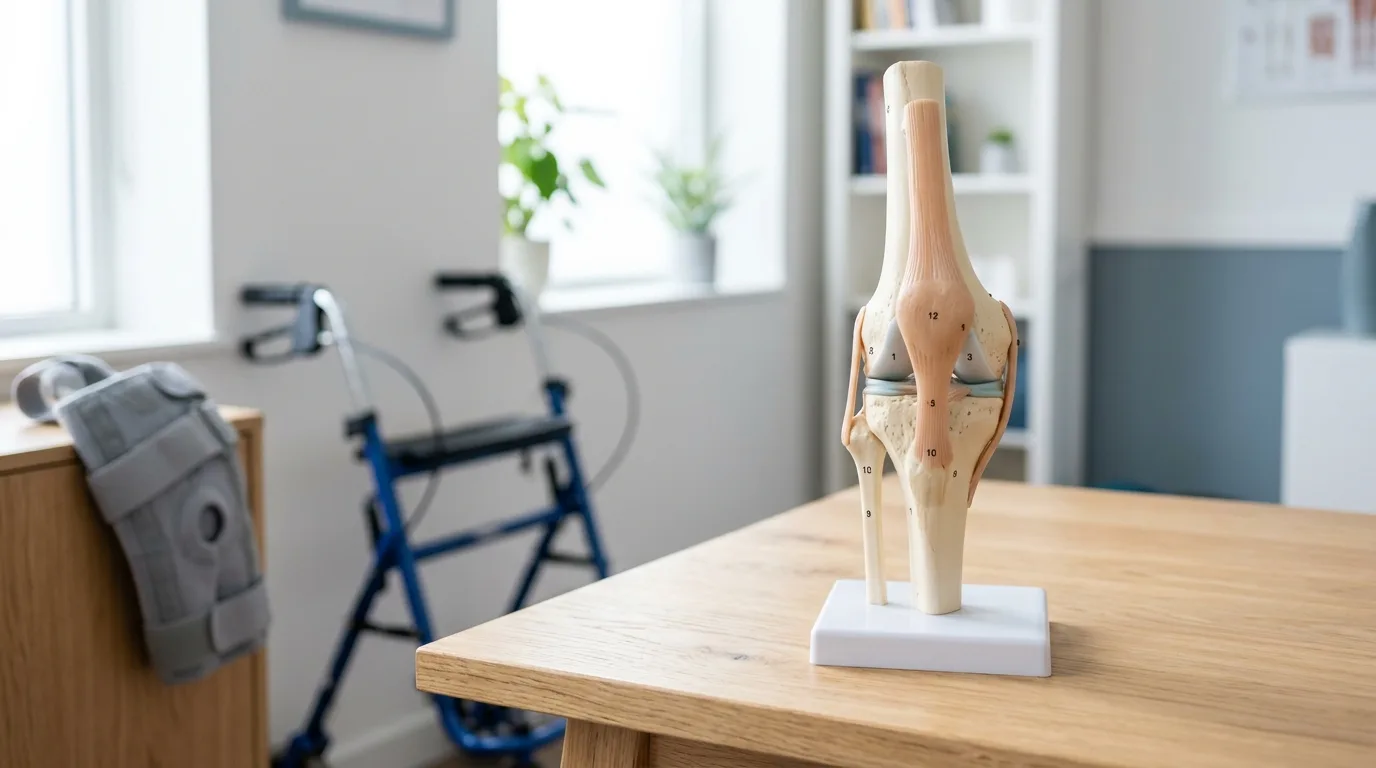
Treating knee arthritis without surgery, the surgical options (arthroscopy, osteotomy, partial or total replacement) and when a knee replacement is needed.
The knee is the largest joint in the body and one of the joints that suffer most from age, weight and activity. Wear of the cartilage (osteoarthritis of the knee) is the most common cause of joint pain after the age of 50, and one of the most frequent reasons for seeing an orthopaedic specialist.
Here we explain how knee arthritis is treated without surgery, what surgical options exist, when a knee replacement is indicated and what you can realistically expect from it.
What is knee osteoarthritis?
The knee has three compartments: the inner one, the outer one and the one formed by the kneecap and the femur. The cartilage covering the bones lets them glide without rubbing. With osteoarthritis, that cartilage thins and cracks, the bone reacts by forming spurs (osteophytes), and the joint becomes inflamed, painful and stiff.
The factors with the greatest influence are age, excess weight, previous meniscus or ligament injuries, misalignment of the leg (bow legs or knock knees) and the repeated strain of certain jobs or sports.
The typical symptoms: pain that gets worse when walking, going up and especially coming down stairs; stiffness when getting up from a chair or in the morning, which eases after a few minutes; swelling during periods of greater activity; and, over time, a feeling that the knee gives way or is changing shape.
How it is assessed
The examination in clinic tells us a great deal: where it hurts, how much the knee moves, whether there is fluid on the knee, the alignment of the leg and the condition of the thigh muscles. A standing X-ray, taken with weight on the leg, is the main test, because it shows how much the space between the bones has narrowed. An MRI scan is not needed to diagnose osteoarthritis; it is requested when an associated meniscus or ligament injury that would change the treatment is suspected.
Non-surgical treatment
Most knees with osteoarthritis are not operated on. They are managed with a set of measures that, done properly, keep the person active for years.
Exercise: the cornerstone
Strengthening the quadriceps and buttock muscles is what protects the knee most. It is not about forcing it, but about building strength gradually: floor or machine exercises, an exercise bike, exercise in water. Walking on level ground is good; hills and long flights of stairs during painful spells are not.
Weight
When you walk, the knee bears several times your body weight with each step. Losing weight, even just a few kilos, reduces pain measurably.
Physiotherapy and aids
A personalised programme with the Physiotherapy team teaches you how to move without damaging the knee and how to rebuild lost muscle. In some cases a knee brace, a walking stick in the opposite hand or insoles can help, when a gait analysis suggests them.
Medication
Painkillers and anti-inflammatories, as prescribed, for flare-ups of pain. Anti-inflammatory gels applied to the knee are an alternative with fewer side effects in older people.
Surgical options
When non-surgical treatment no longer controls the pain and the knee is limiting daily life, there are several possible operations, and choosing well depends on age, leg alignment, which compartments are affected and activity level.
Arthroscopy
It is worth making this clear from the outset: arthroscopy is not a treatment for osteoarthritis. Cleaning out an arthritic knee by arthroscopy does not improve the pain in a lasting way, and it is no longer recommended for that purpose. It does have a place when a fragment of meniscus or a loose body is locking the knee, or for ligament and meniscus injuries in knees without osteoarthritis, which we cover in another article.
Osteotomy
In young, active people with osteoarthritis in a single compartment and a misaligned leg (bow legs, above all), the bone can be cut and realigned to shift the load to the healthy side of the knee. It delays the need for a replacement by years.
Partial (unicompartmental) knee replacement
When the wear affects only one compartment, usually the inner one, and the ligaments are intact, just that part can be replaced. It is a smaller operation than a total knee replacement, with a quicker recovery and a knee that feels more natural, although not every knee is suitable.
When is a total knee replacement needed?
- Daily pain that limits walking, sleeping or basic activities.
- Properly followed non-surgical treatment that is no longer enough.
- An X-ray showing advanced wear that explains the symptoms.
Knee replacement recovery, step by step
A knee replacement demands more rehabilitation work than a hip replacement, and the result depends to a large extent on that work.
- First two weeks: walking at home with crutches, bending and straightening exercises several times a day, ice and pain control. Swelling is normal.
- Months 2 to 3: walking long distances, using an exercise bike, going up and down stairs normally.
- Up to one year: the knee keeps improving in strength, movement and feel. Residual swelling and warmth can last for months.
Stiffness is the main enemy in the first few weeks: if the knee is not moved, scar tissue limits it, and getting the movement back later is harder. That is why the exercises in the first few days, uncomfortable as they may be, are non-negotiable.
What you can do with a knee replacement
Walking as far as you like, swimming, cycling, golf, dancing, moderate hiking. Running, jumping and contact sports are not advised, as they shorten the life of the implant.
If your knee hurts
Knee pain that keeps coming back or is already making you avoid activities deserves a diagnosis. At Rincón Salud Orthopaedics we assess the knee with an examination and imaging on site, and the treatment plan always starts with the least invasive options: exercise, physiotherapy and injections where appropriate. A knee replacement comes when it is the best option, not before. You can book an appointment with our team.